Bears Around a Trailside Camp
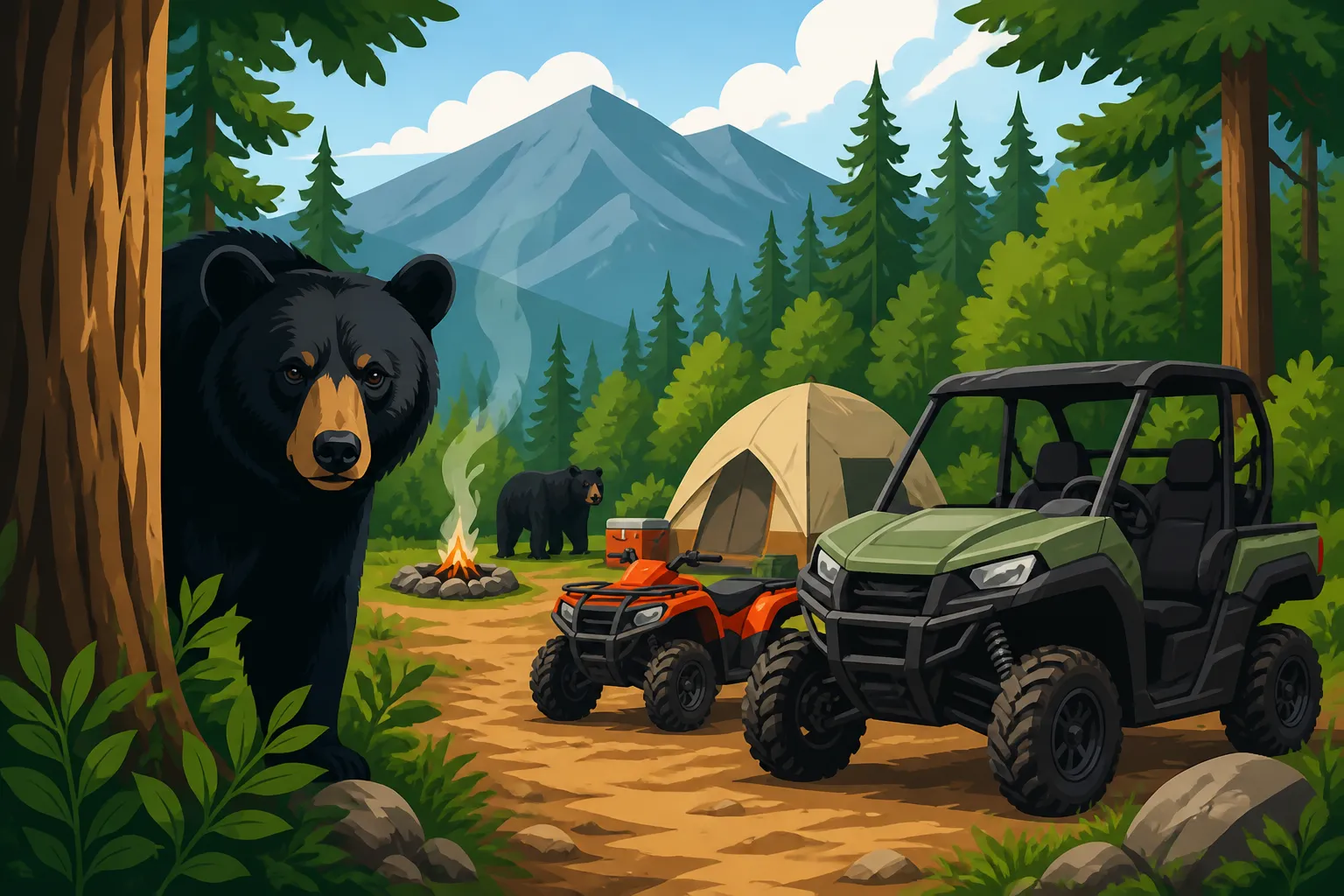
A bear nosing around camp after a long ATV ride is unsettling, especially when your food, trash, and machine are all close by. The best protection is a camp that does not reward a bear for visiting, plus a calm plan for what to do if one appears. This guide covers prevention, campsite setup, and safe responses for New Hampshire rides.
Why bears visit a trailside camp
Food smells can draw bears in
New Hampshire black bears generally avoid people, but a camp can offer an easy meal: a cooler left beside a tent, a greasy pan, an open trash bag, or even food residue on a table. Bears have a strong sense of smell, and they may investigate odors from cooking, snacks, pet food, or toiletries. A bear that finds food at a campsite can return, so prevention matters before you settle in for the night.
Think about the whole camp, not just dinner. A wrapper tucked into a jacket pocket, a cooler in the ATV cargo box, or a bag of marshmallows inside a tent still leaves tempting smells accessible. Even if you are only stepping away for a few minutes to unload gear or check a nearby trail, put food and scented items away first.
The same habits matter whether you are camping near Pittsburg, along a North Country route, or in a more southerly riding area. Before choosing a site, review the rules for the specific land and campground. Camping Along New Hampshire Trails and New Hampshire ATV Camping Near the Trails are useful places to start when planning where an overnight stop is appropriate.
A bear near camp is not automatically aggressive
Seeing a bear does not necessarily mean it is about to attack. It may be passing through, following a food smell, or surprised to find people nearby. Give it room and a clear way to leave. Do not move toward it for a better view, follow it, or try to get close for a photo.
A bear that stands on its hind legs may be trying to identify a smell or get a better look. That posture alone is not a reliable sign that it is about to charge. Focus on its behavior, your distance, and whether it has an open route away from you.
Cubs call for extra caution. A mother bear may react defensively if she believes people are too close to her young. Never approach cubs, block a bear’s route, or move between a mother and her cubs. If you spot cubs near a trail or campsite, quietly increase your distance and leave the area without trying to investigate.
Set up camp to discourage a bear
Store food, trash, and scented items securely
Before you unpack, decide where food and scented items will go when they are not in use. Follow the campground or land manager’s storage rules, and use bear-resistant storage where it is provided or required. Keep food, coolers, garbage, cooking equipment, and toiletries secured rather than leaving them on a picnic table or in a tent.
Do not assume an ATV cargo box is bear-proof. A locked compartment may keep items out of sight, but that does not necessarily prevent a bear from smelling or opening it. Likewise, a cooler is not a dependable wildlife barrier simply because its lid is latched. Use the storage method recommended for the specific place you are visiting.
Make a small cleanup routine part of your evening:
- Pack away all food as soon as cooking and eating are finished.
- Wipe down the cooking area and dispose of food scraps according to site rules.
- Seal trash and store it in the designated secure location.
- Put toiletries and other scented products away with the food.
- Check the tent and gear area for wrappers, crumbs, and forgotten snacks.
These steps can feel fussy when everyone is tired after a ride, but they are easier than trying to recover food or gear after a bear has scattered it around camp.
Choose a site and cooking area thoughtfully
Use established campsites and follow posted instructions. Avoid setting up close to visible food waste, a dumpster, or a place where wildlife has already been feeding. If you see fresh signs that a bear has been active around a site, such as overturned containers or scattered trash, do not linger to inspect them. Choose another permitted location if you can do so safely.
Keep cooking and eating organized. Where the campsite layout allows, separate food preparation and storage from the area where you sleep, while still following the campground’s directions. Never keep snacks in a sleeping bag or leave an open food container beside the tent. Do not leave a grill or cooking gear unattended if food residue and odors remain on it.
A map can help you plan a route and locate a suitable legal overnight area before you arrive. You can use onX Offroad to review your planned ride and save map information before heading into places with weak cell coverage. Treat any app as a planning aid, not confirmation that camping is allowed: check the relevant land manager or campground rules before setting up.
What to do if a bear comes into camp
Give it space and avoid startling or cornering it
If you notice a bear nearby, gather your group calmly and keep children close. Do not run toward it, chase it away with an ATV, surround it, or try to make it move by driving close. Give it room to leave. If you can do so without approaching the bear, move people inside a vehicle or into a secure building and wait for a safe opportunity to leave.
If the bear has not noticed you, avoid sudden movements and quietly back away while keeping it in view. If it has noticed you, speak calmly and make your presence known without screaming or acting aggressively. Do not block its escape route. The aim is to reduce the chance of surprising or trapping the animal, not to confront it.
Do not try to retrieve food or equipment while a bear is beside it. A cooler or backpack is replaceable; getting close to a bear over property can turn a manageable situation into a dangerous one. If it is safe to do so, leave the area and alert the campground host or the appropriate land manager. For an immediate threat to people, contact emergency services.
Know when to leave and when to report it
If a bear repeatedly approaches people, remains around an occupied campsite, or has access to unsecured food, move to a safer place when you can do so without crossing its path. Notify campground staff or the land manager as soon as possible. A bear that has found food may keep returning, and staff may need to address the attractant or warn other visitors.
Avoid approaching a bear to inspect damage or take pictures. Do not try to scare it with fireworks, throw objects at it, or feed it to lure it away from camp. Those actions can increase risk and may create a dangerous association between people and food.
If your group is unsure which way to leave, pause in a protected location and consult your route map rather than riding blindly toward the animal. Saving maps in advance with onX Offroad can be helpful when phone service is limited, but use local trail information to confirm that your planned exit is open and permitted. New Hampshire Trail Conditions Before You Ride and New Hampshire Trail Maps From a Club can help with ride planning; neither replaces directions from on-site staff during an active wildlife situation.
Plan an overnight ride with wildlife in mind
Prepare before you leave the trailhead
Bear safety starts before the first mile. Tell everyone in your group how food and trash will be stored, who is responsible for camp cleanup, and what the group will do if a bear appears. If children are riding along, explain that they should stay with an adult and never approach wildlife, even when an animal appears calm.
Pack food in manageable, sealed containers and bring the storage equipment required by your destination. Carry enough water, a first-aid kit, a charged phone, and a backup way to navigate. Check whether your route and overnight site are currently open and permitted, especially when land access is seasonal or managed by a local club. New Hampshire Trail Conditions Before You Ride can be part of that pre-trip check.
Use a map to understand where the route goes and where you can safely stop. onX Offroad can help organize your planned route and offline navigation, but land boundaries and access can be complicated. Confirm trail and camping permissions with the relevant land manager or club, and do not assume that a visible clearing or roadside pull-off is an authorized campsite. New Hampshire Rules for Riding State Land and New Hampshire Rules for Riding Private Land offer useful context for checking access rules.
Keep wildlife awareness part of the ride
Stay alert on the trail, especially around bends, brush, and quiet stretches where visibility is limited. Do not approach a bear, cubs, or other wildlife for a closer look. If you see an animal ahead, slow down, give it a wide berth when allowed, and follow local rules for stopping or turning around. Do not ride off a marked trail to get around an animal or a closure.
A group should also avoid becoming so spread out that one rider encounters wildlife alone and cannot quickly alert the others. Agree on a stopping point and a simple way to communicate before departing. If someone sees a bear, the group can pause at a safe distance rather than riding toward it or crowding the area.
Other wildlife can create hazards too. A moose on a wooded route may be difficult to see until you are close, and it deserves the same respect and space as a bear. Meeting a Moose on a Coos County Trail is a helpful companion topic for riders heading north.
| Camp concern | Safer approach |
|---|---|
| Food and snacks | Secure them whenever they are not being used |
| Trash and scraps | Seal and store them as the site directs |
| Coolers and ATV storage | Do not assume they are bear-proof |
| A bear near camp | Keep people together, give the bear room, and do not approach |
| Cubs nearby | Leave the area calmly without getting between cubs and an adult |
| Unclear camping permission | Check with the land manager or campground before setting up |
| Limited cell service | Save route information in advance and identify a safe exit plan |
A clean, well-organized camp cannot guarantee that a bear will stay away, but it removes many of the reasons one might investigate. Secure the things that smell, keep distance if wildlife appears, and never put a photo or piece of gear ahead of your group’s safety.
Disclaimer
This article is for general informational purposes only and does not constitute professional advice. Laws, prices and regulations vary by location and change over time. Consult a qualified professional for guidance on your specific situation.