Parking a Trailer at a Club Staging Lot
A ride can go sideways before the ATV even reaches the trail: you arrive with a truck and trailer, only to find a full lot, a locked gate, or no clear place to unload. This guide explains how to plan trailer parking at a New Hampshire club staging lot, what to confirm before leaving home, and how to avoid blocking other riders or damaging the site.
Confirm that the staging lot allows trailer parking
A trailhead lot is not automatically a trailer lot
A club staging lot may be small, seasonal, or intended for a particular type of use. Even if you can see a wide gravel area on a map, that does not guarantee there is room for a truck and trailer—or that parking is allowed there. Lots may be on private land, subject to club or landowner conditions, or closed when trails are closed.
Before driving north, contact the club or the organization responsible for the lot. Ask specifically whether you may park a tow vehicle and trailer, not just whether the trail is open. A vague answer such as “the trailhead is available” may not resolve practical questions about trailer space, overnight parking, or access hours.
This matters in popular riding areas around Berlin, Gorham, Pittsburg, and Colebrook, where riders may be arriving at the same time on busy weekends. A site that has room for several cars might not have room for several long trailers without blocking turning space. For background on finding a suitable starting point, see Parking a Trailer at a Club Staging Lot only if this is not the article’s own topic.
Oops internal link self-reference invalid. Need remove. Use 6-12 links. We can retain no mention. Continue. Maybe staging lot policies differ.
Ask:
– trailer permitted
– spaces / staging layout
– day only/overnight
– fee, membership?
Don’t state fees.
Get a useful answer, not just a yes
When you call or message, describe your setup: truck length, trailer length, number of machines, and whether you need to unload onsite. “Can I park?” can mean very different things to a club volunteer than “Can I leave a full-size pickup and 20-foot trailer in the lot while we ride?”
Ask whether you should arrive early, whether parking is first-come, and what to do if the main area is full. If you are riding with friends, confirm whether each tow vehicle needs its own space. A club may recommend a different staging area, especially during a community event, maintenance project, or high-traffic weekend.
Also ask about overnight parking if you plan to leave the trailer while staying in a nearby lodge or campground. A lot that works for a day ride may not allow a vehicle to remain after hours. Do not assume that a trailer can stay because other trailers are already there; those may belong to club volunteers, landowners, or riders with prior permission.
Check access conditions close to your trip
A lot can be open one weekend and inaccessible the next because of weather, trail conditions, maintenance, landowner requests, or seasonal closures. Check New Hampshire Trail Status Before You Ride and New Hampshire Trail Closures to Check First before loading up. Trail status and parking availability are related, but they are not always the same thing: a trail may be open while a staging area is temporarily unavailable.
This is especially relevant during mud season and at the beginning or end of the riding season. A soft lot can become rutted under a heavy tow vehicle, even when the trails nearby appear rideable. If the club advises against using a lot after rain, follow that guidance rather than trying to squeeze in because the gate is open.
Choose a lot that works for your truck and trailer
Think about the whole maneuver, not just the parking space
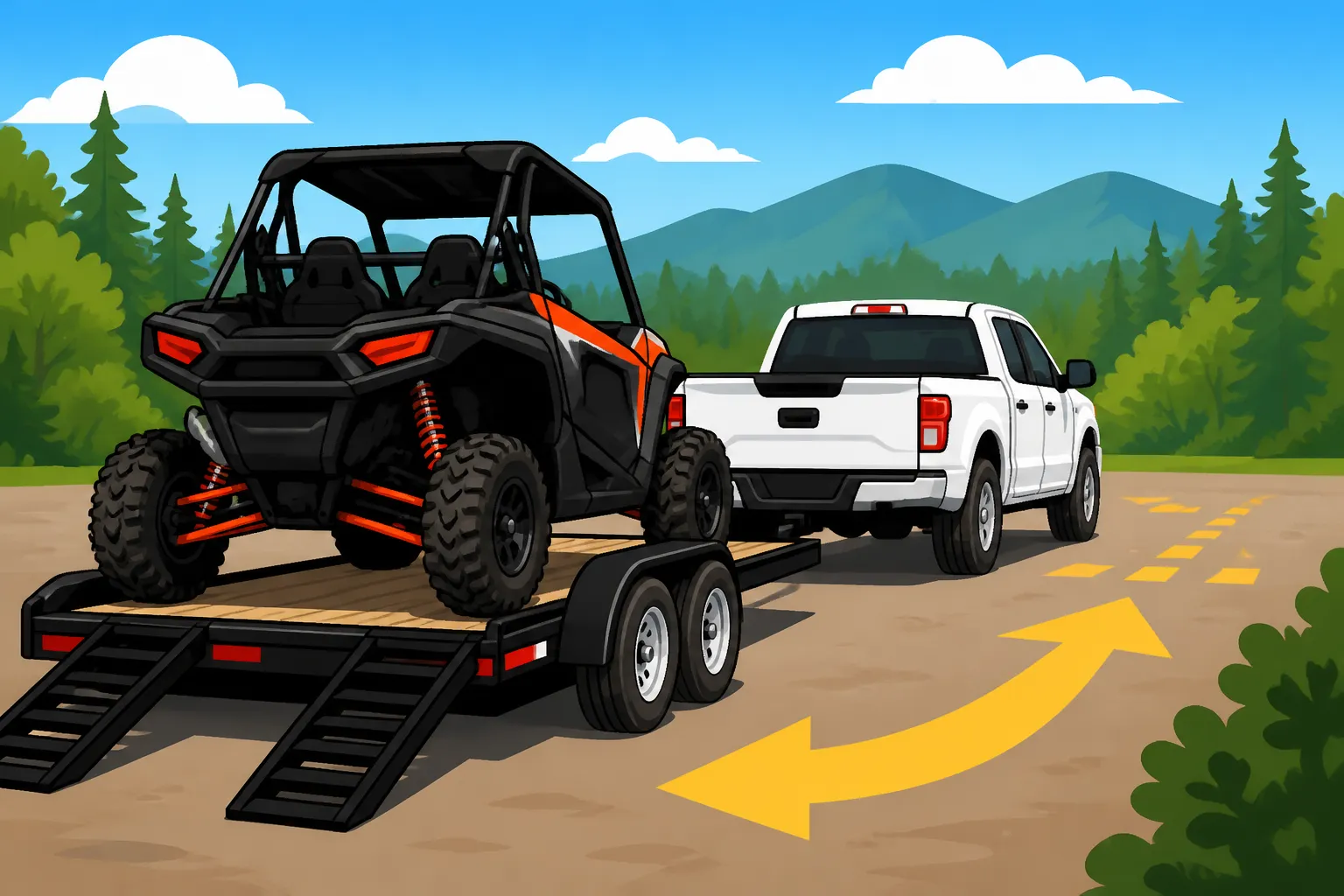
A trailer needs room to enter, turn, unload, and leave. A narrow space beside a tree might technically hold your rig but make it difficult to back out once other vehicles arrive. Before committing to a lot, consider whether there is a broad approach, a safe place to turn around, and enough room to lower ramps without putting machines or people in the traffic path.
For example, a rider towing a long trailer to a North Country trailhead may find that the usable area is not the obvious flat patch near the entrance. The club may direct trailer users to a particular side of the lot or ask them to park in a way that leaves the center open. Follow on-site signs and instructions, and leave space for emergency access and club equipment.
If you are using a map app to plan the route, remember that a mapped road or parking area does not confirm that it is suitable for a trailer. onX Offroad can help you review route context and nearby trail information, but confirm the lot’s actual rules and approach with the club. A map cannot tell you whether a gate is locked, a surface is soft, or the parking layout has changed.
Consider the trailer’s size and ground conditions
The same gravel lot can feel roomy for a short utility trailer and tight for a longer enclosed trailer. If your trailer has a wide turning radius, low clearance, or a heavy load, tell the club when you ask about parking. Do not rely on squeezing past parked vehicles or driving onto grass to create extra space.
New Hampshire weather can make a difference. Rain may soften dirt shoulders, while thawing conditions can leave a lot rutted or muddy. If the club requests that riders avoid a particular area, don’t use it as overflow parking. Getting a trailer stuck can block the lot, damage the surface, and create a recovery problem for everyone else.
When deciding whether a route is suitable, look beyond the final trailhead. Narrow town roads, sharp turns, steep approaches, and low branches can all complicate towing. Use a current club map when possible; New Hampshire Trail Maps From a Club and Downloading a Club Trail Map can help you prepare for the riding portion, while a direct conversation with the club is better for site-specific trailer instructions.
Plan for busy days and limited capacity
Holiday weekends, foliage season, and organized rides can fill staging areas early. A lot that normally has open space may reach capacity before midday. If your schedule is flexible, ask the club when the lot tends to be busiest and whether an alternate staging location is appropriate. The article New Hampshire Trails That Fill Up on Holidays offers related planning context for crowded riding days.
Carpooling can reduce the number of tow vehicles, but coordinate before anyone leaves home. Agree on who is towing, where everyone will meet, and whether riders can safely unload multiple machines from one trailer. If each person brings a separate truck and trailer, you may take up several spaces that could have accommodated more riders.
A useful habit is to have a backup plan before the trip, not after you arrive. Identify another club-approved staging area or a place to regroup that does not involve parking on a shoulder or blocking a gate. Ask the club where overflow should go; do not assume a nearby business, road edge, or open field is available for trail parking.
Park and unload without creating a problem
Follow posted signs and club directions
Once you reach the lot, pause and look for signs before pulling into the first open patch. Check for restrictions on trailer parking, overnight stays, unloading, or access hours. If a volunteer is directing traffic, follow their instructions even if a different arrangement seems more convenient.
Park so other vehicles can enter and leave without having to move your trailer. Avoid blocking gates, access roads, trail entrances, turnaround areas, and any space reserved for maintenance or emergency use. Keep the truck and trailer within the designated parking area rather than extending onto grass or an adjoining property.
A small courtesy can prevent a frustrating end to the ride: take a moment to imagine how another tow vehicle will get through after you. If your parking position requires other riders to squeeze between your trailer and a ditch, move before unloading. A convenient spot for your group should not make the lot unusable for everyone else.
Unload safely and keep equipment organized
Unload on a stable, level surface when possible. Set the tow vehicle and trailer securely, use the equipment’s normal safety procedures, and keep people clear of the ramp path. Avoid unloading where machines or ramps could cross the lot’s main traffic lane. If the lot is busy, wait for a clear moment rather than rushing to get onto the trail.
Keep tie-downs, helmets, tools, and other gear together. Loose straps can become trip hazards or get caught under a tire. If you need to adjust a machine, do so without blocking another rider’s access to their vehicle. Pack trash out, and do not leave fuel containers, broken parts, or disposable items behind.
A quick walk-around before departure is worth the extra minute. Check that the trailer is properly connected, lights and safety chains are set, ramps are secured, and the parking area is clear of gear. If you notice a damaged sign, a blocked entrance, or a problem with the lot surface, tell the club rather than moving barriers or making an informal repair yourself.
Treat private land and shared access with care
Some staging areas depend on the goodwill of a landowner or local club. Parking outside the designated area, driving around a barrier, or leaving a trailer overnight without permission can jeopardize access for future riders. A lot that looks unused is not necessarily open for public parking.
This is one reason it helps to understand the wider trail network before you go. Staging Before a Northern Loop can help with trip planning, while New Hampshire’s Club Trail Network provides related context on how club areas connect. If a route crosses private land, keep to the marked route and respect restrictions rather than looking for an easier shortcut from the parking area.
For camping or a multi-day stay, arrange lodging and parking separately. New Hampshire ATV Camping Near the Trails may help you explore trip options, but do not treat a campground, motel, or town lot as a substitute for permission to leave a trailer there. Ask the relevant property owner or business directly.
A practical checklist before towing north
Ask these questions before you leave
A short confirmation can spare you a long detour. Contact the club or staging-area manager and ask:
- Is the lot open on the date and time I plan to arrive?
- May I park a truck and trailer there while riding?
- Is overnight parking allowed, or is it day-use only?
- Is there a designated trailer area or a maximum vehicle size?
- What should I do if the lot is full?
- Are there current conditions that make towing into the lot difficult?
- Are there fees, permits, or other requirements for using this particular site?
Do not assume that registration or trail access automatically includes permission to park anywhere. New Hampshire’s registration requirements are a separate issue from a specific lot’s access rules; New Hampshire OHRV Permits Explained can help clarify how trail access and registration fit together.
| Before you go | What to confirm | Why it matters |
|---|---|---|
| Lot access | Open status and arrival hours | A closed gate can derail the trip |
| Trailer parking | Permission for your vehicle and trailer | A car space may not fit a tow rig |
| Overnight stay | Whether the trailer may remain after riding | Day-use permission may not cover overnight parking |
| Lot capacity | Busy periods and overflow instructions | Avoid arriving without a safe alternative |
| Road approach | Turns, surface, and current conditions | A suitable trail may have a difficult trailer approach |
| On-site layout | Signs, unloading area, and volunteer directions | Keeps access clear for other riders |
Make the ride plan match the parking plan
Choose the staging area and riding loop together. A promising trail route is not a good choice if the only nearby parking cannot accommodate your trailer. Use a club map to understand where the ride begins and where trails connect, then confirm that the selected lot is appropriate for your setup. onX Offroad may be useful for reviewing route context, but use club information for current access and parking instructions.
If you are planning a long loop near Pittsburg or the Ride the Wilds network, consider how far the group will travel before returning to the same lot. Keep fuel, daylight, rider experience, and communication gaps in mind. Remote stretches can make a minor delay feel much bigger, especially when your truck and trailer are parked far from services. A second planning resource, Planning a Week on Ride the Wilds, can help when your trip involves more than one riding day.
For a first visit, arrive with enough time to assess the lot before unloading. If the site is confusing or unexpectedly crowded, contact the club or follow posted directions rather than improvising. A little flexibility is better than leaving a trailer in a place that blocks access or creates a problem for the landowner.
Use navigation tools as a supplement
Digital maps can help you understand distances, junctions, and the general location of a trail system. onX Offroad can be one tool for reviewing a planned route, but it should not be treated as proof that a road is open to trailers or that a parking area permits public use. Conditions and land access can change, and a line on a screen does not replace signs, club guidance, or permission from the property owner.
Download or save the information you need before entering areas where service may be unreliable. Keep a printed or offline map available, share the route with your group, and agree on what to do if riders become separated. Use New Hampshire Trails With Cell Coverage as a reminder that connectivity should not be assumed throughout the North Country.
Most importantly, separate the questions: Is the trail open? Is my machine properly registered? Is this lot open to trailer parking? Is the approach suitable for my rig? Answering each one before departure makes it much easier to enjoy the ride once you arrive.
Disclaimer
This article is for general informational purposes only and does not constitute professional advice. Laws, prices and regulations vary by location and change over time. Consult a qualified professional for guidance on your specific situation.