Why a Trail Closes Once Grooming Season Starts
A familiar New Hampshire ride can be open one weekend and closed the next when winter grooming begins. That change can frustrate ATV and UTV riders who planned a route without realizing it is also part of a snowmobile corridor. Here’s why closures happen, what grooming season changes on the ground, and how to check access before you unload your machine.
Why trails close when grooming begins
Grooming changes the trail’s job
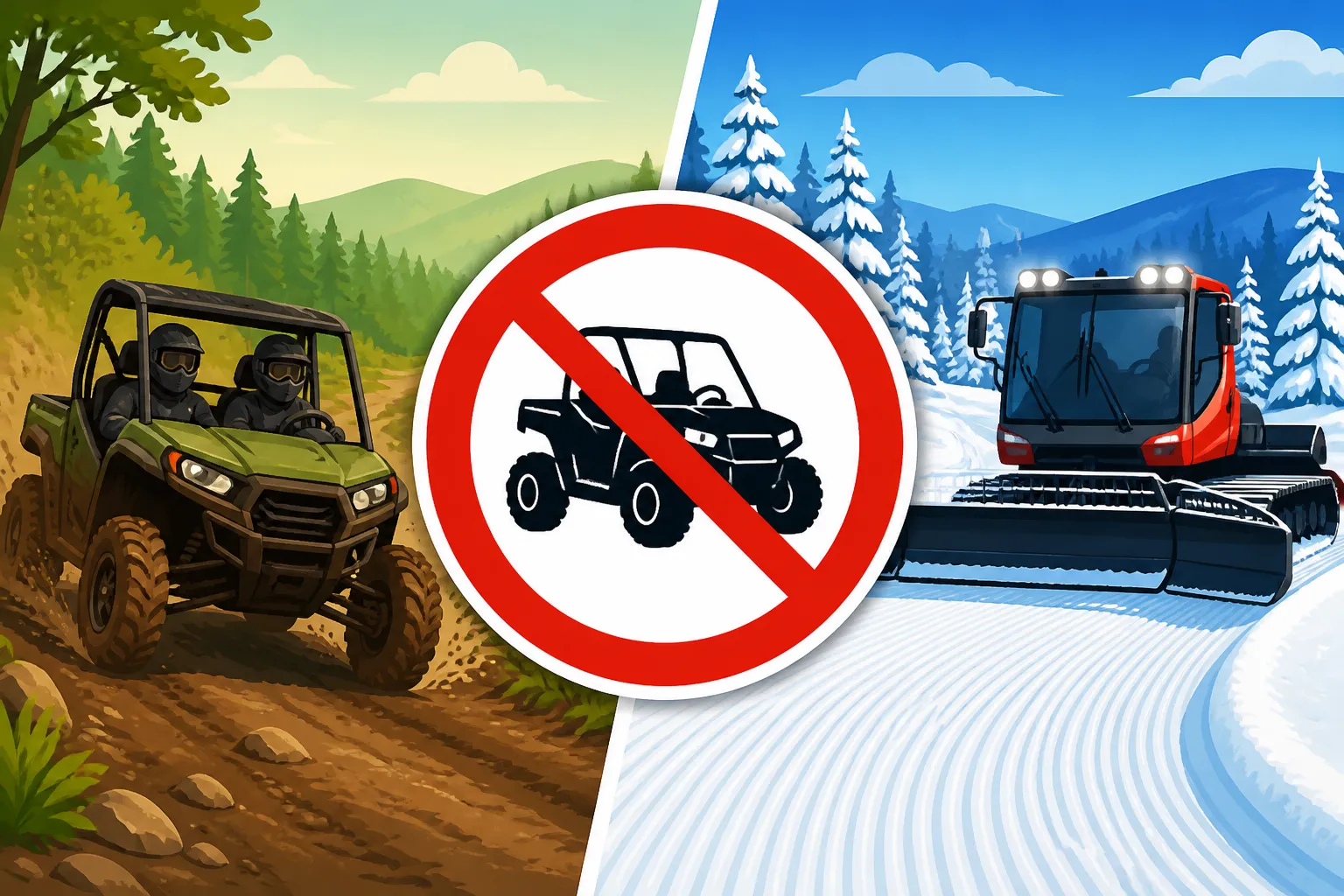
During warmer months, a trail may serve ATV and UTV riders. Once snowmobile season gets underway, that same corridor may be managed as a winter route. Grooming smooths and packs the snow so snowmobiles can travel more safely and comfortably. It can involve heavy equipment, repeated passes, and careful work to establish a usable surface.
That packed surface is not simply a winter version of a dirt trail. A wheeled machine can break through the snow, expose rocks or mud, and leave deep ruts. Those ruts may freeze into bumps that are difficult for snowmobilers to navigate and may take extra work to repair. In other words, a short ride on wheels can affect the trail long after the ATV or UTV has left.
Grooming also requires room to work. Equipment operators may have limited sightlines, and riders approaching from the opposite direction can create a dangerous situation. Keeping wheeled machines off a trail while grooming is underway helps protect both the people operating equipment and the surface they are preparing.
Shared corridors need clear seasonal boundaries
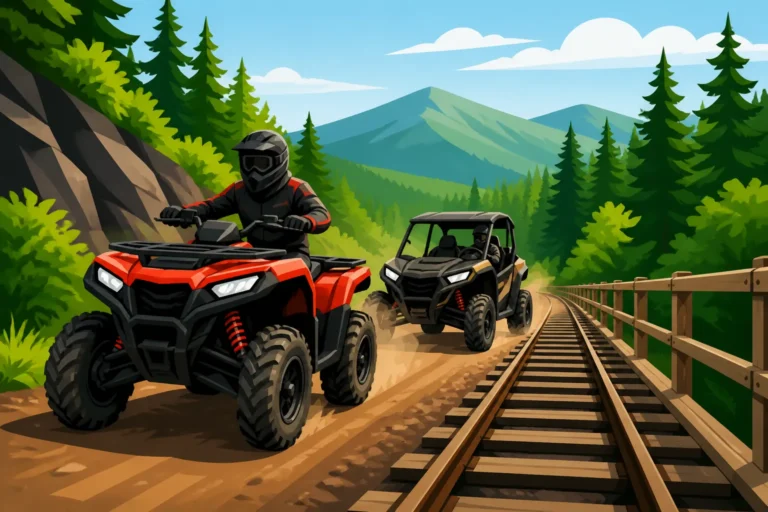
New Hampshire’s trail network includes corridors used by different kinds of machines at different times of year. Some routes support summer riding and winter snowmobiling, while others have more limited access or close when conditions change. The word “trail” can make it sound as though access remains the same year-round, but the allowed use may depend on the season, landowner agreements, trail design, and local club management.
A corridor may be closed to wheeled OHRVs even before grooming equipment is actively working on it. Clubs and land managers may need time to prepare routes, protect soft ground, or coordinate winter access. Conditions can also vary between nearby trails: one may be ready for snowmobile use while another remains closed or is not groomed at all.
This is why it is risky to assume that a trail remains open just because you rode it earlier in the year. The seasonal shift is explained further in Why a Snowmobile Corridor Shuts in Summer and Trails That Carry Quads in Summer and Sleds in Winter. The important takeaway is that shared use does not necessarily mean simultaneous use.
What grooming season means for ATV and UTV riders
A closure can protect the trail and the riding season
Trail closures can feel inconvenient, especially if you have already driven north, arranged a place to stay, or planned a full day around a route. But riding over soft, wet, or freshly packed snow can damage a trail that clubs and volunteers have spent time maintaining. When a trail is damaged, repairs can take time and may affect later access.
In New Hampshire, many trail routes depend on permission from landowners and on volunteer work by local clubs. A landowner may be more willing to keep a corridor open when users respect seasonal restrictions and posted closures. Ignoring a sign can jeopardize access not only for one rider, but potentially for everyone who relies on that route.
Closures also reduce conflicts between trail users. A groomer may be large, slow-moving, and difficult to maneuver around, particularly on a narrow corridor or a route with limited visibility. Even if you do not see equipment at the trail entrance, it may be working farther along the route. A closure is not an invitation to ride in until you reach the groomer; it is a boundary to respect.
Winter access is not automatically open to every machine
A trail that is used by snowmobiles in winter is not automatically open to ATVs and UTVs. The permitted machine type, access dates, and trail conditions can differ by route. Width limits also matter on some trails, so a machine that fits elsewhere may not be permitted on a particular corridor. Check the specific route rather than relying on a general assumption about “winter trails.”
If you ride a snowmobile as well as an ATV, remember that the access rules and trail preparations for one machine type do not automatically apply to the other. New Hampshire Rules for Riding a Snowmobile Trail and Whether a Club Trail Allows Tracks in Winter are useful related topics, but the local trail status and posted signs still matter for the route you intend to use.
A quick comparison can help clarify what to check before heading out:
| What you see or hear | What it may mean for an ATV or UTV ride | What to do |
|---|---|---|
| A posted seasonal closure | Wheeled OHRVs may no longer be permitted on that section | Do not enter; confirm the closure with the responsible club or land manager |
| A trail listed as a snowmobile route | Winter use may be intended for snowmobiles, not wheeled machines | Check the route’s specific rules and current status |
| Grooming equipment nearby | Work may be underway, with limited visibility and room to pass | Stay off the closed route and follow posted directions |
| A route shown as open on an older map | The information may not reflect a new closure or changing conditions | Check a current trail-status update before leaving |
| A nearby trail is open | Access may differ between corridors and clubs | Verify each section of your planned route |
How to check trail status before you ride
Start with the people responsible for the trail
Before loading your machine, identify the club or organization responsible for the route. Trail status can change with weather, ground conditions, landowner requests, and winter preparations. A map that shows where a trail runs may not tell you whether it is open today or whether ATVs and UTVs are allowed during the current season.
Look for recent trail-condition notices from the club, posted updates at staging areas, and signs at trail entrances. If you are connecting routes maintained by different clubs, check each section. One open stretch does not guarantee that the next trail is open, and a closure in the middle of a planned loop can require a substantial detour.
Tools such as onX Offroad can help you plan and keep track of routes, but a mapped line should not be treated as proof that a trail is open. Use mapping to understand where a corridor goes, then confirm access through the club or current trail-status information. This is especially useful when you are planning a ride in an unfamiliar area and need to identify which clubs or trail systems to contact.
Build a backup plan instead of counting on a last-minute workaround
A closure is much easier to manage when you discover it before you arrive. Check the status shortly before your trip, then look for an alternate route that is confirmed open to your machine type. If you cannot verify a connecting segment, avoid building your whole day around it.
For example, imagine planning a loop through the North Country that crosses several club areas. One section may be closed for winter preparation even though the trailhead and the rest of the loop look usable. A current club update could help you choose a different starting point or a shorter out-and-back route before you have unloaded.
Keep a downloaded or offline map as a navigation aid, but remember that offline maps may not include last-minute closure information. onX Offroad can help you keep route details available when cellular service is limited; it should complement, not replace, local status checks. In remote areas, it is sensible to share your intended route and expected return time with someone who is not riding with you.
For practical trip planning, New Hampshire Trail Status Before You Ride and New Hampshire Trail Closures to Check First are useful starting points. If you are riding in the north, Clubs That Post Trail Conditions Every Day may also help you find updates before heading toward a staging area.
What to do when you encounter a closure
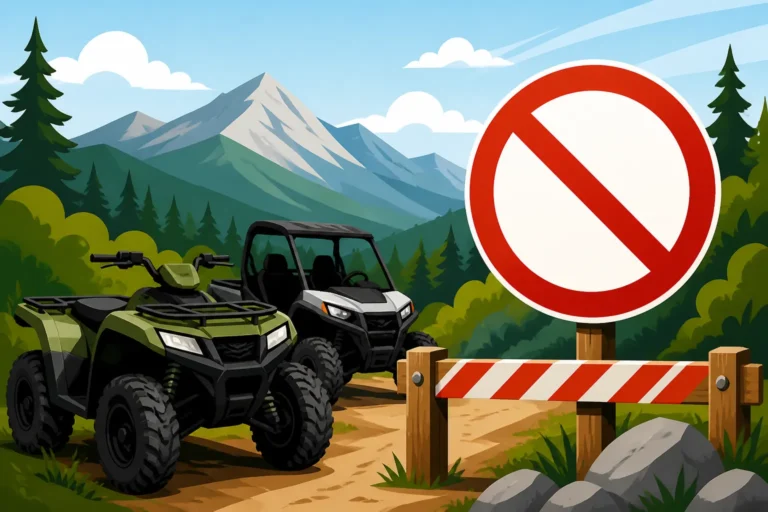
Treat signs and barriers as the end of the route
If you reach a closed sign, gate, or barrier, turn around rather than trying to squeeze around it or find an unofficial bypass. Riding around a barrier can take you onto private property, damage a trail edge, or put you in an area where equipment operators do not expect wheeled traffic. A closure is not limited to the part of the trail where the sign is placed; it may apply to the route beyond it.
Do not assume that a closure is temporary just because the surface looks rideable, or that a trail is open because there are tire tracks. Tracks may be old, unauthorized, or left before the closure took effect. The safest choice is to follow the posted direction and confirm the route’s status before returning.
If the sign is unclear or appears to conflict with a recent update, contact the responsible club or land manager for clarification. Avoid relying on a guess at the trailhead. New Hampshire Trail Maps From a Club can help with route planning, while New Hampshire Trail Conditions Before You Ride focuses on checking conditions before setting out.
Help keep access available for future seasons
Respecting a seasonal closure is one of the simplest ways riders can support continued access. Clubs often rely on volunteers to maintain trails and communicate with landowners. A damaged trail, an unsafe encounter with grooming equipment, or repeated disregard for signs can make that work harder and put future access at risk.
If you discover that a route is blocked, damaged, or signed in a confusing way, report the issue to the appropriate club rather than moving signs or trying to clear the route yourself. Do not ride around a closure to “see how far it goes.” The trail may be closed for a reason that is not visible from the entrance, including soft ground, active work, or a landowner restriction.
A little flexibility makes winter transition easier. Check status before leaving, keep a confirmed alternative in mind, and be willing to change plans when conditions shift. That approach may save a wasted trip, but it also helps protect the corridors that make New Hampshire riding possible in the seasons when they are open.
Disclaimer
This article is for general informational purposes only and does not constitute professional advice. Laws, prices and regulations vary by location and change over time. Consult a qualified professional for guidance on your specific situation.