Sight Lines at a New Hampshire Crossing
One of the most nerve-wracking moments for any ATV or UTV rider in New Hampshire, especially if you're exploring new trails, is when that familiar dirt or gravel path suddenly meets a paved road. You've been enjoying the freedom of the woods, perhaps chatting with your riding buddies, and then BAM – you're faced with the immediate, critical need to safely cross traffic. It's not just about stopping; it's about seeing, and being seen, and knowing what "good sight lines" truly mean. This guide will help you understand and master the art of safe road crossings in the Granite State, ensuring your adventures stay fun and safe.
The Real Challenge of Crossing New Hampshire Roads on an OHRV
Let's be honest, transitioning from a winding, wooded trail onto a busy paved road can feel like shifting gears from a peaceful cruise to a high-stakes obstacle course. The stakes are much higher when you're crossing, and it's not just about avoiding a ticket – it's about avoiding serious accidents. This isn't just theory; it's the bedrock of responsible OHRV riding in our beautiful state.
Why Sight Lines Aren't Just a "Suggestion"
When we talk about "sight lines," we're really talking about your ability to see approaching traffic and, just as importantly, their ability to see you. It's a two-way street, quite literally. New Hampshire law, and common sense, demands that you exercise extreme caution at any road crossing. Think about it: you're likely on a machine that sits lower or higher than typical passenger cars, you're transitioning from one surface to another, and your speed and maneuverability are different from a road vehicle.
The frustration is real when you approach an intersection where the view is blocked by a stand of pines, a large rock outcrop, or even just some overgrown summer foliage. You might think, "I'll just creep out," but that's a gamble. A poor sight line can turn a routine crossing into a truly dangerous situation in a blink. It's why officials take it so seriously, and why we as riders need to prioritize it above all else. Ignoring clear sight lines isn't just risky; it's a direct invitation for trouble, and it can sour the experience for everyone by leading to accidents or even stricter regulations for our sport.
The "Stop Before Every Road Crossing" Rule
This isn't a suggestion; it's a non-negotiable commandment for OHRV riders in New Hampshire: you must come to a full and complete stop before crossing any public way. We've talked about it before in depth in [Why You Must Stop Before Every Road Crossing], but it bears repeating. This isn't just a rolling stop or a quick slowdown. We're talking about bringing your machine to a complete standstill, ideally before the tires even touch the pavement.
Why is this so crucial? Because it gives you a moment – a precious moment – to assess the situation. It forces you to look, listen, and plan your crossing. When you're rolling, your focus is often still on braking or anticipating the next move. A full stop allows your brain to shift gears, to actively scan for traffic, and to verify those critical sight lines. It also gives any approaching motorists a clear indication of your intent: you are stopping, you are waiting, and you are preparing to cross safely. It’s a small pause that makes an enormous difference in safety and compliance.
What "Good Sight Lines" Actually Mean for OHRV Riders
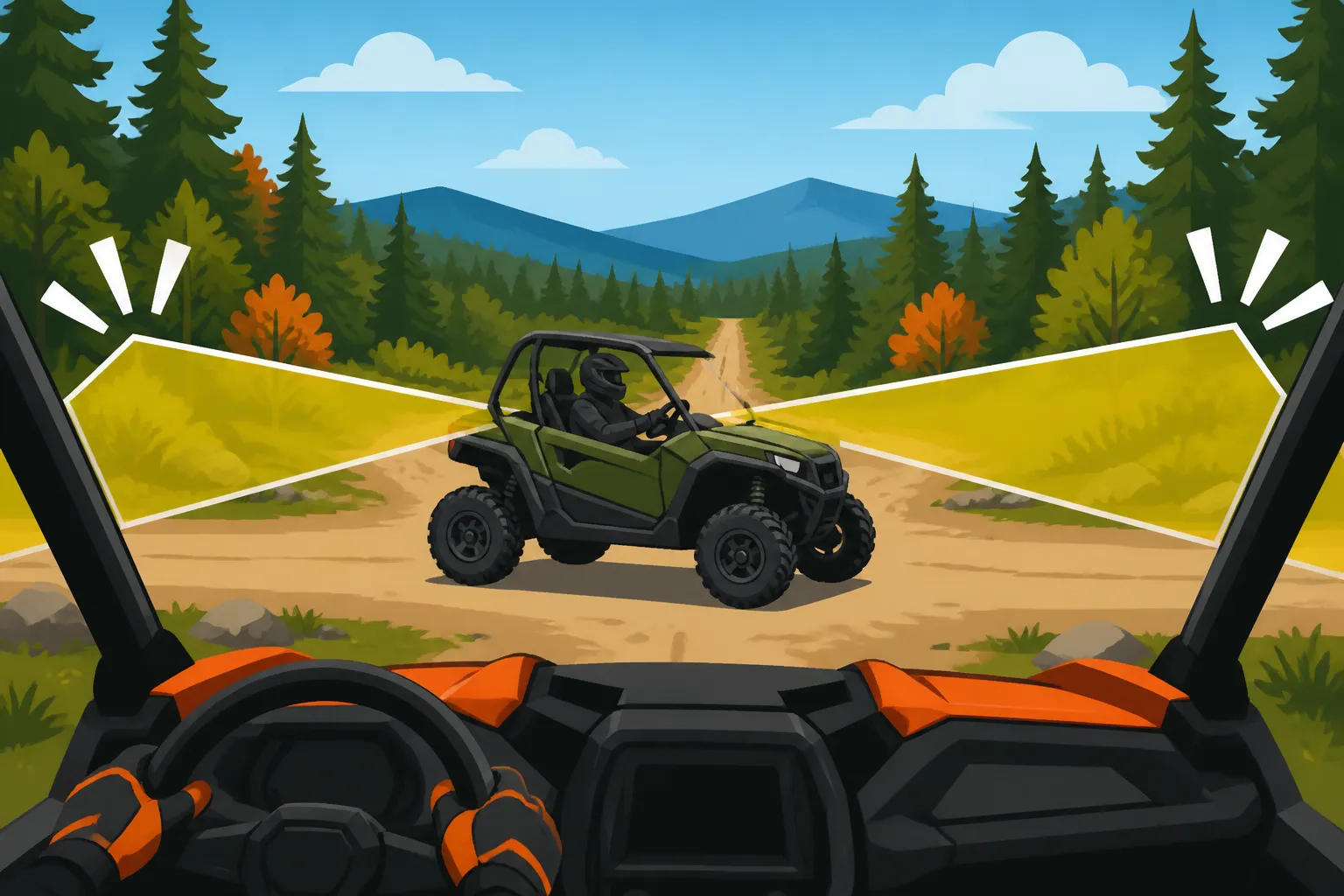
"Good sight lines" might sound like a technical term, but for OHRV riders, it boils down to one thing: having a clear, unobstructed view of the road you're about to cross, far enough in both directions to make a safe judgment call. It's about seeing that car or truck long before it's right on top of you, and knowing you have ample time to cross.
Looking Left, Right, and Back Again
When you come to that mandatory stop, your head should be on a swivel. It’s not just a quick glance. You need to perform a thorough scan:
- Look Left First: Traffic from your left is typically closer and reaching you sooner if you're approaching from the right side of the trail. Scan as far down the road as you can see.
- Look Right: Once you've checked left, shift your gaze to the right. Again, scan as far as possible. Are there any driveways or hidden entrances that a vehicle could suddenly emerge from?
- Back to the Left: Do a quick re-check to the left. Road conditions and traffic can change rapidly.
- Consider Your Machine: Are you on a low-slung sport quad, or a tall side-by-side like a Polaris Ranger or Can-Am Defender? Your height affects your line of sight. A tall UTV might give you a better view over some small bushes, but it also presents a larger target and might take longer to accelerate across.
This continuous scanning, especially for both directions, is your primary defense. It's about being proactive, not reactive. You're not just looking for "no traffic now"; you're looking for "enough clear road to cross safely."
Dealing with Obstructions and Blind Spots
This is where the rubber meets the road, or more accurately, where the trail meets the road with a headache attached. New Hampshire's scenic beauty often comes with challenges like dense tree lines, tall brush, or rolling terrain that can create frustrating blind spots. It's a common complaint among riders: "I can't see anything until I'm practically in the road!"
When you encounter these situations, you need to be extra cautious:
- Inch Forward Slowly: If your view is completely blocked at the stop line, you might need to creep forward, a few inches at a time, until you can safely see. Do this with extreme care, keeping your foot near the brake, ready to stop instantly. Do not enter the travel lane of the road.
- Use the "Buddy System": If you're riding with a friend, one of you can act as a spotter, giving a clear signal when the road is clear. This is particularly helpful for longer groups or where visibility is very poor.
- Listen Actively: Sometimes you'll hear a vehicle before you see it, especially large trucks or loud motorcycles. Turn off your engine for a moment if needed to listen more clearly, especially if you're riding a machine with a louder exhaust.
- Consider Aftermarket Solutions: For UTVs, wider mirrors or convex mirrors can sometimes give you a broader field of view, helping to mitigate some blind spots. While they don't replace active scanning, quality aftermarket mirrors, perhaps from a brand like SuperATV, can definitely enhance your situational awareness by providing a better rear or side view. They offer various mirror solutions designed for off-road machines, which can be invaluable when trying to see what's coming.
The key is never to assume the road is clear just because you can't see anything. Always proceed as if there could be oncoming traffic hidden by an obstruction.
Practical Strategies for Improving Your Road Crossing Safety
Beyond just looking left and right, there are active strategies you can employ to make every road crossing as safe as possible. It's about preparing, communicating, and utilizing your equipment effectively.
Preparing for the Crossing Before You Get There
Safety at a road crossing actually begins long before you even see the pavement. Thinking ahead can dramatically reduce the risks.
- Study Your Maps: Before you head out, familiarize yourself with your route. Identify where the trail crosses paved roads, and note if those intersections are known for poor visibility or heavy traffic. Many online trail maps and apps will indicate road crossings.
- Anticipate the Transition: As you approach a known crossing point, reduce your speed. Give yourself ample time to react, brake smoothly, and observe your surroundings. A surprise road crossing is a dangerous one.
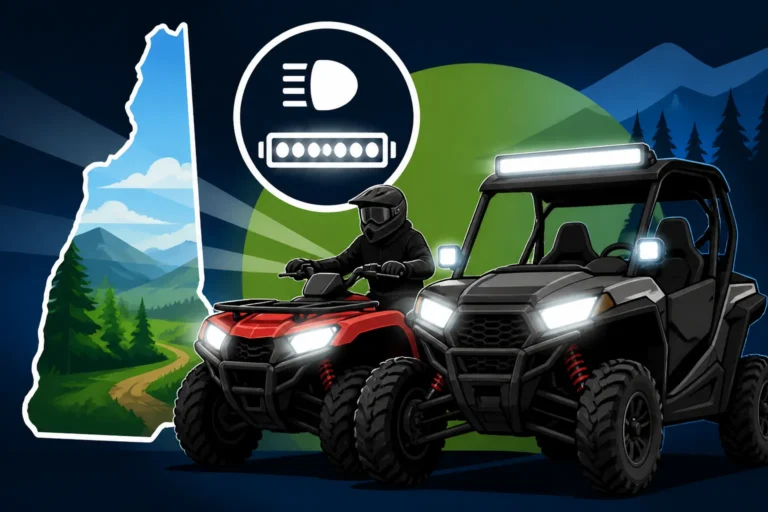
- Make Yourself Visible: Always ride with your headlights and taillights on, even during the day. Brightly colored riding gear can also help you stand out. The more visible you are to oncoming traffic, the better. This is especially true on trails where you might be merging onto a road from a thick tree line. [New Hampshire Lighting Requirements for OHRVs] are in place for a reason – follow them diligently.
Communication and Group Riding Tactics
Riding in a group adds another layer of complexity to road crossings. Proper communication is essential to ensure everyone crosses safely.
- Lead Rider's Responsibility: The lead rider is the "eyes" of the group. They are responsible for making the initial assessment of the crossing, ensuring good sight lines, and signaling when it's safe to proceed. They should never rush, even if they feel pressure from behind.
- Staggered Crossing: When the lead rider signals clear, members of the group should cross one at a time, leaving enough space between machines for an emergency stop by a motorist if necessary. Don't create a continuous stream of OHRVs that blocks traffic for an extended period.
- Hand Signals: Develop clear, universally understood hand signals for "stop," "clear to cross," and "caution." Ensure everyone in your group knows them. This is critical in noisy environments or when helmets obscure voices.
- Tail Rider's Role: The last rider has the important job of ensuring everyone has crossed safely and that no one is left behind. They should also be aware of any traffic backing up behind the group.
Equipment That Can Make a Difference
While your vigilance and good judgment are paramount, certain equipment can certainly aid in safe road crossings.
- Enhanced Lighting: Beyond the basic requirement, consider brighter LED headlights or auxiliary lights, especially if you anticipate riding near dusk or in areas with heavy tree cover. Good lighting isn't just for your visibility; it's for others to see you.
- Quality Mirrors: For UTVs, a robust rear-view mirror and good side mirrors are invaluable. A wide, clear view of what's behind you helps in anticipating traffic that might be following you on the trail and provides critical situational awareness. [A Rear-View Mirror for New Hampshire Road Riding] is a must for any road riding, and investing in a quality set, perhaps from a company like SuperATV, can really pay off. Their mirrors are often designed for the rigors of off-road use, meaning they're built to last and provide clear visibility.
- Whips and Flags: While not always required on all trails, a bright, visible flag on a whip antenna can significantly increase your visibility, especially for lower-profile machines that might otherwise be hidden behind natural roadside features or larger vehicles. This is especially true for UTVs, which can be less visible than an ATV from certain angles.
Navigating Common New Hampshire Road Crossing Scenarios
New Hampshire offers a diverse landscape, and with it comes a variety of road crossing scenarios. Understanding the nuances of each can help you adjust your approach and stay safe.
The Dirt Trail to Paved Road Transition
This is perhaps the most common scenario, and it brings its own set of challenges. You're moving from a loose, uneven surface to a hard, smooth one.
- Braking Distance: Your braking distance will change dramatically on pavement. Plan to brake before you reach the pavement if possible, ensuring you can come to a full stop without sliding.
- Dust Clouds: If the trail is dry, your approach can kick up a significant dust cloud. This not only impairs your own visibility but also makes it harder for motorists to see you. Slow down well in advance and let the dust settle before attempting to cross.
- Traction: Be mindful of the difference in traction. Accelerating too quickly onto pavement can lead to a loss of control, especially on two-wheel drive ATVs. Similarly, sudden braking can cause skidding.
Crossing Busy State Routes vs. Quiet Town Roads
Not all roads are created equal, and your strategy needs to adapt to the traffic volume and speed. We've often discussed [New Hampshire Rules for Crossing a Highway] because these are the crossings where you need to be exceptionally cautious.
- State Routes (e.g., Route 2, Route 16): These roads often have higher speed limits and significantly more traffic, including large commercial trucks. Your window of opportunity to cross safely will be much smaller. You might need to wait longer for a genuinely clear opening. Patience is paramount here.
- Town Roads and Class VI Highways: While potentially quieter, these roads can still present hazards. Residents might not expect an OHRV, and sight lines might be compromised by residential landscaping or less maintained shoulders. Even on a seemingly deserted [New Hampshire Rules for Riding a Town Street], you should still operate with full caution. Always remember to [Riding the Far Right of a Town Road] when you do travel on them.
The Ninety-Degree Crossing Rule
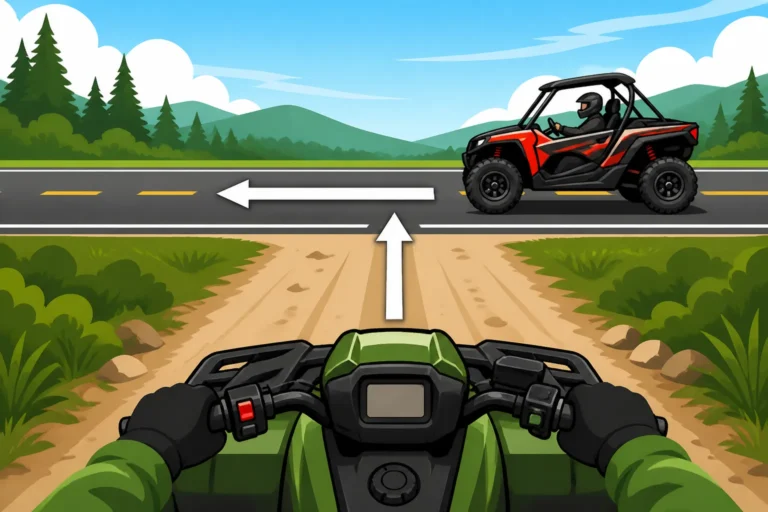
New Hampshire law is very specific about how you cross a road: you must cross it at approximately a ninety-degree angle to the public way. This isn't just a quirk; it's a safety measure. [Crossing at Ninety Degrees in New Hampshire] is fundamental.
- Minimizing Exposure: Crossing at a right angle minimizes the amount of time your machine is in the travel lane of the road. You're moving directly across, rather than traversing a longer, diagonal path.
- Predictable Movement: It makes your movement predictable for any approaching motorists. They can anticipate you moving straight across, rather than guessing if you might be turning or lingering.
- Visual Confirmation: While crossing, continue to scan. Even if you've determined it's clear, a quick glance left and right as you accelerate across ensures no sudden, unexpected developments.
When in Doubt, Don't Go: The Golden Rule
There's an old saying in the outdoors: "It's better to be safe than sorry." This holds especially true for OHRV road crossings. If you're ever uncertain, if you can't get a clear view, or if a situation feels uncomfortable, the safest decision is always to wait.
Prioritizing Safety Over Speed
It can be tempting, especially if you're riding in a group or feel pressed for time, to rush a crossing. Don't. A few extra seconds, or even a few extra minutes, waiting for a truly clear opening is insignificant compared to the potential consequences of a collision.
- Consequences of Rushing: Rushing can lead to misjudgment of speed, insufficient time to react, and ultimately, an accident. Not only could this result in severe injury, but it also reflects poorly on the entire OHRV community, potentially leading to increased restrictions.
- Set the Example: By patiently waiting for optimal conditions, you set a positive example for other riders and demonstrate responsible OHRV use to the public. This contributes to maintaining good relationships with towns and non-riders alike. Remember, you might be riding to [Riding a Town Road to Reach a Club Trail], and showing respect for traffic laws is key.
What an Officer Looks For at a Crossing
New Hampshire law enforcement officers are vigilant about OHRV safety, especially at road crossings. They are looking for compliance with regulations that are designed to protect everyone. [What a New Hampshire Officer Checks Roadside] often includes this very critical interaction.
Here's what an officer will typically observe:
- Full Stop: Did you come to a complete stop before entering the paved surface? This is often the first thing they look for.
- Observation: Did you visibly check for traffic? Head turns, scanning movements – these indicate you were being observant.
- Safe Crossing: Did you cross at a ninety-degree angle? Was your crossing swift, but not reckless? Did you yield to all vehicular traffic?
- Proper Equipment: While not directly related to sight lines, an officer will also check for proper registration, lights, and other required equipment. Failing these can add to the severity of any citation received if you also fail to cross safely. [New Hampshire Fines for an OHRV Violation] can be steep, so it's always better to follow the rules.
Stay aware, stay patient, and always prioritize your safety over making a quick crossing. The trails will still be there, and so will you, ready for more adventure. For those late-season or early-morning rides, always ensure your lighting is fully functional, especially if you anticipate riding into the dark hours. Check [New Hampshire Rules for Riding After Dark] for full details.
OHRV Road Crossing Safety Checklist
| Action | Ideal Scenario | Risky Scenario | Outcome |
|---|---|---|---|
| Approach Speed | Slow, controlled, ready to stop | Fast, unready, potential for last-minute braking | Safe stop vs. Skidding, overshooting |
| The Stop | Full, complete stop before pavement | Rolling stop, slowing down but not halting | Legal compliance vs. Citation, accident risk |
| Sight Line Visibility | Clear view 200+ feet in both directions | Obstructed by brush, hills, buildings, parked vehicles | Informed decision vs. Blind entry |
| Observation | Head on a swivel, left-right-left scan, listening | Quick glance, assumption of clear road | Full awareness vs. Missed traffic |
| Crossing Angle | Approximately 90 degrees to the road | Diagonal entry, lingering in the lane | Minimal exposure vs. Prolonged risk |
| Group Coordination | Lead signals, single-file crossing with spacing | Everyone crosses at once, no signals, little spacing | Organized, safe flow vs. Chaos, increased risk |
| Equipment Check | Lights on, mirrors adjusted, visible attire | Dim lights, dirty or broken mirrors, dark clothing | Enhanced visibility vs. Being overlooked |
| Decision Making | Wait for ample gap, err on side of caution | Rush due to impatience or group pressure | Safe passage vs. Accident, fines |
Disclaimer
This article is for general informational purposes only and does not constitute professional advice. Laws, prices and regulations vary by location and change over time. Consult a qualified professional for guidance on your specific situation.