New Hampshire Rules for Riding a Gravel Road
It's a common misconception among OHRV enthusiasts that a gravel road, simply because it's unpaved, is automatically fair game for riding. Many riders get frustrated when they realize that even those seemingly remote dirt paths are subject to the same strict regulations as any paved town street in New Hampshire. This guide is here to clarify the specific rules and realities of riding your ATV or UTV on gravel roads across the Granite State, helping you stay legal and informed.
The Default Position: Roads Are Closed to OHRVs (Unless Designated)
One of the most important things to understand about riding OHRVs in New Hampshire is that all public roads, whether they're paved superhighways or quiet gravel lanes, are closed to OHRV use by default. This isn't a suggestion; it's the law. This rule often catches riders off guard, especially those coming from states with different regulations, or even just those new to the OHRV scene. You can't just assume a road is open because it's quiet, unpaved, or looks like a trail connector. It must be explicitly designated for OHRV use by the local municipality.
Understanding New Hampshire's Road Classification System
To really grasp why even a gravel road isn't automatically open, it helps to understand how New Hampshire classifies its roads. The state has six classes of highways, ranging from major state routes to essentially unmaintained paths:
- Class I & II Highways: These are your major state highways and turnpikes, like Route 16 or Interstate 93. Absolutely no OHRV use is permitted on these, for obvious safety reasons.
- Class III Highways: These are generally older state-aid roads, often connecting towns. While not as busy as Class I or II, OHRV use is still prohibited unless specifically designated by the state (which is extremely rare) or a town has received special permission for a very short crossing.
- Class IV & V Highways: These are your city and town roads. Class IV are within urban compacts, while Class V are rural town roads. This is where most of the gravel roads you're thinking of fall. For an OHRV to ride on a Class IV or V road, whether paved or gravel, the local town's Selectboard must vote to designate that specific section of road for OHRV use. [Which of the Six Road Classes Allow OHRVs]
- Class VI Highways: These are often the most confusing. Class VI roads are public highways that have either been discontinued or never maintained. They can range from barely distinguishable tracks to passable dirt roads. While they might look like ideal OHRV trails, they are still considered public ways. While some towns might designate sections of Class VI roads, the key is still designation, not just their unmaintained status.
The bottom line is that any road, regardless of its surface or how much traffic it sees, is considered a public way and requires specific legal action by the town to open it to OHRVs.
Why Gravel Roads Aren't Automatically "Open"
The allure of a quiet, winding gravel road is strong for an OHRV rider. It feels more natural, less like riding on pavement, and often connects to the very trail systems we love. However, the legal framework doesn't differentiate between asphalt and gravel when it comes to OHRV access. A gravel road is still a "public way" in the eyes of the law, and therefore, the default "closed" rule applies.
This means that even if a gravel road looks like a perfect connector between two trailheads, or it runs through a seemingly deserted stretch of woods, you cannot legally ride your OHRV on it unless the town's Selectboard has formally designated it for OHRV use. This designation usually involves specific signage indicating that OHRVs are allowed, and often comes with additional rules like reduced speed limits or specific hours of operation. Ignoring this can lead to fines and legal trouble, turning what should be a relaxing ride into a stressful encounter with law enforcement.
The Process for Designating a Gravel Road for OHRV Use
Given that all public roads start as "closed" to OHRVs, how do any of them become open? It's a structured process that relies heavily on local town governance and community input. It’s not something that happens overnight, and it certainly isn't a decision made lightly.
Town Selectboards and Public Hearings
The authority to open town roads, including gravel roads, to OHRV traffic rests squarely with the local town's Selectboard. They are the elected officials responsible for managing the town's affairs, and that includes its public ways. If a group of OHRV riders, a local club, or even an individual wants a specific gravel road to be opened for OHRV use, they must approach their Selectboard.
The process typically involves:
- Petition or Request: A formal request is submitted to the Selectboard. This often includes maps, justifications for why the road should be opened (e.g., trail connectivity, economic benefit for a local business), and consideration of potential impacts.
- Public Hearing: If the Selectboard decides to consider the request, they must hold a public hearing. This is a crucial step for local residents to voice their opinions, concerns, or support. The town is legally required to give at least [Fourteen Days' Notice Before a New Hampshire Hearing] of this hearing, usually by posting notices in public places and sometimes publishing in a local newspaper.
- Abutter Notification: Property owners whose land abuts the road in question (known as "abutters") must be specifically notified of the public hearing, often via [Verified Mail to the Abutters]. This ensures that those most directly affected by potential OHRV traffic have a chance to participate in the discussion.
- Selectboard Vote: After hearing all sides, the Selectboard will vote on whether to designate the road or a specific section of it for OHRV use. If approved, the designation typically specifies conditions, such as speed limits, hours of operation, and whether certain types of OHRVs (e.g., ATVs vs. UTVs) are allowed. A town may designate a road as open for OHRV use, but this designation typically requires annual renewal. [A New Hampshire Selectboard Vote to Open a Road] is a local decision, and towns have the right to decline or to set strict conditions.
This thorough process ensures that opening a gravel road to OHRVs is a well-considered decision, balancing the desires of riders with the concerns of local residents and the overall safety of the community.
Signs and Trail Linkages
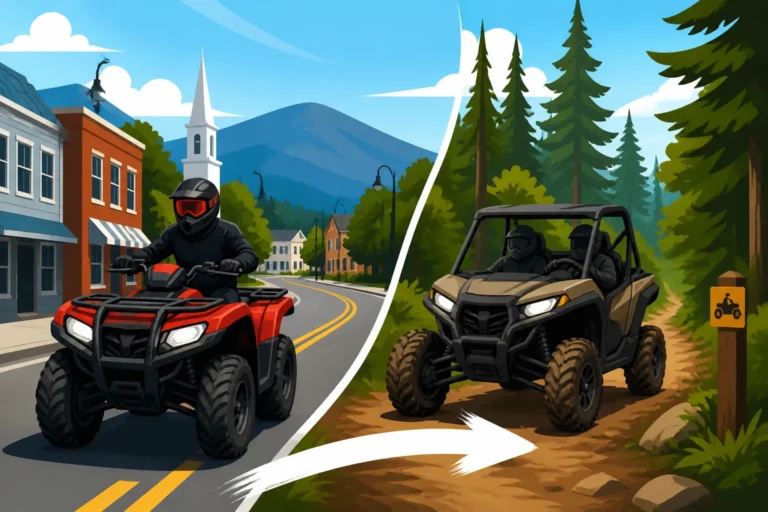
Once a gravel road, or a section of it, has been officially designated by a town's Selectboard for OHRV use, it must be clearly marked with appropriate signage. These signs are critical; they tell you, the rider, where you can legally ride and where you cannot. You'll typically see signs indicating "OHRVs Allowed" or similar, often with specific speed limits or other conditions. These are not always standard road signs, so keep an eye out for official postings from the town or local clubs.
The primary reason many towns choose to open sections of gravel roads to OHRVs is for connectivity. New Hampshire boasts an incredible network of OHRV trails, particularly in the northern regions like Coos County with the "Ride the Wilds" system. Often, these trail systems need to cross or connect via a short stretch of public road to link up different segments, allow access to fuel or food, or bypass private land where trail access isn't permitted. In these instances, a gravel road often serves as an ideal, less trafficked link.
For example, you might find a designated gravel road that allows you to ride from a major trail system directly into a small town for gas and lunch, or to connect to another section of trail across a river or over a hill. These linkages are invaluable for creating longer, more enjoyable rides. When riding on these designated roads, remember that you are sharing the space with other vehicles and residents, so always operate responsibly and respectfully. Riders often improve their vehicle's visibility for these shared sections with aftermarket accessories like brighter LED lights or mirrors from brands such as SuperATV.
Riding Etiquette and Legal Requirements on Designated Gravel Roads
So, you've found a designated gravel road that's open for OHRV use – fantastic! But just because you can ride it doesn't mean it's a free-for-all. There are specific rules, unwritten courtesies, and legal requirements that you absolutely must adhere to when operating your OHRV on any public way, designated or not.
Staying Safe and Courteous on Shared Roads
When you're riding your ATV or UTV on a designated gravel road, you are officially sharing the road with cars, trucks, residents, cyclists, and sometimes even pedestrians. This isn't your private trail, and treating it as such is not only dangerous but can also jeopardize future OHRV access for everyone.
Here are some crucial etiquette and safety tips:
- Stay to the Extreme Right: This is perhaps the most important rule. Always stay as far to the right side of the road as safely possible. This gives conventional vehicles ample room to pass and reduces the risk of head-on collisions, especially around blind corners on winding gravel roads. [Why New Hampshire Riders Keep to the Extreme Right]
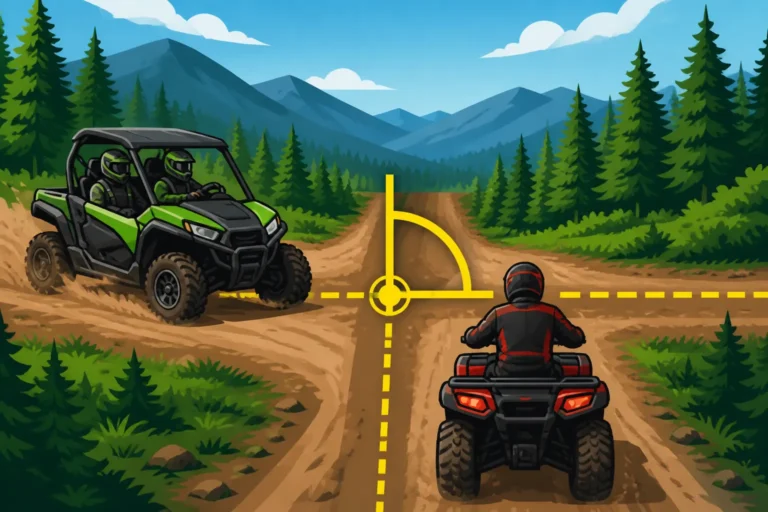
- Yield to Conventional Vehicles: Always assume conventional vehicles (cars, trucks, motorcycles) have the right-of-way. If you encounter an oncoming vehicle, slow down, move further to the right, and be prepared to stop if necessary to let them pass. If you're on a narrow stretch, pull off into a safe spot. [Yielding to Every Conventional Vehicle]
- Observe Speed Limits: Designated OHRV routes on roads often have a specific, lower speed limit for OHRVs than for cars. Even if there isn't a specific OHRV speed limit posted, operate at a safe, responsible speed. Kicking up excessive dust, especially near homes, is a sure way to annoy residents and invite stricter regulations.
- Be Mindful of Noise: While some OHRVs are naturally louder than others, try to minimize excessive noise, especially in residential areas. Aftermarket exhausts that exceed decibel limits are illegal and contribute to negative perceptions of OHRV riders.
- No Reckless Behavior: Wheelies, donuts, excessive speed, or other stunts are absolutely forbidden on public roads. This isn't just about safety; it's about showing respect for the community and ensuring OHRV access remains viable.
Remember, every time you ride on a designated road, you are an ambassador for the entire OHRV community. Your actions can positively or negatively influence public opinion and future decisions about road access.
Equipment and Registration Essentials
Just like on the trails, your OHRV needs to be properly equipped and registered when riding on any designated public way, including gravel roads. There are no exceptions for short road sections or quick trips.
Key requirements include:
- Registration and Decals: Your OHRV must be registered with the State of New Hampshire, and your current registration decals must be properly affixed to your machine. Law enforcement can, and often does, check this. You also need to carry your printed Certificate of Registration with you. [New Hampshire OHRV Decals and the Certificate]
- Headlight and Taillight: If you're riding at dusk, dawn, or in low light conditions (or if required by local ordinance), your OHRV must have a working headlight and taillight. These are essential for visibility, especially on dusty gravel roads where visibility can be reduced.
- Rear-View Mirror: For OHRVs operated on a public way, at least one functional rear-view mirror is often required. This allows you to see traffic approaching from behind and is a critical safety feature when sharing the road. Many riders opt for robust aftermarket mirrors, possibly from a brand like SuperATV, to ensure they meet requirements and have clear visibility.
- Spark Arrester: Your OHRV must be equipped with a U.S. Forest Service-approved spark arrester in good working order. This is a fire safety requirement that applies everywhere, including designated road sections.
- Safety Certificate (for minors): If you are under 18, you generally need to have completed an approved OHRV safety course and carry your safety certificate. While adults with a valid driver's license are exempt from the safety certificate requirement, everyone must be aware of and follow the rules.
Failure to meet these requirements can result in fines and potentially having your ride cut short. Always do a quick pre-ride check to ensure your machine is in compliance before you head out, especially if your route includes designated road sections.
Common Misconceptions and What to Avoid
Despite clear regulations, there are still several common misunderstandings that trip up OHRV riders in New Hampshire when it comes to riding on roads, especially gravel ones. Avoiding these pitfalls is crucial for a safe and legal riding experience.
The "Unposted Means Open" Myth
This is perhaps the most dangerous and widely held misconception among OHRV riders: "If there isn't a 'No OHRV' sign, it must be okay to ride there." In New Hampshire, this is absolutely false. The default position for all public roads, including gravel roads, is that they are closed to OHRV use.
Think of it this way: you don't need a sign telling you not to drive your car on a private hiking trail, because the default is that roads are for cars, and trails for hikers (unless designated for mixed use). Similarly, for OHRVs, the default for all roads is "no access," unless there's a specific, official sign stating that OHRVs are allowed.
Relying on the absence of a "No OHRV" sign is a recipe for trouble. You could easily find yourself facing a ticket for illegal operation on a public way, which carries significant fines. [Why New Hampshire Roads Are Closed by Default] exist precisely because the burden is on the municipality to open them, not on riders to interpret the lack of a prohibitory sign as permission. Always look for positive signage indicating permission, not the absence of a negative sign.
Private Gravel Roads vs. Public Ways
Another area of confusion revolves around distinguishing between a public gravel road and a private gravel road or driveway. While both may look similar—unpaved, leading into woods or to a few homes—their legal status for OHRV use is entirely different.
- Public Gravel Roads: These are maintained by the town or state (even if minimally, like a Class VI road), are generally open to public travel by conventional vehicles, and are the types of roads that can be designated for OHRV use by the Selectboard.
- Private Gravel Roads/Driveways: These are owned and maintained by private individuals or entities. They might lead to a single residence, a hunting camp, or connect to private logging operations. Even if they appear to lead to public land or trails, you absolutely cannot ride on them without explicit, written permission from the landowner. [New Hampshire Written Permission Requirements] are clear on this.
Riding on a private gravel road without permission is trespassing, a serious offense that can lead to legal action, fines, and severely damage relations between landowners and OHRV riders. Many of New Hampshire's trails exist thanks to the generosity of private landowners, and trespassing jeopardizes that access for everyone. If you're unsure if a road is public or private, err on the side of caution and assume it's private unless clearly marked otherwise. If you do find yourself on challenging, unmapped private terrain, having reliable recovery gear, like a durable winch from SuperATV, could be a lifesaver if you get stuck, but it's always best to stick to designated paths.
Road Classes and OHRV Access
Understanding the various road classifications in New Hampshire is key to knowing where you can and cannot ride your OHRV. Here’s a quick overview of how OHRV access generally aligns with each class:
| Road Class | Description | OHRV Access Status (Default) | Common Use for OHRVs (if Designated) |
|---|---|---|---|
| Class I | Major State Highways (e.g., I-93, US-3) | Closed | None. |
| Class II | Primary State Routes (e.g., NH-16, US-2) | Closed | None. |
| Class III | Secondary State Routes, often connecting towns | Closed | Very rare, short crossings possible only with specific state/local permits. |
| Class IV | City/Urban Town Roads | Closed | Short connector routes to link trails or access services within towns. |
| Class V | Rural Town Roads (often gravel or paved, well-maintained) | Closed | Primary for designated OHRV routes, especially gravel connectors to trails. |
| Class VI | Unmaintained Public Ways (discontinued, unaccepted, or unmaintained roads) | Closed (but often easier for towns to designate if suitable) | Often designated to link trails, access remote areas, or form parts of loops. |
This table illustrates that while all roads start as closed, Class IV, V, and especially VI roads are the ones where you might find designated OHRV access, typically through the local town's Selectboard. Always look for official signage.
Disclaimer
This article is for general informational purposes only and does not constitute professional advice. Laws, prices and regulations vary by location and change over time. Consult a qualified professional for guidance on your specific situation.