New Hampshire Rules for a Machine Over 50 Inches
It's incredibly frustrating to invest in a fantastic, powerful off-road machine, only to arrive at your favorite New Hampshire trailhead and realize your pride and joy might be too wide for the very trails you came to explore. Modern side-by-sides, in particular, often push past traditional width limits, creating a real headache for riders. This guide will meticulously break down New Hampshire's specific regulations for OHRVs over 50 inches wide, helping you understand where you can legally ride and how to avoid unwelcome surprises.
Understanding New Hampshire's OHRV Width Regulations
When you're out on the trails in New Hampshire, you'll encounter a variety of rules designed to keep everyone safe, protect the environment, and maintain access for all riders. One of the most common and often misunderstood regulations revolves around the width of your Off-Highway Recreational Vehicle (OHRV). While many newer machines, especially side-by-sides, are getting wider and more capable, many of New Hampshire's trails were simply not designed with these larger dimensions in mind.
The Historical Context of Trail Design
Think about how many of New Hampshire's amazing OHRV trails came to be. Many were originally old logging roads, disused railway corridors, or simply paths carved out through decades of use. These older paths, particularly the rail trails, often feature bridges, culverts, or rock formations that create natural chokepoints. When these trails were formally adopted into the state's OHRV system, or when clubs began maintaining them, it was often with specific equipment and established norms for what an "ATV" was – typically a quad that easily fit within a 50-inch width. To expand these narrow sections to accommodate every new machine would be an astronomical undertaking, not to mention a potential environmental nightmare in some sensitive areas. So, rather than altering the landscape for every new vehicle, the rules were put in place to ensure machines fit the existing infrastructure.
Moreover, a significant portion of the OHRV trail network in New Hampshire relies on landowner permission. Clubs work tirelessly to build and maintain relationships with private landowners, allowing access across their property. These agreements often come with stipulations, and one common condition is respecting the trail's footprint. A wider machine tearing up the edges of a trail, encroaching on private land, or causing damage to sensitive areas can quickly sour these relationships and lead to trails being closed permanently. The 50-inch rule, therefore, isn't just arbitrary; it's a reflection of historical development, practical limitations, and vital landowner cooperation. For a broader look at how these trails are governed, you might want to check out [New Hampshire Club Trail Network].
Measuring Your Machine Accurately
So, how exactly do you measure your OHRV to ensure it complies with New Hampshire's width regulations? It's crucial to measure your machine at its widest point, which almost always means from the outermost edge of your tires, including any bulge, to the outermost edge of the opposite tire. This isn't just the width of the chassis; it's the full envelope your machine occupies on the trail. If you've added aftermarket accessories, like wider A-arms, offset wheels, or even a robust set of SuperATV fender flares, these can (and often do) increase your overall width beyond the factory specification. Always measure your machine as it will be ridden on the trail. Don't eyeball it; use a tape measure and double-check. It's much better to know your true width before you haul your machine all the way north than to find out at a trailhead gate. For more specific guidance, consider looking at [Measuring Your Machine Before You Drive North].
Many modern side-by-sides, even some "sport" quads, are designed to be wider for stability and performance. Factory specifications for many popular models now routinely exceed 50 inches. This means that while your machine might be perfectly legal and appropriate for other states or private property, it could encounter restrictions on public trails in New Hampshire. Knowing your exact width is the first step in responsible trail planning.
Where Wider OHRVs Can Legally Ride in New Hampshire
Just because your machine is over 50 inches wide doesn't mean you're out of luck in the Granite State. New Hampshire offers fantastic riding opportunities for larger OHRVs, but it requires knowing where to go and doing your homework beforehand. The key is understanding that width restrictions are trail-specific, not state-wide.
Designated Trails and Systems for Wider Machines
The good news is that New Hampshire has made significant strides in accommodating wider machines, especially in the northern part of the state. The most prominent example is the legendary [Ride the Wilds in Coos County], an interconnected network of over 1,000 miles of trails in the Great North Woods. Many sections of this expansive system, managed by various OHRV clubs, are specifically designed to handle machines wider than 50 inches. Often, you'll find these trails accommodate widths up to 65 inches or even more in certain areas, particularly on former logging roads that have been integrated into the network.
Another prime destination for wider machines is [Jericho Mountain State Park at Berlin]. Jericho Mountain boasts a dedicated trail system with a variety of terrain and scenic overlooks, and it is known for being very accommodating to side-by-sides and other larger OHRVs. They even have specific trails for rock crawling and challenging terrain that are clearly marked for their width allowances. When planning your trip, always check the specific club websites or the New Hampshire Bureau of Trails website for the most up-to-date information on trail status and width limits. These resources often include maps and detailed descriptions that clearly indicate which trails are suitable for wider machines. You can also consult resources like [New Hampshire Trails With a 65 Inch Limit] to find suitable trails.
Private Land and Landowner Permission
Of course, if you own private land in New Hampshire, or if you have explicit, written permission from a private landowner, then the width of your OHRV generally isn't an issue. On private property, the landowner sets the rules for use. However, it's absolutely critical to ensure you have that permission, and that it's clear what you are allowed to do. Simply seeing an unposted trail on someone's property does not grant you permission to ride, regardless of your machine's width. Always secure permission beforehand and respect the landowner's wishes. [New Hampshire Landowner Permission Rules] offers more insight into this important aspect of responsible riding.
Roads Designated for OHRV Use
Some towns and municipalities in New Hampshire have taken the initiative to open certain public roads for OHRV use. These are typically secondary or gravel roads, not major state routes, and they are usually opened by a vote of the local selectboard. When riding on these designated town roads, the OHRV width limits that apply to some trails often do not apply, as the roads are already designed for full-size vehicles. However, when riding on any public road, even those designated for OHRV use, you must adhere to all traffic laws, speed limits, and any specific local ordinances. Always look for signage indicating that the road is open to OHRVs and be aware of any time-of-day restrictions or other rules. This can be a great way to link trail sections or access services, but always ride cautiously and be respectful of other road users. Learn more about where this is possible by reading [New Hampshire Towns That Allow OHRVs on Roads].
The Risks and Responsibilities of Riding an Oversized Machine
Attempting to ride an OHRV that exceeds the posted width limits on a particular trail isn't just a minor infraction; it carries significant risks and can lead to consequences that affect not only you but the entire OHRV community. Understanding these risks is part of being a responsible rider in New Hampshire.
Physical Obstacles and Trail Gates
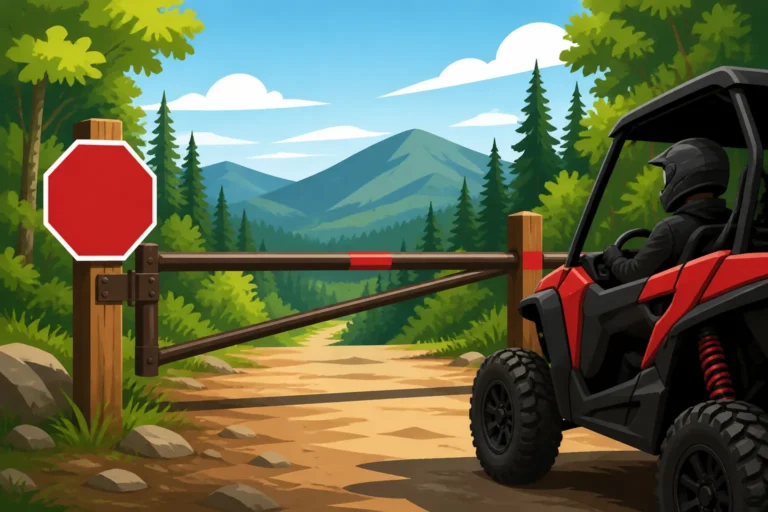
New Hampshire trail systems, especially those with 50-inch restrictions, are often physically designed to enforce these limits. You'll frequently encounter metal gates, bollards, large rocks, or even strategically placed trees that create narrow openings. These aren't there to annoy you; they're there to protect the trail, prevent erosion, and maintain the integrity of the system. Trying to force a wider machine through these obstacles can result in significant damage to your OHRV, potentially snapping axles, bending control arms, or ripping off body panels. It's a costly mistake that's easily avoided by knowing your machine's width and the trail's limits. Many riders have stories of getting stuck, needing recovery, and ruining a day of riding because they gambled on fitting through a tight spot.
Beyond the physical damage, such actions can damage the trail itself. Widening a trail by force, tearing up the shoulders, or knocking over trail markers can lead to erosion, impact sensitive wetlands, and ultimately threaten the very access we cherish. It's a lose-lose situation that nobody wants.
Enforcement and Consequences
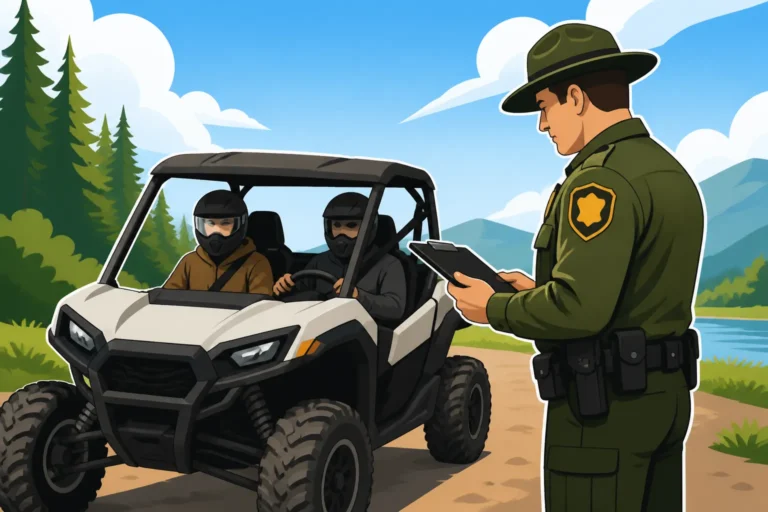
New Hampshire Fish and Game Conservation Officers regularly patrol OHRV trails, and they are well-versed in the regulations, including those pertaining to machine width. If you are caught operating an OHRV on a trail where its width exceeds the posted limit, you can face significant fines. These aren't just slaps on the wrist; New Hampshire takes its OHRV regulations seriously. A fine can quickly add up, turning an enjoyable day into a very expensive lesson.
Furthermore, getting a citation for an OHRV violation can impact future riding privileges and, in some cases, even affect your regular driving record, depending on the severity and nature of the offense. It's always better to err on the side of caution and ensure you're compliant with all rules and regulations before you hit the trail. For a detailed breakdown of potential penalties, you might find [New Hampshire Fines for an OHRV Violation] to be a helpful read. These officers are there to ensure everyone's safety and the longevity of the trail system, and they will enforce the rules.
Respecting Landowner Agreements
As mentioned earlier, much of New Hampshire's OHRV network exists thanks to the generosity and cooperation of private landowners. OHRV clubs spend countless hours cultivating these relationships, negotiating leases, and ensuring that riders respect the agreements in place. When riders disregard trail rules, such as width limits, it undermines these relationships. A landowner who sees their property being damaged, or trails being widened beyond what was agreed upon, may withdraw their permission, leading to the closure of entire sections of trail. This can have a cascading effect, impacting dozens or even hundreds of miles of interconnected trails and diminishing the riding experience for everyone. Every rider has a responsibility to uphold these agreements to ensure that trail access remains open for future generations.
Strategies for Enjoying New Hampshire with a Wider OHRV
Having a wider OHRV doesn't mean you can't have an incredible time exploring New Hampshire's scenic trails. It simply means you need a slightly different approach to planning and preparation. With a little foresight, you can maximize your riding enjoyment and stay within the rules.
Researching Trails Before You Go
This is perhaps the single most important piece of advice for riders with wider machines. Before you even load your OHRV onto the trailer, make sure you know exactly where you plan to ride and what the specific width restrictions are for that area. Don't rely on old maps or hearsay. The best resources are the official New Hampshire Bureau of Trails website, and the websites of the individual OHRV clubs that maintain the trails.
Many clubs provide detailed trail maps online, often with color-coded routes indicating difficulty and width allowances. Check [New Hampshire Trail Conditions Before You Ride] or download [New Hampshire Trail Maps From a Club] directly from the relevant club's site. Pay close attention to any symbols or legends that denote width limits. It's also a good idea to call the club or a local OHRV agent if you have any lingering questions. A quick phone call can save you a lot of time, frustration, and potential fines.
For instance, while a trail might be generally open to wider machines, it could have specific sections, bypasses, or bridges that still have a 50-inch restriction. Knowing this in advance allows you to plan an alternative route or avoid that particular section altogether.
Considering Aftermarket Solutions and Alternatives
While it's unlikely you'll want to buy a complete "narrowing kit" for your wide side-by-side every time you come to New Hampshire, being aware of your machine's exact dimensions is key. If your OHRV is just slightly over the 50-inch mark, you might consider adjusting tire pressure (within safe limits) or even looking into narrower offset wheels if trail width is a consistent issue for you and you primarily ride 50-inch trails. However, for most modern, wider machines, these are not practical solutions.
Instead, a more realistic alternative for some riders might be to rent a smaller, 50-inch machine for specific excursions into restricted areas. Many rental companies in the northern part of New Hampshire, such as those in Gorham or Pittsburg, offer a range of machines. This allows you to experience all of New Hampshire's diverse trail offerings without having to buy a second machine. Some rental outfits even specify the width of their fleet, so you can specifically inquire about 50-inch options. Check out [Renting a Side-by-Side in New Hampshire] for more information on rental options.
Another aspect to consider is how aftermarket accessories from companies like SuperATV might affect your machine's width. While lift kits and larger tires are fantastic for clearance and traction, they can inadvertently push your OHRV past crucial width thresholds. Always remeasure after any significant modifications.
Here's a quick comparison of popular New Hampshire riding areas and their general width allowances:
| Riding Area | General Width Allowance (Inches) | Notes |
|---|---|---|
| Jericho Mountain State Park | Up to 65+ | Very accommodating, specific trails for wider machines. |
| Ride the Wilds (Coos County) | Varies, often 60-65+ | Many clubs maintain wider trails, but check specific club maps. |
| Southern Rail Trails | Typically 50 | Many rail trails are strict 50-inch limits due to historical bridges. |
| Pisgah State Park | Up to 50 | Strict 50-inch limit in most areas due to ecological concerns. |
| Town-Designated Roads | No OHRV width limit | Must be legally designated by the town; follow all road rules. |
| Private Land (with permission) | No OHRV width limit | Landowner permission is paramount; respect their rules. |
Remember, this table provides general guidance. Always verify the specific rules for the exact trail or area you plan to ride, as conditions and regulations can change.
Plan Your Lodging and Fuel Stops Carefully
When riding a wider machine, especially in areas like the Ride the Wilds, you're often covering vast distances. Plan your fuel stops and lodging in advance. Many trail towns, particularly in Coos County, are OHRV-friendly and allow direct access from the trails to gas stations, restaurants, and hotels. However, if your chosen trails have width restrictions that limit your ability to reach these services, you'll need to plan alternate routes or carry extra fuel. Understanding which towns are "trail-friendly" and how to access them with your particular machine can make or break a multi-day riding adventure. Always keep an eye on [New Hampshire Trail Closures to Check First] and [New Hampshire Trail Status Before You Ride] so you don't find yourself rerouting last minute.
Disclaimer
This article is for general informational purposes only and does not constitute professional advice. Laws, prices and regulations vary by location and change over time. Consult a qualified professional for guidance on your specific situation.