New Hampshire Rules for Riding Private Land
One of the trickiest aspects of enjoying the incredible ATV and UTV trails here in New Hampshire is figuring out where you can legally ride, and private land often feels like a giant question mark. Many riders face the frustration of seeing tempting trails or open fields, only to be unsure about the rules, leading to worries about trespassing or accidental violations. This guide is here to clear up the confusion, walking you through everything you need to know about riding your OHRV responsibly and legally on private property in the Granite State.
The Absolute Foundation: Landowner Permission is Paramount
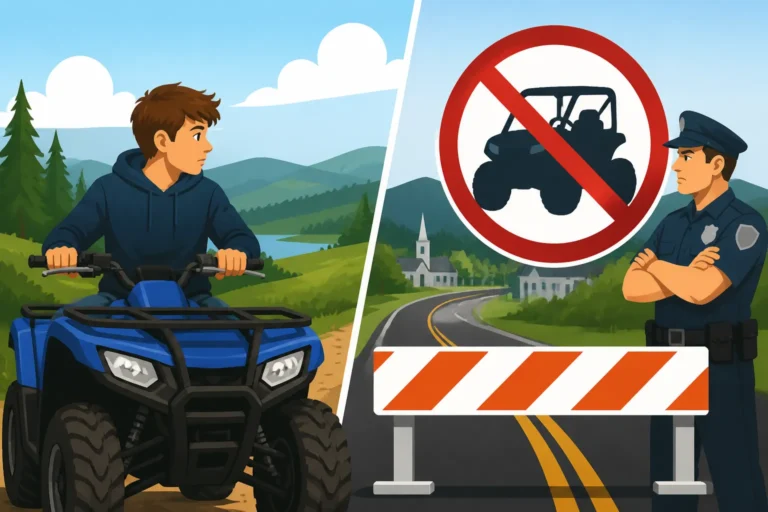
Let's get one thing straight right from the start: in New Hampshire, riding an Off-Highway Recreational Vehicle (OHRV) on private land always, unequivocally, requires the express permission of the landowner. This isn't a suggestion; it's the law. Whether it's a small woodlot, a vast logging tract, or even just a shortcut between two public trails, if it's not public land, you need to get the okay first. Ignoring this fundamental rule is the quickest way to find yourself in a heap of trouble, potentially facing fines, a court appearance, or even losing your machine.
Unposted Land is NOT an Invitation
This is a common misconception that gets many riders into hot water. There’s a widespread belief that if land isn't specifically posted with "No Trespassing" signs, it’s fair game. In New Hampshire, that simply isn't true for OHRV use. The absence of a sign does not imply permission. Think of it this way: if you saw a car with the keys in it, would you assume you could take it for a spin just because it wasn't locked and there wasn't a "Do Not Steal" sign on the windshield? Of course not! The same principle applies here. [Why Unposted Land Is Not an Invitation] dives deeper into this specific legal nuance. Always assume private land is off-limits unless you have explicit permission.
The Importance of Direct Contact and Building Relationships
The best way to secure permission is often through direct, respectful communication with the landowner. This isn't just about ticking a box; it's about building a positive relationship that benefits both parties. Many private landowners are passionate about the outdoors themselves, and some are open to responsible OHRV use if approached correctly.
Start by identifying the landowner. Local town halls, tax maps, or online property assessment databases are invaluable resources for this. Once you have a name, craft a polite letter or make a phone call. Explain who you are, what kind of machine you ride, where exactly you'd like to ride on their property, and what steps you'll take to ensure you leave no trace and respect their land. Offer to share a copy of your [New Hampshire OHRV Registration and Insurance] information, even though insurance isn't required for OHRVs in New Hampshire, it shows responsibility. Being upfront, courteous, and respectful of their property and their time goes a long way. This personal connection can often lead to long-term access and even new friendships.
Why Landowners Grant or Revoke Access
Landowners have a variety of reasons for granting or denying access. Some might own hundreds of acres of timberland and are happy for responsible riders to use old logging roads, especially if it helps keep trails clear or acts as a deterrent to truly unauthorized use. Others might have small parcels that abut public trails and are willing to allow careful passage. Often, permission comes with specific conditions: sticking to certain trails, avoiding sensitive areas like wetlands or wildlife habitats, staying off during hunting season, or adhering to specific times of day.
On the flip side, permission can be revoked just as easily as it's granted. This usually happens when riders abuse the privilege: littering, riding off designated paths, making excessive noise, cutting trees, or damaging property. One bad apple can spoil the bunch for everyone. This is why maintaining good relationships and strictly adhering to any agreed-upon rules is crucial. [When a Landowner Takes Back Riding Permission] explores common reasons for revocation and how to avoid them. Remember, private property is a privilege, not a right, for OHRV use.
Understanding Written Permission Requirements
While a verbal agreement might feel sufficient, for your own protection and to avoid misunderstandings, always strive for written permission. This provides a clear, documented understanding between you and the landowner, leaving no room for doubt or memory lapses. It’s particularly important if the land changes hands, or if you need to demonstrate your right to be there to a conservation officer.
What to Include in a Written Permission Form
A simple, well-drafted permission form doesn't need to be complex, but it should contain key information. Think of it as a mini-contract. Here’s what you should include:
- Landowner Information: Full name, address, and contact number.
- Rider Information: Your full name, address, and contact number.
- Property Description: A clear description of the land, including its address, town, and possibly a parcel ID number (available from the town assessor's office). A simple map marking the approved riding areas is also extremely helpful.
- Dates of Permission: Specify the start and end dates of the permission. Is it for a single day, a week, a season, or indefinite until revoked?
- Conditions of Use: List any specific rules or restrictions set by the landowner (e.g., "stay on marked trails only," "no night riding," "speed limit of 15 mph," "no riding during deer season").
- Machine Description (Optional but helpful): You could include the type of OHRV (e.g., ATV, UTV), make, model, and registration number.
- Signatures and Date: Both you and the landowner should sign and date the document.
You can often find templates for [Written Permission Before Private Ground] online or create your own. The goal is clarity and mutual understanding.
Carrying Proof of Permission While Riding
Once you have that signed permission, it's not enough to just have it at home. You need to carry it with you every single time you ride on that specific private property. A physical copy in a waterproof bag, or a clear digital copy on your phone, is essential.
Imagine this scenario: you're riding a permitted private trail, perhaps utilizing some quality aftermarket parts from SuperATV on your machine, when a New Hampshire Fish and Game officer or local law enforcement stops you. They might be responding to a complaint or simply doing routine checks. If you can't immediately produce proof of permission, you're going to have a hard time convincing them you're not trespassing. Having the document readily available shows responsibility and respect for the law, making their job easier and preventing potential misunderstandings that could lead to a citation.
Specific Scenarios for Written Permission
While it's good practice for any private land use, written permission becomes even more critical in certain situations:
- Leased Land: Many large tracts of forest land in New Hampshire are owned by timber companies but leased by OHRV clubs for trail development. While you might be riding a "club trail," that club has an agreement with the landowner. If you're riding a section that isn't part of the official club trail system, even if it looks like an old logging road, you need separate permission directly from the timber company or private owner. Don't assume club access extends beyond marked club trails.
- Crossing Private Property to Access Public Trails: Sometimes, the most direct route to a public trail system requires crossing a small strip of private land, like a driveway or a corner of someone's field. In these cases, a quick handshake might seem okay, but for everyone's protection, a written note confirming your right to pass is best. This avoids situations where a new property owner or neighbor might misunderstand your intentions.
- Organized Group Rides: If you're leading or participating in an organized ride that includes private land, the organizer should have written permission for the entire group. As an individual rider, you should ensure you see or receive a copy of this permission to verify that you are authorized.
- Renting a Machine: If you're [Renting an ATV in New Hampshire] and plan to ride on private land, ensure you have explicit written permission from the landowner and confirm with the rental company that their machine is allowed on that specific private property.
Consequences of Trespassing on Private Land
Riding an OHRV on private land without permission isn't just a minor oversight; it's a serious matter with potentially significant legal and social repercussions. Ignoring the rules can ruin the experience for everyone, especially for the responsible riders who work hard to maintain positive relationships with landowners.
Legal Ramifications: Fines and Penalties
Trespassing with an OHRV in New Hampshire can lead to substantial fines. The exact amount can vary depending on the severity of the trespass, whether damage was done, and if it's a repeat offense. Typically, initial fines can be hundreds of dollars, and repeated violations can escalate quickly, potentially leading to thousands in fines. Beyond monetary penalties, an OHRV violation could become part of your permanent record. [New Hampshire Fines for an OHRV Violation] provides more details on the potential costs of such actions.
In addition to state laws, some towns may have their own ordinances regarding OHRV use and trespassing, which could add further penalties. Law enforcement, including local police and New Hampshire Fish and Game officers, are empowered to enforce these rules.
Damage to Relationships and Future Access
Perhaps even more damaging than the legal fines is the irreparable harm trespassing does to the relationship between the OHRV community and private landowners. When riders trespass, damage property, or disrespect the land, it causes landowners to put up "No Trespassing" signs where there weren't any before, or to revoke existing permissions for everyone. This closes off trails and riding areas, shrinking the overall network for law-abiding enthusiasts.
Consider the ripple effect: a few irresponsible riders can lead to an entire club losing access to critical trail connectors or popular riding areas. It undoes years of hard work by volunteer clubs who dedicate countless hours to building and maintaining trails, negotiating land use agreements, and fostering goodwill. [What a Club Does to Keep a Landowner Onside] highlights the effort involved in maintaining these vital relationships. Every act of unauthorized riding erodes trust and makes it harder for everyone to enjoy the trails.
Potential for Machine Impoundment
In serious cases of OHRV trespassing, especially if there's damage to property or repeated offenses, law enforcement has the authority to impound your machine. This means your ATV or UTV could be seized, requiring you to pay impoundment fees, storage costs, and potentially legal fees to get it back—if you get it back at all. This consequence can be financially devastating and a huge hassle, far outweighing any perceived convenience of riding where you shouldn't.
Think about the investment you've made in your machine, perhaps upgrading it with robust protection from SuperATV or other accessories. Losing access to it, even temporarily, for a preventable mistake like trespassing is a tough pill to swallow. It's simply not worth the risk.
Navigating Private Land Adjacent to Public Trails
The lines between public and private land can sometimes feel blurry, especially when trails weave through various properties or cross small private parcels to connect to larger public systems. It's crucial to understand how to navigate these areas responsibly to avoid accidental trespassing.
Identifying Trail Corridors on Leased Land
Many of New Hampshire's fantastic OHRV trails, particularly those within the extensive Ride the Wilds network, exist on privately owned land through agreements with landowners or timber companies. These are often "leased" trail corridors managed by local clubs. While you're riding a "publicly accessible" trail, it's still technically on private land under a specific agreement.
This means you must stay strictly within the marked trail corridor. Do not venture off these marked trails onto what appears to be adjacent private property. Signs, trail markings, and gates are there for a reason – they delineate where you are allowed to be. Moving outside these boundaries is an act of trespassing, even if it’s just a few feet into the woods. Always assume that anything beyond the marked trail is off-limits unless explicitly stated otherwise with separate, specific permission. Club maps and trail apps are invaluable for staying on the designated path. [Riding a Club Trail in New Hampshire] has more on this.
Crossing Private Drives or Small Sections
Occasionally, a public trail might legally cross a private driveway, a small strip of someone's yard, or a short section of a private road to connect to another trail or a public highway that's been opened to OHRVs. When this happens, there are specific rules of etiquette and law to follow:
- Yield to All Traffic: When crossing a private drive or road, always yield to pedestrians, bicycles, and conventional vehicles. Your presence is an exception, not the rule.
- Proceed Directly and Safely: Cross the private area at a slow, controlled speed. Do not stop, linger, or deviate from the most direct path. The goal is to traverse the area as quickly and unobtrusively as possible.
- No Excessive Noise: Be mindful of your OHRV's sound. Keep engine revs low to minimize disturbance to residents.
- Respect Private Property Markings: Look for any "No Trespassing" signs or property markers that indicate the boundaries of the allowed crossing. Adhere strictly to these.
Always remember that these crossings are a privilege, and your responsible behavior helps maintain them for all riders.
Respecting Abutters and Minimizing Impact
Even when you're riding on legally permitted private land or within a club-managed corridor, always be mindful of the property's abutters – the people who live next to or near the trail. Excessive noise, dust, or riding too close to their property lines can cause significant friction.
- Noise: OHRVs can be noisy. Be particularly mindful when passing near homes, farms, or businesses. Keeping your speed down and avoiding aggressive throttle use in these areas can make a big difference. Ensure your machine meets [New Hampshire's OHRV Decibel Limit].
- Dust: On dry, unpaved sections, OHRVs can kick up a lot of dust. Slow down significantly when passing homes or other sensitive areas to minimize dust clouds.
- Privacy: Never stop, park, or look into private yards or windows. Respect people's privacy and their enjoyment of their own property.
- Litter: Pack out everything you pack in. Leaving trash, even inadvertently, is a surefire way to alienate landowners and abutters.
The future of OHRV riding in New Hampshire depends heavily on the collective responsibility of riders. By understanding and strictly adhering to the rules for private land, we ensure that the beautiful trails remain open and accessible for generations to come. Your actions directly impact the entire OHRV community.
| Key Aspect | Public Land (State Parks, Forests) | Private Land (Non-Club Managed) | Club-Managed Leased Land |
|---|---|---|---|
| Permission Needed? | No, if designated for OHRVs | Yes, always explicit landowner permission | Yes, via club agreement and membership |
| Default Status | Assumed open if marked for OHRVs | Assumed closed unless permitted | Assumed open if marked for OHRVs |
| Best Practice | Stay on marked trails, check status | Obtain written, signed permission | Stay on marked club trails |
| Signs (No Trespass) | Not typically found for OHRV access | Crucial to respect, even if unposted | Found if leaving designated trail |
| Enforcement | NH Fish & Game, Park Rangers | Local Police, NH Fish & Game | Local Police, NH Fish & Game |
| Fines | Violation of state park rules | Trespassing fines, potential impoundment | Violation of club/landowner rules |
Disclaimer
This article is for general informational purposes only and does not constitute professional advice. Laws, prices and regulations vary by location and change over time. Consult a qualified professional for guidance on your specific situation.