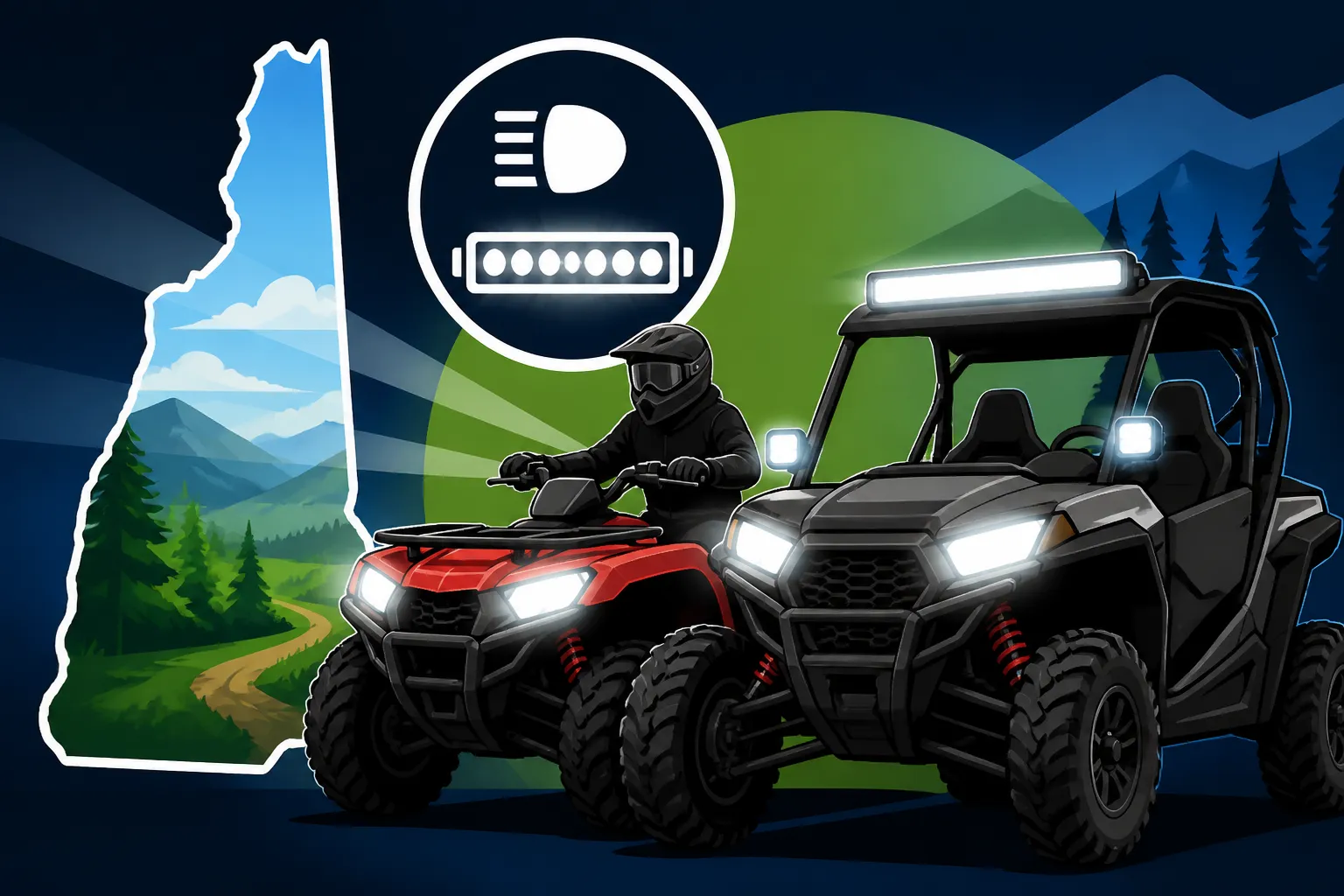
New Hampshire Lighting Requirements for OHRVs
It can be incredibly frustrating to hit the trails or even just cross a town road on your ATV or UTV, only to wonder if your machine's lights are actually legal. New Hampshire has specific rules about OHRV lighting, especially when the sun dips low or visibility drops. This guide will shine a light on everything you need to know about New Hampshire's OHRV lighting requirements, helping you stay safe, seen, and on the right side of the law.
The Basics of New Hampshire OHRV Lighting
When you're out exploring the vast network of trails across the Granite State, whether it's through the forests of the North Country or along a rail trail further south, having proper lighting isn't just a suggestion—it's a requirement. These rules are in place not to make your life harder, but to ensure everyone's safety, including yours. It's about being visible to other riders, hikers, and even potential emergency responders if you ever find yourself in a bind.
Headlights for Forward Visibility
Every OHRV operating in New Hampshire is required to have at least one headlight. This isn't just for looking cool; it's fundamental for navigating safely. Your headlight needs to emit a white light and be visible for a certain distance, typically at least 150 feet in front of the machine. Think about those moments when you're riding through dense tree cover, even in the middle of a sunny day, and the trail suddenly gets dark. Or when an unexpected afternoon shower turns the sky gloomy. Your headlight becomes essential for picking out obstacles, dips, and turns in the trail that might otherwise be invisible.
The purpose of the headlight isn't solely about illuminating your path. It's also about making you visible to others. Imagine another rider coming around a blind corner, or a pedestrian enjoying a walk on a multi-use trail. Your headlight is their first warning that you're approaching. For many riders, the standard headlight that comes on their machine is sufficient for meeting the basic legal requirements. However, those who frequently ride in very challenging terrain or venture out after dark often find themselves considering upgrades for better, broader illumination to enhance both safety and enjoyment.
Taillights for Rear Awareness
Just as crucial as seeing where you're going is being seen from where you've been. New Hampshire law mandates a red taillight on your OHRV, visible from the rear. This light typically needs to be visible from a distance of 500 feet, which gives riders approaching from behind ample time to react to your presence. There’s nothing quite as unsettling as riding in a group, especially as dusk begins to settle, and realizing the machine in front of you has a dim or non-existent taillight. It puts everyone at risk.
The taillight serves as a critical safety feature, particularly when riding in groups, on shared trails, or even when briefly stopping on the side of a trail. It provides a clear indication of your machine's presence, preventing potential rear-end collisions. Consider the trails that wind through areas with varied terrain or those that might be shared with other outdoor enthusiasts. A bright, properly functioning taillight ensures that you stand out, reducing the likelihood of being a surprise to someone coming up behind you, or even to a conservation officer doing their rounds.
Specific Requirements for Road and Trail Riding
The type of riding you're doing can subtly shift what's expected of your OHRV's lighting setup. While the core requirements for headlights and taillights remain consistent, the context of where you're riding often dictates the level of scrutiny and the perceived importance of your lights. New Hampshire is known for its incredible trail systems, many of which connect directly into towns, allowing riders to grab a bite or refuel. This intermingling of OHRV traffic with conventional vehicle traffic means being extra vigilant about your machine's compliance.
Riding on Designated Public Roads
This is where your lighting needs to be absolutely on point. While OHRVs are not generally considered "street legal" everywhere in New Hampshire, many towns have opened specific roads or sections of roads for OHRV use as connectors to trail systems or to allow access to local businesses. When you're operating your OHRV on any of these designated public roads, your headlight and taillight must be fully functional and meet the visibility standards. This isn't just about avoiding a ticket; it's about blending safely with cars, trucks, and other road users.
Beyond the basic headlight and taillight, it's prudent to ensure your OHRV's brake lights are also working if your machine is equipped with them. While not always explicitly mandated for all OHRVs in the same way as conventional vehicles, functional brake lights significantly increase your safety when navigating public roads, signaling your intentions to traffic behind you. An officer checking machines roadside, as outlined in [What a New Hampshire Officer Checks Roadside], will certainly be looking at these vital pieces of equipment. Remember, when you're riding on a town street or [New Hampshire Rules for Crossing a Highway], you're sharing the space, and clear communication through your lighting is paramount for everyone's safety.
Trail Riding and Beyond Sunset
When you're deep in the woods, on a winding trail, the lighting requirements might feel less pressing, but they are just as important, especially if your ride extends into the twilight hours or after dark. [New Hampshire Rules for Riding After Dark] are very clear: you need your lights on. Even if you don't plan to be out after sunset, a broken belt, a wrong turn, or just getting caught up in the pure joy of riding can extend your adventure unexpectedly. Having reliable, powerful lighting is crucial for navigating roots, rocks, mud puddles, and tight turns when visibility is low.
Many serious trail riders invest in auxiliary lighting, such as LED light bars or pod lights, from companies like SuperATV. These additions can dramatically improve your visibility and make night riding much safer and more enjoyable, especially when you're riding [New Hampshire Rules for Night Riding on a Trail] that might be less maintained. While your stock lights meet the minimum, extra lumens can literally be a game-changer when trying to spot that washed-out culvert or an unexpected downed tree. These upgrades are not just for aesthetics; they are a vital part of enhancing your ability to react to hazards and prevent accidents in low-light conditions.
What to Look For in OHRV Lighting and Maintenance
Taking a few minutes to check your lights before each ride can save you a lot of grief—and potentially a lot of money in fines or repair bills. It's a small habit that pays huge dividends in safety and peace of mind. Many riders just jump on and go, assuming everything is fine, until they're pulled over or nearly have an accident because a light wasn't working.
Checking Your Lights Before You Ride
Before you even turn the key, do a quick walk-around of your OHRV. Turn on your headlight and taillight to ensure they are both functioning. Wiggle the wires a bit to check for loose connections that might flicker or go out when you hit a bump. Check that the lenses are clean and free of mud, dirt, or debris that can significantly diminish light output. This is especially true for those riding [New Hampshire Rules for Riding in Winter], where snow and ice can quickly obscure lights. A dirty lens can reduce your headlight's effective range by half or more, turning a legal light into a dangerously dim one.
It’s an incredibly frustrating experience to be halfway through a long loop and realize your taillight is out, especially if you're riding with a group. Not only does it make you a hazard, but it also creates anxiety about potentially encountering law enforcement and facing [New Hampshire Fines for an OHRV Violation]. A simple check takes seconds and can prevent a whole lot of hassle. If you have brake lights, give the lever and pedal a squeeze to confirm they illuminate. This pre-ride routine should be as automatic as checking your fuel level or tire pressure.
Upgrading and Maintaining Your Lighting System
Many OHRVs come with basic halogen bulbs, which do the job but can be relatively dim and consume more power. Upgrading to LED (Light Emitting Diode) lighting is a popular choice for good reason. LEDs are significantly brighter, draw less power from your machine's electrical system, and are far more durable, standing up better to the vibrations and impacts common with off-road riding. When looking for high-quality, robust options, consider reputable manufacturers known for their off-road products, such as SuperATV, which offers a wide array of aftermarket lighting solutions designed to withstand tough conditions.
Beyond just the bulbs, consider the overall health of your electrical system. Frayed wires, corroded connections, or a failing stator can all lead to intermittent or non-functional lights. If you're frequently replacing bulbs or notice dimming, it might be a sign of a deeper electrical issue. Regular cleaning of your OHRV, especially around the light housings and electrical connections, can prevent corrosion and extend the life of your lighting components. If you're adding auxiliary lights, ensure they are properly wired with fuses and relays to protect your machine's electrical system and avoid overloading it. Proper maintenance means your lights will be there for you when you need them most, whether you're planning a full day's ride or just doing a quick check of [New Hampshire Trail Status Before You Ride].
Consequences of Non-Compliance and Safety Tips
Ignoring New Hampshire's lighting requirements for OHRVs isn't just a minor oversight; it carries real risks and potential penalties. No one wants their exhilarating ride cut short by a citation or, worse, an accident that could have been prevented with proper lighting.
The Risks of Inadequate Lighting
Riding an OHRV without proper lighting, especially when conditions warrant it, significantly increases your risk of an accident. Without a working headlight, you might not spot that hidden rock, sudden drop, or crossing deer until it's too late. Without a taillight, you become nearly invisible to riders behind you, particularly on dusty trails or during [New Hampshire Rules for a Group Ride]. This can lead to rear-end collisions, which are often preventable.
Beyond the immediate safety concerns, failing to comply with lighting regulations can result in fines and other penalties from law enforcement. Conservation Officers patrol the trails and are well-versed in OHRV laws. Being caught with non-functional lights can lead to a roadside stop and a citation, putting a damper on your whole day. Imagine trying to explain why your lights aren't working when you're miles from a town, and an officer is writing you a ticket for an equipment violation. It's an inconvenience, a financial hit, and a safety hazard all rolled into one.
Essential Safety Practices for Night Riding
If you plan to ride after dark or in low-light conditions, taking extra precautions is always a good idea. Always carry spare bulbs for your stock lights, and even a small, powerful flashlight or headlamp as a backup. This can be a lifesaver if your primary lights fail in a remote area. Slow down considerably when riding at night; your reaction time needs to be greater when visibility is limited, even with the best auxiliary lighting from a brand like SuperATV.
Consider riding with a buddy, especially for night rides. Having another set of eyes and an extra machine's lights can significantly enhance safety. Additionally, wearing reflective gear yourself and adding reflective tape to your OHRV can make you much more visible to others, even if your machine's lights aren't directly illuminating them. Always communicate your plans, check trail conditions, and remember that even familiar trails can feel very different—and hide new hazards—when ridden after dark.
Here’s a quick overview of typical OHRV lighting:
| Feature | Standard OHRV Lighting | Upgraded (Aftermarket) OHRV Lighting |
|---|---|---|
| Headlight | Typically halogen bulb, moderate brightness | LED, significantly brighter, wider beam, often adjustable |
| Taillight | Basic red, incandescent or simple LED | Brighter LED, faster illumination, better visibility |
| Auxiliary Lights | Rarely included on stock machines | Light bars, flood/spot pods for enhanced illumination |
| Power Draw | Higher for halogen bulbs | Lower for LED, more efficient for your electrical system |
| Durability | Standard, can be prone to vibration/water ingress | Often more rugged, sealed against elements, impact resistant |
| Cost | Included with machine, replacement bulbs inexpensive | Higher initial investment, longer lifespan for LEDs |
| Visibility Range | Adequate for basic legal compliance | Greatly enhanced, improved safety in low light/adverse weather |
Disclaimer
This article is for general informational purposes only and does not constitute professional advice. Laws, prices and regulations vary by location and change over time. Consult a qualified professional for guidance on your specific situation.