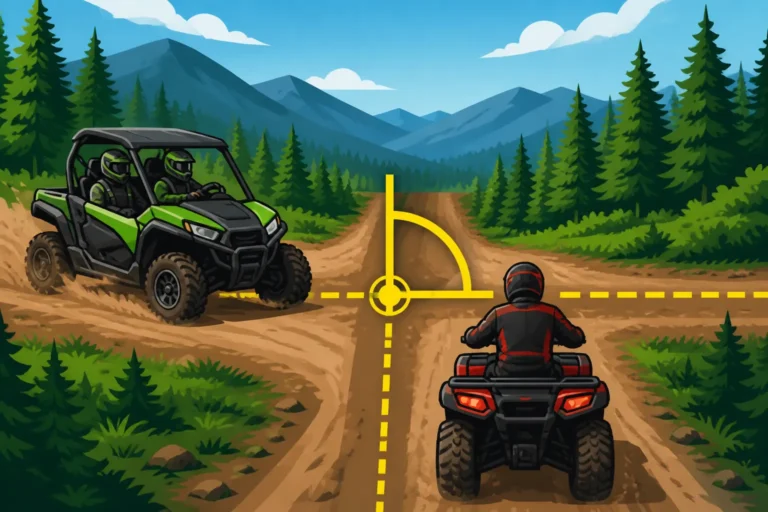
New Hampshire Towns That Allow OHRVs on Roads
Many OHRV enthusiasts dream of seamlessly connecting trails by riding a short distance on a public road, but the reality in New Hampshire can be confusing and, let's be honest, a bit frustrating. It's a common scenario: you’re just a quarter-mile from the next fantastic trail system, or a quick run into town for gas, and you’re left wondering if you’re legally allowed to use that stretch of pavement. This guide will cut through the confusion, helping you understand which New Hampshire towns have embraced OHRV road access and what essential rules you need to follow to ride legally and safely when you're off the designated trail system.
Understanding the Default: Why OHRVs Aren't Always Allowed on New Hampshire Roads
It can feel like a contradiction, can't it? We have these incredible OHRV trail systems in New Hampshire, yet the moment you hit a paved road, it feels like you're entering a legal minefield. Many riders mistakenly assume that because OHRVs are so popular here, they must be allowed on most roads. The truth, however, is a bit more nuanced and often leads to unnecessary stress or, worse, a citation.
The 'Closed by Default' Rule and Its Impact
The fundamental principle in New Hampshire is that all public roads and highways are, by default, closed to OHRV use. This means you cannot just jump on any road and expect it to be legal. This rule often catches visitors and even some local riders off guard. Imagine planning an epic ride through the North Country, only to find a crucial connector road is off-limits. It's a real bummer, and it forces riders to either find lengthy detours, trailer their machines short distances, or risk breaking the law.
This "closed by default" status exists for a few key reasons: safety for both OHRV operators and conventional vehicles, maintaining peace for residents, and protecting road infrastructure not designed for off-highway vehicles. It's not meant to be an inconvenience, though it often feels like one. Instead, it's a foundational legal stance that towns have the power to override, provided they follow a specific process. Without this explicit action from a local government, those paved stretches remain strictly for cars and trucks.
The Importance of Designated Trails
Given the restrictions on public roads, the vast network of designated OHRV trails becomes even more crucial for riders in New Hampshire. These trails are where our machines truly belong – off-road, away from traffic, designed for the unique experience OHRVs offer. New Hampshire boasts hundreds of miles of these trails, maintained by dedicated clubs and often funded, in part, by your registration fees. These are the main arteries of our riding culture, providing safe and legal routes through some of the most beautiful scenery.
Think of our trail system as a series of connected pathways, winding through forests, over mountains, and alongside rivers. The vast majority of your riding time will be spent here, where you can fully enjoy the capabilities of your ATV or side-by-side. The frustrations with road access often arise when a designated trail ends abruptly at a road, or when you need to cross a short stretch of pavement to link up with another part of the system or access amenities like gas stations or restaurants. Understanding that these trails are the primary domain for OHRVs helps put the limited road access into perspective – it’s the exception, not the rule, and designed to enhance, not replace, the off-road experience.
The Town's Choice: How Localities Open Their Streets to OHRVs
While state law dictates that roads are closed to OHRVs by default, it also grants individual towns the power to open them. This isn't a decision made lightly, and it involves a formal process that reflects the community's input and priorities. It's why you'll find some towns that are incredibly OHRV-friendly, with designated roads and clear signage, while others remain completely closed.
The Selectboard Vote and Public Hearing Process
For a town to open any of its public roads to OHRVs, it must go through a very specific legal procedure, usually initiated by its Board of Selectmen (or Selectboard). This isn't a quick rubber stamp; it's a careful consideration of community impact. The process typically starts with a proposal, often driven by local OHRV clubs or business owners keen to attract riders and their tourism dollars.
Once a proposal is on the table, the Selectboard is required to hold a public hearing. This is a critical step where residents can voice their opinions, concerns, and support. State law requires that notice of this hearing be given at least [Fourteen Days' Notice Before a New Hampshire Hearing], and often [Verified Mail to the Abutters] of the roads in question is also mandated. This ensures that everyone potentially affected has a chance to participate. After considering all input, the Selectboard then takes a formal vote. If approved, the town must designate the specific roads, set any conditions (like speed limits or hours of operation), and usually post signage clearly indicating OHRV access points and rules. This careful, democratic process explains why [Why a Town Must Renew Its OHRV Designation] periodically, ensuring ongoing community support.
Factors Influencing a Town's Decision
So, what makes a town decide to open its roads to OHRVs, or conversely, keep them closed? It's a complex mix of economic, safety, and quality-of-life considerations. On the one hand, towns in the North Country, like Gorham and Berlin, have seen a significant boost in local businesses and tourism by embracing OHRV traffic. Riders often stop for gas, food, lodging, and supplies, pouring vital dollars into the local economy. Businesses selling accessories, like those from SuperATV, also benefit from increased traffic. For many of these communities, OHRVs are not just recreational vehicles; they are economic engines.
However, opening roads also comes with challenges. Safety is always a primary concern. Integrating OHRVs with conventional vehicle traffic requires careful planning, clear signage, and strict enforcement of rules. Residents might also worry about increased noise, dust, or potential environmental impacts. Some towns prioritize the quiet enjoyment of their streets for residents and visitors on foot, choosing to keep OHRVs strictly on trails. The decision often boils down to balancing the potential economic benefits with community concerns about safety, noise, and the overall character of the town. Each town's unique demographics and economic drivers play a huge role in their ultimate stance on OHRV road access.
Navigating Open Roads: What to Expect in New Hampshire's OHRV-Friendly Towns
Once a town has gone through the process and officially opened certain roads to OHRVs, it's a game-changer for riders. These designated roads become crucial links, allowing for longer, more integrated rides and easier access to town services. But remember, "open" doesn't mean "anything goes." There are still very specific rules you absolutely must follow.
Specific Towns Embracing OHRV Road Access
While many towns have debated the issue, a handful have truly embraced OHRV road access, particularly in the northern part of the state where the vast trail networks exist. Towns like Gorham, Berlin, and Pittsburg are prime examples. [Gorham's Open Streets] are a shining example of how a community can successfully integrate OHRV traffic into its daily life. In Gorham, you can often ride right down Main Street, connecting to various trails and stopping at local shops and restaurants. It's a fantastic experience that allows you to truly explore the town as part of your ride.
Berlin also welcomes OHRVs, allowing riders to access portions of the city and connect to the famous Jericho Mountain State Park trails. However, even in these friendly towns, there are often specific hours of operation for OHRVs on roads. For instance, [Berlin's Ten O'Clock Closing] rule means you'll need to be off city streets by then. These regulations are in place to balance rider access with the needs of residents. It's crucial to be aware of each town's specific ordinances before you ride onto their roads. Always assume there are restrictions, even in the most OHRV-friendly areas.
Essential Rules for Road Riding in New Hampshire
When you hit those paved sections in an OHRV-friendly town, you’re no longer just on a trail; you’re sharing the road with cars, trucks, and pedestrians. This means you must adopt a different mindset and adhere strictly to all applicable traffic laws and OHRV-specific regulations. These rules are non-negotiable for your safety and the safety of everyone else.
First and foremost, speed limits are enforced, and they're often much lower than trail speeds. You might find yourself [Riding Through Town at Walking Pace] in some areas. Always stick to the extreme right side of the road, giving conventional vehicles ample room to pass. [New Hampshire Rules for Riding the Far Right of a Town Road] emphasize this for good reason. You must also [Yielding to Every Conventional Vehicle] – they have the right of way. At intersections, come to a complete stop, just as you would in a car, and pay close attention to visibility. [Why You Must Stop Before Every Road Crossing] cannot be stressed enough; these are critical moments for preventing accidents.
Equipment rules are also vital. Your OHRV must be properly equipped for road use, even for short stretches. This typically includes a headlight, taillight, brake light, and at least one rear-view mirror mounted on the left side. Many riders opt for quality aftermarket mirrors from companies like SuperATV to ensure excellent visibility. While [New Hampshire Helmet Law for OHRV Riders] allows adults over 18 to ride without a helmet off-road, it's always wise to wear one, especially when on paved surfaces, and it is legally required for all riders under 18. [New Hampshire Equipment Rules for Road Riding] outlines these requirements in detail, and a quick roadside check by a conservation officer might include verifying these components.
Connecting the Trail Systems
The real beauty of New Hampshire towns opening their roads to OHRVs lies in the enhanced connectivity they provide. No longer are vast trail networks completely separated by a mile of pavement; instead, these short road segments act as vital bridges. This allows riders to embark on much longer, more diverse rides, seamlessly linking different club trails, state park routes, and even crossing town lines.
For instance, in the Ride the Wilds system in Coos County, being able to ride through towns like Gorham and Berlin means you can connect hundreds of miles of trails into epic multi-day adventures. It allows you to start your day at one trailhead, ride through a village for lunch and fuel, and then access another remote trail system without having to load your machine back onto a trailer. This not only makes the riding experience more enjoyable and convenient but also supports local businesses that cater to OHRV enthusiasts. It transforms what might have been a series of disconnected loops into a truly expansive and integrated riding destination.
Finding Your Way: Resources for Identifying Open OHRV Roads
Knowing that some towns have open roads is one thing; knowing exactly which roads, and for how long, is another challenge entirely. The rules can change, and what was open last year might be closed this season. Relying on outdated information or hearsay can quickly land you in trouble. Fortunately, there are reliable ways to stay informed.
Checking with Town and Club Resources
The most accurate and up-to-date information on OHRV road access will always come directly from the source: the towns themselves and the local OHRV clubs that manage the trails. Many OHRV-friendly towns will post their specific ordinances and maps of designated OHRV roads on their official town websites. A quick search for "OHRV ordinance [Town Name] New Hampshire" is often a good starting point. This information might be under the town clerk's section or a recreation department.
Local OHRV clubs are also invaluable resources. These dedicated volunteers work closely with landowners and town officials, so they are always in the know about trail and road status. Clubs often publish detailed trail maps that clearly mark road-legal sections and any restrictions. Websites like the New Hampshire Bureau of Trails or the New Hampshire OHRV Association often link to individual club websites, where you can find current trail and road conditions, closures, and even specific town rules. Checking [New Hampshire Trail Status Before You Ride] is paramount, especially when planning a route that includes road segments. Many clubs use social media or dedicated "trail status" pages to provide real-time updates.
Maps and Navigation for Road-Legal Sections
Once you've gathered the information, having reliable maps and navigation tools is essential for safely riding any road-legal sections. Don't rely solely on general GPS maps designed for cars, as they won't differentiate between OHRV-friendly roads and closed ones. Dedicated OHRV trail maps, often available from clubs or the state, are your best friend. These maps will highlight specific roads or segments that are open to OHRVs and often include important details like speed limits, hours of operation, or "no return" directions.
Many riders also use GPS devices or smartphone apps specifically designed for off-road navigation. These can be pre-loaded with official trail and road data, helping you stick to legal routes. When planning your ride, always trace your intended path, paying close attention to where a trail might transition to a road and back again. Look for signage in person, too; towns that allow OHRVs on roads typically have clear signs indicating where OHRV access begins and ends, and any special conditions like "OHRVs must keep to extreme right" or "10 MPH in town." Investing in good navigation, like a rugged GPS unit or a strong phone mount for your side-by-side (perhaps a heavy-duty option from SuperATV), is just as important as knowing the rules.
Disclaimer
This article is for general informational purposes only and does not constitute professional advice. Laws, prices and regulations vary by location and change over time. Consult a qualified professional for guidance on your specific situation.