Crossing a Road on an OHRV in New Hampshire
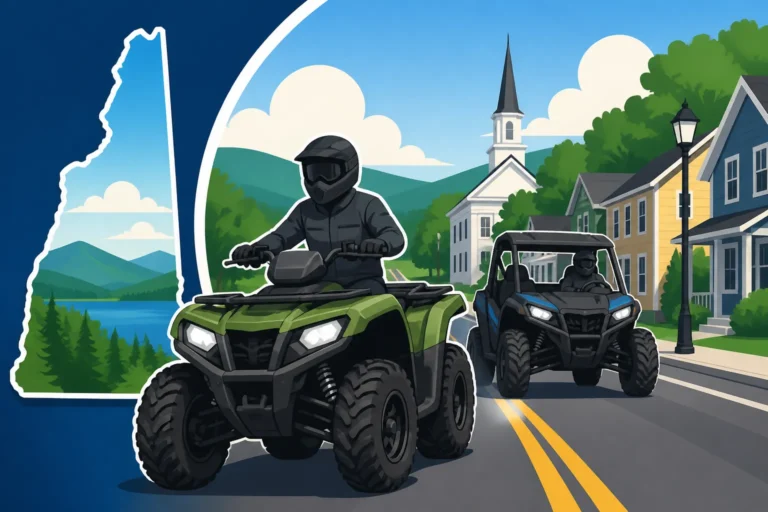
There's nothing quite like the freedom of exploring New Hampshire's vast network of OHRV trails, feeling the crunch of gravel under your tires or the squish of mud beneath your treads. But let's be real, the thrill often comes with a bit of a headache: how do you connect all those amazing trails when there's a paved road, a main highway, or even a quaint town street standing in your way? It's a common frustration for riders, feeling like you're stuck between a rock and a hard place. This guide is here to untangle the complexities of legally crossing roads on your ATV or UTV in the Granite State, helping you navigate the rules so you can keep your adventures going without a hitch.
The Default Rule: Roads are Closed to OHRVs
It's a common misconception, especially for those new to the New Hampshire OHRV scene, that once you're registered and ready to ride, every piece of pavement is fair game for crossing. Unfortunately, that's just not the case. The default position for nearly all roads in New Hampshire, whether they're quiet town lanes or bustling state highways, is that they are closed to OHRV use. This means you can't just casually motor down the road to get to the next trail section, nor can you assume a quick dash across a paved surface is permissible without specific authorization. It's a fundamental rule that many new riders learn the hard way, often after a less-than-pleasant encounter with local law enforcement.
Think of it this way: the trails are your playground, and the roads are like the fence around it. You need a designated gate to get from one section to another. This isn't meant to be punitive; it's about safety for everyone, including OHRV riders, motorists, pedestrians, and cyclists. Our machines, while incredibly fun and capable off-road, aren't designed or typically equipped for the speeds, traffic, and dynamics of public roads.
Why Roads Aren't Open by Default
The primary reason New Hampshire's roads are generally closed to OHRVs boils down to safety and legal precedent. Our vehicles, with their open cockpits, knobby tires, and often higher centers of gravity, handle very differently on pavement than a car or truck. They accelerate differently, brake differently, and even their visibility to other motorists can be a concern. When you mix these characteristics with conventional traffic, the risk of accidents increases significantly.
Beyond the physical dynamics, there are legal frameworks at play. Public roads are maintained by the state or towns, primarily for conventional motor vehicles. Opening them up to OHRVs requires specific legislative action and local ordinances, often involving public input and careful consideration of traffic patterns, noise, and environmental impact. Without these specific designations, the general rule of "no OHRVs on roads" prevails to maintain order and protect all road users.
This isn't unique to New Hampshire, but our state has a very particular way of addressing it. Understanding that the default is "closed" helps riders appreciate the efforts made by towns and clubs to open up even small sections for crossing or limited travel. It puts the responsibility on us as riders to be informed and to seek out those designated access points rather than assume we have free rein.
The Importance of Designated Crossings
When a road is open for OHRV use, whether for a short crossing or a designated connector route, it's usually because the town has gone through a specific process to allow it. These aren't arbitrary decisions; they involve public hearings, votes, and often the installation of specific signage. Ignoring these designations and simply riding on any road you choose isn't just a minor infraction; it can lead to serious legal consequences.
Picture this: you're out on a beautiful Saturday, riding a new trail system, and you come to a paved road. You see a clear trail on the other side, so you figure it's just a quick hop across. But what if that road isn't a designated crossing? What if a local resident, tired of unpermitted OHRV traffic, reports you? Suddenly, your fun day could turn into a hefty fine or worse. [New Hampshire Fines for an OHRV Violation] can be substantial, and nobody wants that kind of souvenir from their ride.
These designated crossings and routes are often the result of years of advocacy by local OHRV clubs and enthusiasts working with town officials. They represent a fragile balance between rider access and community concerns. Every time a rider ignores the rules, it jeopardizes future access for everyone. It's about respecting the system, the landowners, the residents, and the hard work that goes into creating and maintaining our incredible trail network. Always look for clear signage indicating where and how you can legally interact with public roads.
How a Town Opens Its Roads to OHRVs
Opening a town road for OHRV access in New Hampshire isn't as simple as a local official just saying "go for it." It's a structured, democratic process that involves multiple steps, public involvement, and careful consideration. This ensures that any decision to allow OHRVs on public ways is made with the community's input and safety in mind. Understanding this process helps riders appreciate the effort involved and underscores why respecting the rules on open roads is so crucial. It’s a testament to local control, where each town has the autonomy to decide what works best for its unique character and traffic patterns.
The Selectboard Vote and Public Hearing
The journey to opening a town road for OHRVs in New Hampshire almost always begins with the local Selectboard (or equivalent governing body) taking up the issue. A resident, an OHRV club, or even a Selectboard member might propose opening a specific road or section for OHRV use. This initial proposal then triggers a formal process. The Selectboard can't just wave a magic wand and make it happen; they must first hold a public hearing.
This public hearing is a crucial step. It's where local residents, business owners, and OHRV enthusiasts can come together to voice their opinions, concerns, and support. Imagine a packed town hall meeting: residents might raise concerns about noise, dust, safety for children playing near the road, or the impact on property values. On the other hand, OHRV proponents will highlight the economic benefits of increased tourism, the value of connecting trail systems, and the responsible nature of the riding community. All these perspectives are vital for the Selectboard to make an informed decision.
Following the public hearing, the Selectboard will typically hold a vote. For the road or road section to be designated for OHRV use, a majority vote of the Selectboard is required. This vote effectively creates a local ordinance or modifies existing ones to permit OHRV activity under specific conditions. It’s a transparent process, and the outcome reflects the local community's consensus. This is also why some towns have embraced OHRVs on their roads, while others have firmly decided against it. You can learn more about this by researching [How a New Hampshire Town Designates a Road].
Notifying Abutters and Posting Signs
Once a Selectboard has voted to open a road or section for OHRV use, there are still practical steps that need to be completed before machines can legally roll. One of the most important is the notification of abutters. Abutters are the property owners whose land directly borders the road in question. These individuals have a direct stake in how the road is used, and New Hampshire law typically requires that they receive formal notice about the proposed change. This notification process ensures that everyone directly affected is aware and has had an opportunity to participate in the public hearing or at least understand the impending changes.
After the necessary notifications, the town then proceeds with the actual designation of the road. This involves clearly marking the approved sections with official signage. These signs are absolutely critical for riders. They indicate where OHRVs are permitted to ride, often specifying the type of OHRV, the hours of operation, and any speed limits that apply. Without clear signage, a rider has no way of knowing if a road is open, and riding on an undesignated road can still lead to violations.
These signs are typically placed prominently at the entry and exit points of the designated OHRV corridor or crossing. They might show an OHRV symbol, an arrow, and specific text. It's not uncommon to see signs that also detail the rules, such as "OHRVs Stay Right" or "Speed Limit 25 MPH." Riders should make it a habit to actively look for and obey these signs, as they are the official communication from the town regarding OHRV access. The entire process, from the initial proposal to the final signage, underscores the intentional and regulated nature of road access for OHRVs in New Hampshire. You can often find a comprehensive list of [New Hampshire Towns That Allow OHRVs on Roads] by checking local club websites or state resources.
The Rules for Riding on Designated Open Roads
So, a town has gone through the process, and you've found a clearly marked road that's open to OHRVs. Fantastic! But simply knowing a road is "open" isn't the whole story. Just like driving a car, there are specific rules of the road that OHRV riders must adhere to for everyone's safety and to ensure continued access. These aren't just suggestions; they are legal requirements designed to integrate OHRV traffic safely with conventional vehicles and pedestrians. Ignoring these rules can lead to citations, accidents, and damage to the OHRV community's reputation.
Staying to the Extreme Right and Yielding
When you're riding your OHRV on a designated town road in New Hampshire, one of the most fundamental rules is to stay to the extreme right side of the roadway. This isn't just a polite suggestion; it's a safety imperative. Our machines, especially ATVs, take up less width than a typical car or truck, and keeping far to the right provides maximum clearance for oncoming and passing traffic. Imagine you're on a narrow country road; hugging the shoulder makes a huge difference for everyone sharing that space.
Along with staying right, you must always yield to conventional vehicles. This means cars, trucks, motorcycles, and any other street-legal vehicle have the right-of-way. If a vehicle approaches from the front or rear, or is trying to pass, you should move as far right as safely possible, and if necessary, pull over and stop to allow them to proceed. This also extends to pedestrians and cyclists – they too have precedence. Showing this courtesy and caution is not just good manners; it demonstrates responsible riding and helps maintain positive relationships with the local community, which is crucial for continued OHRV access. The rule is explicitly detailed in [Why New Hampshire Riders Keep to the Extreme Right].
For instance, if you're on a connector road in Gorham, riding to link up with another section of the [Ride the Wilds in Coos County], and you encounter a logging truck, you absolutely pull over. These trucks are massive, they move fast, and they need all the road they can get. Yielding to every conventional vehicle is a non-negotiable part of riding on designated town roads.
Speed Limits and Equipment Requirements
Designated OHRV roads in New Hampshire often come with their own specific speed limits, and these are usually significantly lower than the posted speed limits for conventional vehicles. You might see signs indicating "OHRV Speed Limit 25 MPH" or even "10 MPH near residences." It's imperative to pay attention to these, as they are tailored for the unique characteristics of OHRVs and the environments they are in. Speeding on these sections not only increases the risk of an accident but also generates noise and dust, which are common complaints from residents and can jeopardize the privilege of road access.
Beyond speed, your machine itself needs to meet certain equipment requirements when operating on a public road, even if it's just for a short distance. While New Hampshire generally has fewer equipment requirements for off-road use compared to some other states, road operation changes things. You'll need:
- A rearview mirror: Typically one on the left side is sufficient. This allows you to monitor traffic behind you.
- Headlights and taillights: Essential for visibility, especially during dawn, dusk, or in adverse weather. If you're out past sunset, these are non-negotiable.
- Brakes: Your braking system must be in good working order.
- A spark arrester: This is universally required for OHRVs in New Hampshire to prevent wildfires, but it's especially important to remember when near residential areas.
- A functional muffler: To meet the state's decibel limits. Aftermarket exhausts are popular, but make sure yours still falls within the legal sound limits.
You might even consider certain upgrades or accessories from companies like SuperATV that enhance safety and compliance for road sections. For instance, a quality rearview mirror or an LED light bar can significantly improve your visibility and ability to see other traffic, making your road crossings safer and more compliant. Always check your machine before heading out, ensuring all lights, brakes, and mirrors are operational.
Specific Town Examples (Gorham, Berlin)
To really drive home how localized these rules can be, let's look at a couple of popular OHRV towns in New Hampshire: Gorham and Berlin. These towns are hubs for the "Ride the Wilds" trail system and have embraced OHRV tourism, but they have their own specific regulations for riding on town streets.
In Gorham, for example, certain town streets are designated as OHRV connectors, allowing riders to travel from lodging and restaurants directly to the trailheads. This is a huge convenience, letting you ride right from your hotel to the trails! However, these designated streets have very specific rules. There's often a strict 25 mph speed limit, and you are expected to stay to the far right. You might be allowed to ride parts of Routes 2 and 16 through Gorham, but only on the far right shoulder and under strict speed limitations. Parking your OHRV at designated spots, like the Eastern Depot, is common, but you can't just park anywhere. [Riding Main Street in Gorham] is a unique experience, but it comes with precise guidelines.
Berlin is another prime example. As the home of Jericho Mountain State Park, Berlin also has a progressive stance on OHRV access within its town limits. However, they famously have a "10 O'Clock Closing" rule, meaning OHRVs are typically prohibited from operating on designated town roads after 10:00 PM. This is a direct response to community concerns about noise and aims to ensure a good night's sleep for residents. So, if you're planning a late-night dinner in Berlin after a full day of riding, you'll need to make sure your machine is parked by ten. These examples highlight the importance of checking local ordinances, which can often be found on town websites or through local OHRV clubs, before you arrive. Every town is different, and what's allowed in Gorham might not be allowed just down the road in Berlin.
Rules for Crossing a State Highway (Routes & Numbered Roads)
Crossing a state highway, like a numbered route (e.g., Route 3, Route 16, Route 26), presents a different set of challenges and rules than traversing a town road. While some towns may designate specific local roads for limited OHRV travel, state highways are generally much more restrictive. They are high-speed arteries of transportation, and mixing OHRVs with the flow of traffic on these roads is deemed significantly more dangerous. This is where precision and extreme caution become paramount. It's not about riding along a state highway; it's strictly about getting from one side to the other at designated points.
The Ninety-Degree Rule
When you encounter a state highway that requires an OHRV crossing, one of the most critical rules to remember is the "ninety-degree rule." This means you must cross the highway at a right angle to the flow of traffic. You cannot angle across, nor can you travel for any significant distance on the shoulder before or after the crossing. The intent is to minimize your time spent in the actual travel lanes of the highway and to make your movement predictable to other motorists.
Imagine drawing a perfect "T" on the road: your OHRV is the vertical line, and the highway is the horizontal. You drive straight across. This minimizes the distance you cover in the path of oncoming vehicles and reduces the chance of confusion for drivers who might not expect an OHRV. This rule is a cornerstone of safe highway crossing and is strictly enforced by New Hampshire law enforcement. Violating this rule isn't just dangerous; it's a clear infringement that can lead to fines and potentially put you and others at severe risk. The legal requirements are very specific in [New Hampshire Rules for Crossing a Highway].
This rule is why you'll often find trailheads or connecting trails directly opposite each other at highway crossing points. The infrastructure is designed to facilitate this ninety-degree movement, guiding riders to the safest and most compliant crossing spots.
Coming to a Full Stop and Sight Lines
Before attempting any highway crossing, even at a designated point, a full and complete stop is absolutely mandatory. This isn't a rolling stop, and it's not a "slow down and look" maneuver. It means stopping your machine completely, engaging the brakes, and taking a moment to thoroughly assess the situation. You need to be able to see clearly in both directions, making sure there's ample time and space to cross safely without interfering with any vehicular traffic.
This is where "sight lines" become incredibly important. Are there blind curves? Is there a crest in the road that limits visibility? Is there heavy foliage obstructing your view of oncoming traffic? If your sight lines are compromised, or if you can't clearly see a significant distance in both directions, you must wait. Sometimes, this means patiently waiting for several minutes for a clear break in traffic. Rushing a crossing with poor visibility is incredibly dangerous, and no trail connection is worth risking your life or the lives of others. [Why You Must Stop Before Every Road Crossing] emphasizes the importance of this step.
Once you have a clear line of sight and an adequate gap in traffic, proceed directly across the highway at a ninety-degree angle, maintaining a steady, controlled speed. Do not accelerate recklessly, but also don't crawl across. The goal is to be decisive and efficient, minimizing your exposure to the higher-speed traffic. If you're riding with a group, each rider should stop, look, and cross individually, ensuring they have their own clear window of opportunity.
Why You Can't Ride Along a State Route
It's a common desire for OHRV riders to want to "just ride a little way" down the shoulder of a state highway to get to the next trail or connection. However, with very few and highly specific exceptions (usually only in designated town sections, as mentioned earlier), you absolutely cannot ride along a state route in New Hampshire, even on the shoulder. State routes are engineered for high-speed conventional traffic, and OHRVs are simply not permitted to operate longitudinally on them.
The law makes a clear distinction between crossing a highway at a designated point and using the highway as a travel corridor. The dangers are numerous:
- Speed differential: The speed difference between an OHRV and highway traffic is immense, making it extremely difficult for motorists to react safely.
- Lack of protection: OHRVs offer minimal protection in a collision with a vehicle traveling at highway speeds.
- Visibility: While OHRVs have lights, they are often smaller and lower to the ground, making them less visible to fast-moving traffic.
- Road surface: OHRV tires are designed for off-road traction, not sustained high-speed pavement use, which can affect handling and braking.
Even if you see a wide, clear shoulder, resisting the urge to ride along it is critical. Riding along a state route is a direct violation of New Hampshire OHRV laws and can result in significant fines and penalties. Stick to the designated trails and approved crossing points, and always err on the side of caution when it comes to state highways. For durable parts and safety features that can withstand the demands of various terrains, including occasional road sections, checking out a brand like SuperATV might offer good options for your machine.
Age, Supervision, and Licensing for Road Crossings
Riding an OHRV in New Hampshire isn't just about having a registered machine; it's also about who is operating it. When you introduce public roads into the equation, even for a brief crossing, the rules regarding age, supervision, and safety certification become even more stringent. It's not just about the machine; it's about the rider's responsibility and legal standing. Ensuring compliance with these rules is essential for safety and to avoid costly legal trouble, especially when young riders are involved.
The Safety Certificate and Driver's License
For anyone operating an OHRV in New Hampshire, a basic understanding of safety education requirements is crucial. Riders aged 12 and older are generally required to possess a valid New Hampshire OHRV Safety Certificate or a valid driver's license. The Safety Certificate demonstrates that the rider has completed an approved course on safe OHRV operation, trail etiquette, and understanding the state's laws. This is particularly important for younger riders who may not have a driver's license.
If you possess a valid motor vehicle driver's license (from any state or province), it can serve as a substitute for the OHRV Safety Certificate. The reasoning here is that the skills and knowledge required to operate a motor vehicle safely on public roads, including an understanding of traffic laws and defensive driving, are considered transferable. However, it's important to remember that a driver's license does not automatically grant you permission to ride an OHRV on public roads; it only fulfills the safety education requirement. You still need to be on a designated open road or at an approved crossing. For full details on these requirements, check out [New Hampshire Safety Education Requirements] and [Does a Driver's License Replace the Certificate in New Hampshire?].
For road crossings, especially on designated town roads, having either the Safety Certificate or a driver's license is non-negotiable for eligible operators. Law enforcement officers can and do check for these credentials. Always carry proof of your certificate or license with you when you ride.
Supervision for Minors
The rules regarding minor riders on OHRVs in New Hampshire are quite specific, and they become even more critical when operating on or crossing public roads. These regulations are designed to protect young riders, who may lack the judgment, experience, or physical capabilities to handle all situations independently.
- Riders under 12 years of age: Children under 12 are generally not permitted to operate OHRVs on public lands, including designated public roads or road crossings. There are very limited exceptions, such as on private property with landowner permission or during an organized event under strict supervision, but for road crossings, the rule is effectively "no."
- Riders aged 12 and 13: A rider who is 12 or 13 years old and has obtained a New Hampshire OHRV Safety Certificate may operate an OHRV on public OHRV trails, but only if accompanied by a licensed adult at least 25 years of age. This adult must be riding on their own OHRV or be a passenger on the minor's machine. This supervision rule applies to designated road crossings as well.
- Riders aged 14 and 15: A rider who is 14 or 15 years old and has obtained an OHRV Safety Certificate may operate an OHRV on public OHRV trails and designated road crossings without direct adult supervision, provided they meet all other requirements. However, if they do not have a motor vehicle driver's license, they cannot operate an OHRV on a town road that has been designated for OHRV use unless directly accompanied by a licensed adult. [New Hampshire Rules for a Rider Aged 14] and [New Hampshire Rules for a Rider Aged 12] provide more context.
It's a nuanced set of rules, and the presence of a public road elevates the need for caution and adherence to supervision requirements. Always double-check the current regulations before allowing a minor to operate an OHRV, especially near or on public roadways.
Helmet and Eye Protection Rules
Safety gear is paramount for all OHRV riders in New Hampshire, but specific rules apply when you're interacting with public roads. The general rule for helmets is that all riders and passengers under the age of 18 are required to wear a protective helmet when operating or riding as a passenger on an OHRV. This means if you have a child riding with you or operating their own machine, a helmet is legally mandated, regardless of whether you're on a trail or crossing a road. For adults 18 and over, helmets are generally not legally required while on trails, but the recommendation for all riders to wear one for safety remains incredibly strong. Many riders choose to wear helmets from brands like SuperATV that prioritize safety and comfort.
When it comes to road crossings, however, the "under 18" helmet rule still applies. Even if an adult is exempt on a trail, the moment they are on a designated road or crossing a highway, the stakes are higher. While the law technically exempts adults from helmets on trails, it's a wise decision for anyone riding on or crossing any public way to wear one, as the risk of interacting with conventional traffic increases.
Eye protection is another crucial piece of gear. New Hampshire law generally requires that all OHRV operators and passengers wear eye protection, such as goggles, a face shield, or safety glasses. The only common exception is if the OHRV is equipped with a windshield that meets specific safety standards. Given that most ATVs and UTVs don't come standard with full windshields (though many UTVs do), or if you're riding an ATV, you'll almost certainly need to wear eye protection. This protects your eyes from debris, dust, insects, and wind, all of which can severely impair your vision, especially when focusing on traffic during a road crossing. Whether it's a short crossing or a longer ride on a designated town road, good vision is non-negotiable for safety. [New Hampshire Helmet Law for OHRV Riders] goes into more detail.
What Happens if You Don't Follow the Rules
Ignoring the rules for crossing or riding on roads in New Hampshire isn't just a minor inconvenience; it carries real consequences that can impact your wallet, your riding privileges, and the broader OHRV community. It's a serious matter that local law enforcement, especially New Hampshire Fish and Game conservation officers, take very seriously. They understand the dangers involved and are committed to ensuring everyone's safety.
Fines and Penalties
The most immediate consequence of violating OHRV road rules in New Hampshire is a fine. These aren't usually cheap. For instance, riding an unregistered OHRV or operating on a closed road can result in a significant monetary penalty. If you're caught riding on a state highway where OHRVs are prohibited, the fines can be even steeper. And if you're involved in an accident while violating these rules, the legal ramifications, including liability for damages and injuries, can be catastrophic.
Beyond the initial fine, other penalties might apply. Repeated offenses could lead to the suspension of your OHRV registration or your operating privileges. In some cases, a particularly egregious violation, especially one that endangers others, could lead to a criminal charge. It's not just about a ticket; it's about the potential for a criminal record, which can have long-lasting effects on employment, insurance rates, and more.
Imagine planning a multi-day trip on [Ride the Wilds in Coos County] only to have your machine impounded and your trip cut short because you decided to take a shortcut down a closed road. It happens. It's far better to spend a few extra minutes reviewing a map and understanding the legal routes than to face the financial and legal fallout of a violation. Always carry your registration and safety certificate with you, as an officer will ask to see them.
Impact on Landowner Relations and Trail Access
The OHRV trail system in New Hampshire, particularly the vast network of club trails, relies heavily on the goodwill of private landowners and the cooperation of towns. Many sections of trail cross private property, and landowners generously grant permission for riders to pass through. When riders disregard the rules, particularly those related to road crossings and designated open roads, it erodes this critical trust.
If residents complain about OHRVs speeding on town roads, creating excessive noise, or trespassing, towns might reconsider their decision to allow OHRV access. Landowners might revoke permission for trails to cross their property, leading to trail closures and reroutes. This domino effect can severely shrink the available riding areas for everyone. For every rider who violates the rules, there's a potential negative impact on the entire community. [New Hampshire Landowner Permission Rules] are critical to understand.
Maintaining positive relationships with landowners and local communities is the lifeblood of our trail system. Responsible riding, which includes strict adherence to road crossing rules, is a direct way to ensure that access continues and even expands in the future. The OHRV community thrives on respect and adherence to regulations, and a few irresponsible actions can have far-reaching negative consequences for all.
Importance of Knowing Local Ordinances
As we've discussed, road access rules can vary significantly from one town to the next in New Hampshire. What's perfectly legal in Gorham might be a violation just a few miles away in another town. This is why it's incredibly important for riders to do their homework and familiarize themselves with the specific local ordinances for any area they plan to ride in.
Local OHRV clubs are an invaluable resource for this information. They often work directly with town officials to establish and maintain designated routes, and they'll have the most up-to-date information on trail closures, open roads, speed limits, and any specific restrictions. Checking their websites, social media pages, or even calling the town clerk's office before your trip can save you a lot of grief.
Reliance on outdated maps or hearsay can lead to problems. Always seek out the most current information. The landscape of OHRV access is dynamic; towns can open or close roads, and ordinances can change. Being informed is your best defense against unintended violations and helps ensure a smooth, enjoyable, and compliant ride. You can even check town websites or call their selectboard for specifics on [New Hampshire Rules for Riding a Town Street].
Planning Your Ride with Road Crossings in Mind
Successful and stress-free OHRV riding in New Hampshire, especially when dealing with the interconnected trail systems, requires a fair bit of planning. Just like you wouldn't head out on a long hike without a map and water, you shouldn't embark on an OHRV adventure without understanding how you'll navigate road crossings. Proper preparation ensures safety, legality, and maximum enjoyment.
Using Trail Maps and GPS
Modern OHRV riding is significantly enhanced by good trail maps and GPS devices. These tools are indispensable for planning and executing a ride that correctly incorporates road crossings. Official club maps, often available in print or digital formats, clearly mark designated OHRV trails, as well as approved road crossings and designated OHRV-friendly roads. These maps are designed specifically for OHRV users and typically highlight exactly where you can and cannot ride on pavement.
GPS devices, whether handheld units or apps on your smartphone, can be loaded with these trail maps, providing real-time navigation. This is invaluable, especially in areas with complex trail networks and numerous road intersections. A good GPS will show you exactly where you are in relation to an approved crossing, helping you avoid accidental deviations onto closed roads. Some devices even allow you to pre-plan your route, marking all necessary road crossings in advance.
Before your ride, take the time to study your map and plan your route. Identify all the points where you'll need to cross or ride on a public road. Pay attention to any notes or symbols on the map that indicate specific rules for those sections. This proactive approach will prevent uncertainty and last-minute confusion when you encounter a road. Companies like SuperATV offer a range of accessories that can help secure your GPS device to your machine, ensuring it's always accessible and visible during your ride.
Identifying Designated Crossings and Open Roads
The process of identifying designated crossings and open roads goes hand-in-hand with using your maps and GPS. It's about translating the information on your map into real-world awareness. As you plan, specifically highlight the road sections where OHRVs are allowed. Note any specific rules mentioned, such as speed limits, hours of operation (like Berlin's 10 O'Clock Closing), or special yielding requirements.
When you're actually out on the trail, be vigilant for official signage. Designated road crossings will have clear signs indicating where OHRVs are permitted to cross. Similarly, roads open to OHRVs will be marked at their entry and exit points. Don't rely on guesswork or the assumption that "everyone else is doing it." If you don't see an official sign, assume the road is closed to OHRV traffic.
It's also a good idea to research the specific town you'll be riding through. Many towns that are part of larger OHRV systems, such as those in Coos County forming the [Ride the Wilds in Coos County] network, will have their OHRV ordinances publicly available on their town websites. A quick search can confirm whether a particular street you plan to use is, in fact, an approved OHRV corridor.
Understanding Road Classes in New Hampshire
New Hampshire classifies its roads into several categories (Class I, II, III, IV, V, and VI), and understanding these distinctions can be helpful when planning your ride, particularly when encountering less-maintained or rural roads. While OHRVs are generally prohibited on Class I, II, and III roads (main state highways and primary routes), they may have limited access on certain Class IV, V, and VI roads if specifically designated by a town.
- Class IV roads are typically town roads that connect villages or serve as important arteries within a town. These can be designated for OHRV use by local ordinance.
- Class V roads are common town roads, maintained by the town, and found throughout residential and rural areas. These are the most common types of town roads that might be opened for OHRV use, for either crossings or short connector segments.
- Class VI roads are the most interesting for OHRV riders. These are typically unmaintained, unplowed, or discontinued public roads. They often exist as little more than old logging paths or gravel tracks. While they are still technically public ways, their unmaintained nature makes them more akin to trails. Towns can designate these for OHRV use without as much concern for conventional traffic, though safety rules still apply. [New Hampshire Rules for Riding a Class VI Road] are very different from higher class roads.
Knowing which class of road you're looking at can give you a better idea of the likelihood of OHRV access. While you should always look for official signage and confirm local ordinances, understanding road classes provides a useful framework for interpreting maps and planning your route. Always remember that even on Class IV, V, or VI roads, if there's no official designation, they are still considered closed to OHRV traffic.
Here's a quick reference table outlining common road interactions for OHRVs:
| Road Type | Default OHRV Status | How Access is Granted (if any) | Key Rules for OHRV Use |
|---|---|---|---|
| State Highways | Closed | Designated 90-degree crossings only, by state/town | Full stop, clear sight lines, 90-degree crossing, yield to all traffic, no riding along shoulder. |
| Town Roads (Class IV, V) | Closed | Local Selectboard vote and public hearing | Stay extreme right, yield to all traffic, obey specific speed limits, headlights/taillights, mirror required. |
| Discontinued/Unmaintained Town Roads (Class VI) | Closed | Local Selectboard vote and public hearing | Often more lenient due to low conventional traffic, but still requires official designation and adherence to rules. |
| Private Roads | Closed | Express written permission from landowner | Requires explicit permission, not public OHRV access. |
Disclaimer
This article is for general informational purposes only and does not constitute professional advice. Laws, prices and regulations vary by location and change over time. Consult a qualified professional for guidance on your specific situation.