How New Hampshire Registration Money Funds Trails
It’s a common question, and one many OHRV enthusiasts ask: "I pay my registration fees every year, but where does that money actually go?" It can feel like just another state fee, but in New Hampshire, your ATV and UTV registration dollars are specifically earmarked to maintain and expand the incredible trail network we all love to ride. This guide will pull back the curtain and show you exactly how those fees are collected, administered, and ultimately transformed into the smooth, safe, and exciting trails you enjoy.
Where Does Your OHRV Registration Money Go?
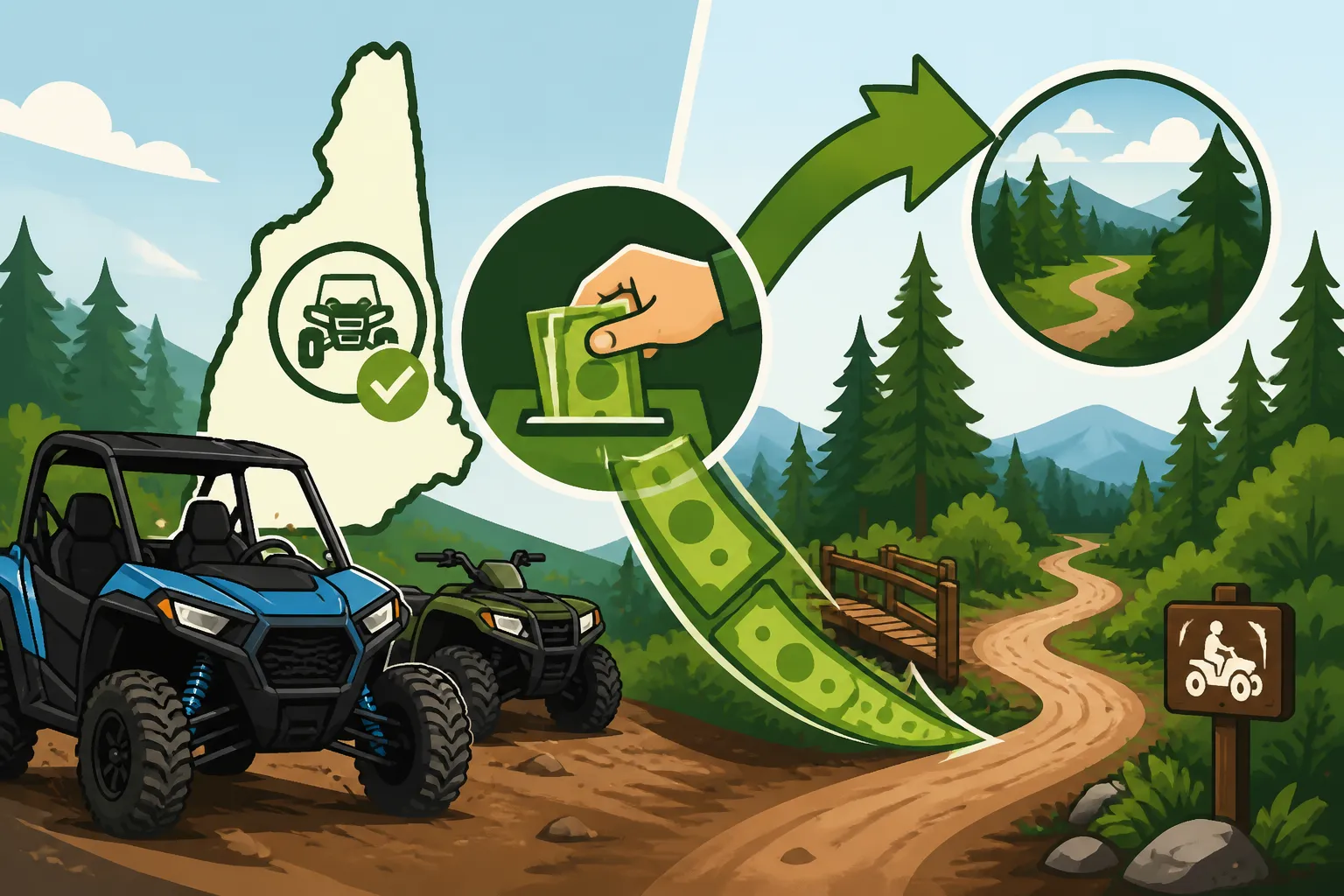
When you register your off-highway recreational vehicle in New Hampshire, you’re not just paying a general tax that disappears into the state’s vast coffers. Instead, a significant portion of your registration fee is directed into a dedicated fund, specifically created to support the OHRV trail system. This isn't just a bureaucratic detail; it’s a fundamental aspect of New Hampshire's approach to recreational vehicle management, designed to ensure that the user fees directly benefit the users. It's often misunderstood that there's a separate "trail pass" to buy, but in New Hampshire, the registration is your access pass to the approved trail network. [Why Your Registration Is the Access]
The Dedicated OHRV Fund
Imagine a special bank account set up just for OHRV riders. That's essentially what the dedicated OHRV fund is. Every time you register your ATV, UTV, or trail bike, a portion of that fee goes directly into this account. This system ensures that the funds generated by the OHRV community are reinvested directly back into what matters most to riders: the trails themselves. It's a closed-loop system, designed to create a direct link between what you pay and the quality of your riding experience. This transparency is crucial for riders to feel that their contributions are valued and put to good use, rather than being siphoned off for unrelated state expenditures.
This dedicated funding mechanism is a point of pride for New Hampshire's outdoor recreation community. It means that when you see a newly installed culvert, a clear trail sign, or a freshly graded section of trail, you can know that your registration fee played a direct role in making that improvement happen. It’s a testament to the state's commitment to supporting recreational riding, and it encourages ongoing participation from riders who see the tangible benefits of their annual investment.
More Than Just Maintenance
It would be easy to assume that registration money simply covers basic trail maintenance, like clearing fallen branches or mowing overgrown areas. While those are certainly part of the equation, the scope of what these funds support is much broader and more impactful. The money helps fund everything from major infrastructure projects to essential operational needs that keep the trail system running smoothly and safely. This includes significant undertakings like bridge construction and repairs, which are critical for maintaining continuous trail access across challenging terrain and waterways. [Bridges Built With Registration Money]
Beyond the big projects, these funds also cover the less visible but equally important aspects of trail management. This includes purchasing and maintaining equipment used by volunteer clubs for trail work, developing and printing trail maps, and ensuring proper signage for navigation and safety. It also helps with the administrative costs associated with managing a statewide trail system, coordinating with landowners, and planning for future expansions. Without these funds, many of the interconnected trails that form networks like the expansive Ride the Wilds would simply not be sustainable or accessible.
The Bureau of Trails: Overseeing the Funds
The administration of the OHRV fund and the oversight of the trail system falls primarily to the New Hampshire Bureau of Trails, a division within the Department of Natural and Cultural Resources. This agency acts as the central hub, responsible for collecting the registration fees, managing the dedicated fund, and working closely with the dozens of volunteer OHRV clubs across the state. They are the strategic planners, the financial managers, and the regulatory body ensuring that the state’s vision for recreational riding is realized and sustained.
From Collection to Allocation
The process begins, as you might expect, with the collection of your annual OHRV registration fees. Once these funds are received, the Bureau of Trails meticulously manages them within the dedicated OHRV fund. Their role isn't just about holding the money; it's about strategically allocating it to maximize its impact on the trail system. This involves a comprehensive assessment of needs across the state, prioritizing projects based on safety, sustainability, and rider experience. They work with clubs to identify areas requiring attention, whether it's a critical bridge repair or the development of a new connector trail.
The allocation isn't arbitrary. It follows a structured grant program where OHRV clubs submit detailed proposals for projects. The Bureau reviews these applications, often conducting site visits and consulting with experts, to ensure that the proposed work is necessary, feasible, and aligned with the overall goals for the state's trail network. This rigorous process helps ensure that every dollar is spent wisely, addressing the most pressing needs and contributing to the long-term health and accessibility of our trails. [New Hampshire Grants for Club Trail Work]
Transparency and Accountability
A cornerstone of the New Hampshire Bureau of Trails' operation is its commitment to transparency and accountability. They understand that riders want to know their money is making a real difference. To that end, clubs that receive grants are required to maintain meticulous records of their expenditures and the work completed. This often includes invoices, time sheets for volunteer labor, and photographic evidence of project progress and completion. This strict reporting ensures that funds are used precisely for their intended purpose.
For clubs, this means having well-organized internal processes for managing projects and finances. Sometimes, clubs may even leverage resources like LawDepot to help them formalize contracts with contractors, document agreements with landowners, or maintain accurate records for grant compliance. Having clear, legally sound documents can streamline the reporting process and ensure that the club meets all requirements set forth by the Bureau of Trails, ultimately safeguarding the integrity of the funding process and the trust placed in them by both the state and the riding community.
How Clubs Apply for and Use Trail Grants
While the state manages the funds, it's the network of dedicated volunteer OHRV clubs that truly makes the New Hampshire trail system thrive. These clubs are the boots on the ground, the unsung heroes who transform registration fees into rideable trails. Without their tireless efforts and passionate commitment, much of the trail infrastructure we enjoy simply wouldn't exist or would quickly fall into disrepair. They are the vital link between state funding and the physical reality of the trails.
The Backbone of the System: Volunteer Clubs
New Hampshire is home to dozens of active OHRV clubs, each responsible for developing, maintaining, and often grooming sections of the vast trail network. These clubs are made up of local volunteers—your neighbors, friends, and fellow riders—who dedicate countless hours to improving the riding experience for everyone. Their work ranges from routine maintenance like clearing brush and fallen trees to more complex tasks such as installing new signage, repairing washed-out sections, and even constructing new sections of trail. [What a Club Does With Your Dues]
The synergy between the state's funding and the clubs' volunteer efforts is what makes the New Hampshire system so effective. The state provides the financial resources, but it's the clubs that supply the local knowledge, the volunteer labor, and the commitment to get the job done. This collaborative model empowers local communities to take ownership of their trails, fostering a strong sense of pride and ensuring that the trail system reflects the needs and desires of the riders who use it most.
Grant Applications and Project Selection
When an OHRV club identifies a need for a specific project on their managed trails, they don't just start digging. They go through a formal application process with the New Hampshire Bureau of Trails. This involves submitting a detailed grant proposal outlining the project's scope, objectives, estimated costs, and how it will benefit the riding public. Projects can vary widely in scale, from minor repairs like replacing damaged trail markers or clearing a specific problem area, to major undertakings such as designing and building a new bridge or re-routing a significant section of trail to improve safety or environmental sustainability.
The Bureau of Trails carefully reviews these applications, considering factors like impact, cost-effectiveness, and alignment with statewide trail objectives. Once a grant is approved, the club can then begin the work, often using a combination of volunteer labor and, for larger or more specialized tasks, contracting with local businesses. This systematic approach ensures that valuable funds are directed towards projects that offer the greatest benefit to the OHRV community and contribute to the overall quality and safety of the trail system.
The Work in Action
Once a grant is approved and funding secured, that's when the real work begins. Volunteer club members, often aided by professional contractors for heavy equipment operation or specialized construction, roll up their sleeves and get to work. This might involve operating excavators to grade a new section of trail, hauling in gravel to stabilize soft spots, hand-clearing overgrown areas with chainsaws, or constructing sturdy wooden bridges over streams and wetlands. [Who Cuts and Maintains a Volunteer Club Trail]
Proper planning and execution are key. Clubs often need to enter into formal agreements with landowners to secure access for trail development or maintenance. In such cases, having a well-drafted landowner agreement is crucial, and some clubs may turn to resources like LawDepot for reliable templates to ensure all parties' rights and responsibilities are clearly defined. This formalizes the relationship, protects the club, and ensures the landowner is comfortable with the trail passing through their property. The visible results of this hard work are the well-maintained, clearly marked, and enjoyable trails that riders experience every season across New Hampshire.
The Real-World Impact: Trails You Can Ride
So, what does all this administrative work, grant writing, and volunteer labor actually mean for you, the rider? It means a robust, interconnected, and continuously improving OHRV trail system that offers unparalleled riding experiences. Your registration fees are not just numbers on a ledger; they are the literal foundation of the trails beneath your tires.
More Miles, Better Riding
The most direct and visible impact of this funding model is the sheer volume and quality of trails available for riding. New Hampshire boasts thousands of miles of OHRV trails, many of which are connected through vast networks like the famous Ride the Wilds in Coos County. [Ride the Wilds in Coos County] This extensive system didn't appear by magic; it was built and is sustained through the dedicated OHRV fund and the efforts of volunteer clubs. The funds allow for the creation of new trails, linking previously isolated segments and opening up new opportunities for multi-day excursions or longer loop rides.
Beyond expansion, the funds ensure the existing trails are well-maintained. This translates to smoother riding surfaces, less erosion, properly functioning culverts, and clear sightlines, all contributing to a more enjoyable and less challenging experience for riders of all skill levels. When you’re out on the trails exploring the beautiful New Hampshire landscape, you’re experiencing the direct result of a system designed to reinvest in your passion.
Enhanced Safety and Sustainability
The impact of registration money extends far beyond just adding mileage. A significant portion of these funds is dedicated to enhancing safety and ensuring the long-term sustainability of the trail system. This includes the installation of clear and consistent signage, critical for navigation and warning riders of potential hazards. Funds also support the construction and repair of bridges, ensuring safe crossings over water bodies and ravines. [Signs Paid for by Registrations]
Furthermore, proper trail design and maintenance, funded by registration fees, play a crucial role in environmental protection. Projects often incorporate erosion control measures, proper drainage systems, and the rehabilitation of sensitive areas, minimizing the environmental footprint of OHRV use. This commitment to both rider safety and environmental stewardship ensures that New Hampshire's trails remain enjoyable and accessible for generations to come, allowing us to continue exploring the beauty of the state responsibly.
A Shared Responsibility
Ultimately, the thriving OHRV trail system in New Hampshire is a testament to a shared responsibility among riders, volunteer clubs, and the state government. Your annual registration fee is more than just a requirement; it's an investment in the future of the sport you love. By contributing to the dedicated OHRV fund, you directly support the maintenance, development, and improvement of the trails.
Joining a local OHRV club further amplifies your impact, as club dues often supplement grant money, and volunteer hours provide the labor that grant funds can't always cover. [Joining a New Hampshire OHVA Club] The success of this model hinges on continued participation and understanding from the riding community. So, the next time you hit the trails in New Hampshire, remember that every smooth turn, every well-marked intersection, and every sturdy bridge is a direct result of the collective effort, powered by your registration dollars.
Here's a quick look at how your registration money breaks down:
| Contribution Area | Description | Example Projects |
|---|---|---|
| Trail Maintenance | Day-to-day upkeep, clearing, grooming, minor repairs. | Clearing fallen trees, grading rough sections, mowing. |
| Infrastructure Projects | Larger construction and repair efforts for essential trail components. | Bridge building, culvert installation, trail reroutes. |
| Equipment & Materials | Purchase and maintenance of tools and materials for clubs. | Chainsaws, excavators, gravel, lumber, signage. |
| Signage & Maps | Ensuring clear navigation and safety information on trails. | Trail markers, hazard warnings, directional signs. |
| Administrative Support | Management, coordination, and oversight by the Bureau of Trails. | Grant application processing, landowner relations. |
| Landowner Agreements | Formalizing access rights across private lands (often club-driven). | Drafting formal access agreements (e.g., via LawDepot). |
Disclaimer
This article is for general informational purposes only and does not constitute professional advice. Laws, prices and regulations vary by location and change over time. Consult a qualified professional for guidance on your specific situation.