New Hampshire OHRV Registration and Insurance
Navigating the world of Off-Highway Recreational Vehicles (OHRVs) in New Hampshire can sometimes feel like trying to untangle a particularly stubborn knot. One of the biggest areas of confusion, and frankly, frustration, for many riders revolves around what’s actually required to hit the trails – specifically concerning registration and that ever-present question of insurance. This guide is here to cut through the noise, offering clear, empathetic insights into New Hampshire's specific rules so you can ride with confidence and peace of mind.
Understanding New Hampshire OHRV Registration Requirements
Before you even think about firing up that engine and heading out, understanding New Hampshire’s OHRV registration process is absolutely crucial. It’s not just a suggestion; it’s a legal necessity that keeps our trails open and safe for everyone. Many riders, especially those new to the state or new to the sport, often wonder if their home state’s registration is enough, or if they really need to go through yet another bureaucratic step. The short answer for riding in the Granite State? Yes, you most likely do need a New Hampshire registration.
Think of registration as your official permission slip to use the state’s extensive trail system. It’s how the state identifies your machine and ensures that funds are collected to maintain those very trails you love to ride. Without it, you’re not just risking a ticket; you’re missing out on supporting the network that makes New Hampshire such a fantastic OHRV destination.
When Registration is Mandatory in New Hampshire
It’s tempting to think that if you’re only riding on a friend’s back forty, or a small piece of private land you own, that registration might be an optional extra. However, the law in New Hampshire is quite clear: if your OHRV leaves your own property and ventures onto any public land, approved private land, or trails that connect to them, it must be registered. This includes vast networks like the [Ride the Wilds in Coos County], designated town roads, or even crossing a public right-of-way to get from one private parcel to another.
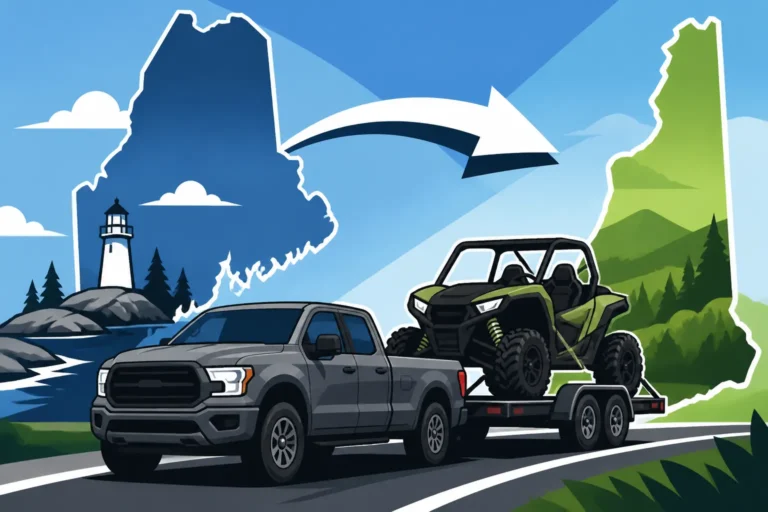
Picture this common scenario: you’ve got a fantastic new side-by-side, and your buddy has invited you to his camp up north, promising access to miles of beautiful trails. You pack up, trailer your machine, and when you get there, you’re ready to roll right from the camp driveway onto the club trail. If that club trail connects to the broader public system, or even if it’s just approved private land, you need that New Hampshire registration. It doesn’t matter if your machine is already registered in Vermont or Massachusetts; New Hampshire honors no other state’s registration for OHRV use on its trails. This often catches out-of-state visitors by surprise, leading to unnecessary fines or cutting a trip short. The only exception to the "leave your own property" rule is if you're riding entirely on your own land. Even then, you need to be very careful not to accidentally stray onto someone else's property or a public access point. [Leaving Your Own Property in New Hampshire] explains this further.
The Process of Registering Your OHRV
Alright, so you know you need to register. What’s next? The process itself is fairly straightforward, but it requires a few key pieces of information and, of course, some patience. You’ll need proof of ownership, which for many means a bill of sale, especially if you bought your machine privately. Unlike cars, New Hampshire does not issue titles for OHRVs, which can be a point of confusion for those coming from states where titles are common for all vehicles. This means your bill of sale is incredibly important as your primary proof of ownership. Make sure it's detailed and signed by both parties. If you're looking for a template, services like LawDepot can provide customizable legal documents, including a bill of sale, to ensure you have all the necessary information covered for a smooth transfer of ownership. [Do You Need a Title for an ATV in New Hampshire?] goes into more detail on this.
You’ll also need to know your machine's Vehicle Identification Number (VIN) or serial number, which is usually stamped on the frame. Additionally, you'll need personal identification for yourself. Registrations can be obtained at various locations, including most local town clerks and some authorized powersports dealers. Many find it convenient to visit a dealer because they can often help you with the paperwork right on the spot, especially if you're buying a new machine. It’s a good idea to call ahead to your chosen registration agent to confirm their hours and what forms of payment they accept. You’ll walk away with your registration certificate and those all-important decals that you’ll affix to your OHRV, proving it’s ready for the trails. [Where to Register an OHRV in New Hampshire] lists the various options.
Navigating New Hampshire OHRV Insurance
This is perhaps one of the most surprising aspects for many OHRV riders in New Hampshire: the state does not legally require you to carry liability insurance on your ATV or UTV. Yes, you read that correctly. While car insurance is mandatory for operating a vehicle on public roads, OHRVs are treated differently in this regard. This doesn't mean it's a free-for-all, but it certainly clarifies a common misconception.
However, just because it’s not mandated by law doesn’t mean it’s not a really, really good idea. This distinction often leads to a false sense of security, and it’s important to understand the significant risks you take on if you choose to ride uninsured. Think about the potential for accidents, property damage, or even injuries to yourself or others. Without insurance, you are personally liable for all these costs.
Is OHRV Insurance Required in New Hampshire?
To reiterate, New Hampshire law does not currently require OHRV owners to carry liability insurance for their machines when operating them on trails or designated OHRV routes. This policy is unique compared to many other states and other types of vehicles. The state focuses more on registration and safety education as its primary means of regulating the sport. While this might sound like a cost-saving measure, it places a significant burden on the individual rider in the event of an incident.
Consider a situation where you’re enjoying a beautiful day on the [Jericho Mountain State Park at Berlin] trails, and you accidentally misjudge a turn, clipping a parked machine or causing minor property damage to a trailside sign. If you’re uninsured, all those repair costs come directly out of your pocket. Or, even more seriously, imagine an accident resulting in an injury to another rider. The medical bills and potential legal fees could be financially devastating. This lack of a state mandate for insurance is not an invitation to ride recklessly or without personal responsibility; it's simply an absence of a legal requirement. [Why New Hampshire Requires No OHRV Insurance] dives deeper into the reasoning behind this.
The Benefits of Voluntary OHRV Insurance
Given that insurance isn’t legally required, why would anyone bother with it? The answer is simple: protection and peace of mind. Voluntary OHRV insurance offers a crucial safety net that shields you from the potentially catastrophic financial consequences of an accident. Most OHRV insurance policies offer several types of coverage, similar to auto insurance:
- Liability Coverage: This is perhaps the most important. It covers property damage and bodily injury to others if you are at fault in an accident. Without it, you are personally responsible for these costs.
- Collision Coverage: This covers damage to your own OHRV if it collides with another object or vehicle.
- Comprehensive Coverage: This protects your machine from non-collision incidents like theft, vandalism, fire, or natural disasters. Given the investment many of us make in our machines, this can be invaluable.
- Uninsured/Underinsured Motorist Coverage: This protects you if you’re involved in an accident with another rider who doesn't have insurance or doesn't have enough to cover your damages.
Many financial advisors would strongly recommend at least basic liability coverage. It’s an investment in your financial security and the ability to continue enjoying your passion without constant worry. Some might even bundle OHRV insurance with their existing auto or home policies, potentially finding more favorable rates. The cost of insurance is typically a fraction of what a major accident could cost you out-of-pocket. It’s all about risk management – deciding whether the potential savings of not having insurance are worth the substantial financial risk.
Essential Paperwork and Practical Considerations
Beyond the big questions of registration and insurance, there are other practical details and pieces of paperwork that every New Hampshire OHRV rider should be aware of. Being prepared isn't just about avoiding a fine; it's about ensuring a smooth, enjoyable, and safe experience every time you hit the trails. Knowing what to carry, what to look out for, and how to properly maintain your documents can save you a lot of headaches down the line.
Key Documents for OHRV Registration
When you head to register your OHRV, or even when you're just out for a ride, having the correct documents readily available is essential. As mentioned earlier, since New Hampshire does not title OHRVs, your primary proof of ownership is often your bill of sale. If you're purchasing a used machine, ensure you get a clear, concise, and signed bill of sale from the seller. This document should include the date of sale, the purchase price, the full names and addresses of both buyer and seller, and the complete VIN of the machine. Utilizing a service like LawDepot for creating a comprehensive bill of sale can provide peace of mind that you've covered all the legal bases. This document will be critical when you present it to the registration agent.
When registering, you'll fill out the official [The New Hampshire OHRV Registration Application]. Make sure all fields are accurately completed. Once registered, you’ll receive a printed certificate of registration and two decals. The certificate is your proof of registration and should be carried with you whenever you’re riding, either the physical copy or a clear photograph on your phone. The decals, which show your registration number and the expiration date, must be prominently displayed on your OHRV, typically on both sides of the machine’s cowling or a visible flat surface. Having your [New Hampshire OHRV Decal Placement] correct is important for trail officers to quickly verify your compliance. Losing your certificate or decals isn't the end of the world, but it does require extra steps to replace them, so keeping them safe is wise. [Replacing Lost New Hampshire Decals] is a process you want to avoid if possible.
Safety and Legalities Beyond Registration and Insurance
While registration is mandatory and insurance is highly recommended, your journey as a responsible OHRV rider doesn't end there. There are numerous other safety and legal considerations that contribute to a positive riding experience for everyone on the trails. These rules are designed to protect riders, preserve the environment, and ensure harmonious coexistence with other trail users and landowners.
For example, all riders aged 12 and over are required to hold a valid OHRV Safety Certificate, or a valid driver's license, to operate an OHRV on public land or trails. This is a crucial step for younger riders to learn proper safety techniques and responsible riding habits. If you're riding with minors, understanding [New Hampshire's Age and Supervision Rules] is paramount. Also, many club trails, which form the backbone of New Hampshire's OHRV network, operate on land generously leased or permitted by private landowners. Respecting posted signs, staying on marked trails, and understanding [New Hampshire Landowner Permission Rules] are not just legal requirements but also fundamental courtesies that help maintain access for future generations of riders. Never assume unposted land is open; always seek explicit permission. Furthermore, simple things like checking [New Hampshire Trail Conditions Before You Ride] can prevent you from encountering unexpected closures or dangerous situations. Adhering to speed limits, especially in congested areas or near trail entrances, and being mindful of noise levels are also vital for maintaining good relations with local communities and other outdoor enthusiasts.
Here's a quick reference table to help clarify the main points regarding registration and insurance:
| Feature | New Hampshire OHRV Registration | New Hampshire OHRV Insurance |
|---|---|---|
| Legal Requirement | Yes, if riding off your own private property, on public trails, or approved private land. | No, not legally required by the state. |
| Purpose | Funds trail maintenance, identifies machine, grants legal access to trails. | Protects rider from financial liability and damages in case of an accident. |
| Cost | Varies by machine type, residency, and club membership status. | Varies by provider, coverage level, machine, and rider history. |
| Documents Needed | Bill of sale/proof of ownership, VIN, personal ID, completed application. | Policy documents (after purchase). |
| Where to Obtain | Town clerks, authorized dealers, Fish and Game OHRV agents. | Private insurance carriers. |
| Benefits | Legal trail access, supports trail system, avoids fines. | Financial protection, peace of mind, covers damages/injuries. |
| Consequences of Not Having | Fines, machine impoundment, no trail access. | Personal financial liability for all damages and injuries. |
Disclaimer
This article is for general informational purposes only and does not constitute professional advice. Laws, prices and regulations vary by location and change over time. Consult a qualified professional for guidance on your specific situation.