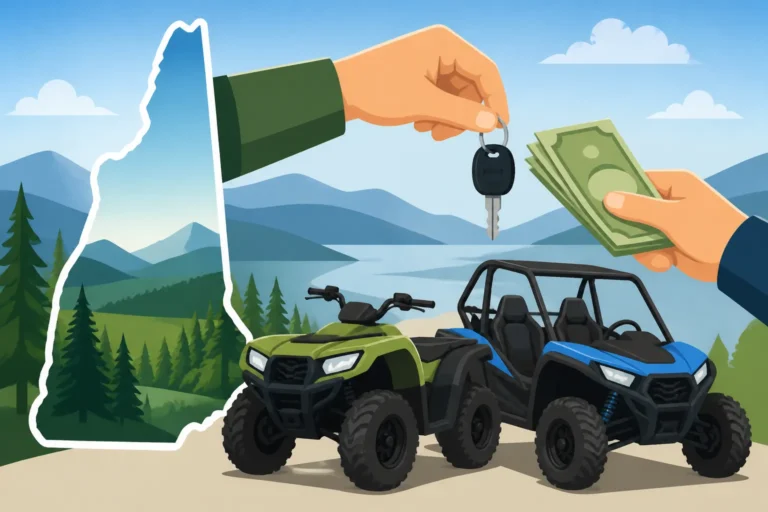
New Hampshire’s $25.50 OHRV Transfer Fee
Navigating the world of OHRV ownership in New Hampshire can sometimes feel like a treasure hunt for paperwork, especially when you're buying or selling a machine. One particular point of confusion for many new owners is the OHRV transfer fee. This guide is here to demystify that process, explaining exactly what the $25.50 fee covers, when you'll encounter it, and how to ensure your OHRV ownership transfer is as smooth as a freshly groomed trail.
Understanding the New Hampshire OHRV Transfer Fee
So, you’ve found the perfect quad or side-by-side, or perhaps you're looking to pass your beloved machine on to a new owner. Amidst the excitement, you might stumble upon mention of a transfer fee. In New Hampshire, there's a specific charge of $25.50 associated with transferring an OHRV registration from one owner to another. This isn't just a random fee; it's a critical component of the state's system for tracking ownership and ensuring the correct information is on file. It's essentially the administrative cost for updating the official record of who owns and operates a particular OHRV.
This fee ensures that when you sell your machine, the new owner's details are accurately recorded, removing your name from responsibility for that specific OHRV. Conversely, when you buy, it's how your name gets officially etched onto the state's records, granting you the legal right to register and operate the machine on New Hampshire's fantastic trail system. Without this step, the machine would technically still be tied to the previous owner, leading to all sorts of headaches down the line, from registration issues to potential liability questions. Think of it as the price of making it officially "yours" in the eyes of the state.
What the $25.50 Fee Covers
The $25.50 OHRV transfer fee in New Hampshire primarily covers the administrative work involved in updating the state's registration database. When you complete a transfer, the New Hampshire Fish and Game Department, which oversees OHRV registrations, processes your new information. This includes updating the certificate of registration to reflect the new owner's name and address, ensuring the correct machine identification numbers (like VIN or serial number) are associated with the right person, and issuing new decals if necessary.
It's a fee that helps maintain the integrity of the registration system. It's not about the machine itself, but the paperwork that proves legal ownership and allows for subsequent registration. This helps prevent fraud, ensures that law enforcement can accurately identify the responsible party for a machine, and generally keeps the OHRV ecosystem organized and accountable. Without this mechanism, tracing ownership and maintaining proper records would become significantly more challenging, impacting trail management, safety enforcement, and even revenue collection for trail maintenance.
Why It's Separate from the Annual Registration Cost
It's really important to distinguish the transfer fee from the annual OHRV registration cost. Many new riders get these two confused, thinking the transfer fee is the registration. Nope! The $25.50 transfer fee is a one-time charge per transaction when an OHRV changes hands. It's solely for updating ownership records. The annual registration fee, on the other hand, is what you pay each year (or for a specific period, like a [Ten-Day Nonresident Registration]) to get your machine legally registered to ride on New Hampshire trails. This annual fee contributes to things like trail maintenance, safety programs, and administrative costs for the OHRV program. [Where New Hampshire OHRV Fees Go] is a topic many find enlightening.
So, if you buy a used OHRV in August, you’ll pay the $25.50 transfer fee to get the ownership switched to your name. Then, you'll also need to pay the appropriate annual registration fee to get your decals and certificate for the current season. This annual registration will expire on April 30th of the following year, regardless of when you bought it. It's two distinct charges for two distinct purposes. One makes it legally yours, the other makes it legally ridable.
When Does the $25.50 Fee Apply?
The New Hampshire OHRV transfer fee of $25.50 comes into play anytime there's a change of ownership for a registered OHRV. This isn't just limited to sales between strangers; it applies to a variety of situations where the legal owner of the machine changes. Understanding these scenarios helps you anticipate when you'll need to pay this fee and what documentation to have ready.
Buying or Selling a Used OHRV
This is by far the most common scenario where the $25.50 transfer fee applies. Whether you're purchasing an ATV, UTV, or dirt bike from a powersports dealer or from a private individual, the ownership will need to be transferred. If you're buying from a dealer, they will typically handle the transfer paperwork as part of the sales process, often rolling the transfer fee into your total cost. They act as agents for the state, making the process relatively seamless for you. [Registering a Machine Bought at a New Hampshire Dealer] simplifies this.
For private sales, the responsibility falls more directly on the buyer and seller. You'll need to complete the necessary paperwork together and then take it to a registration agent or the Fish and Game Department. It's crucial that both parties understand their roles in this process to avoid delays. The seller needs to provide the signed-over registration certificate, and the buyer needs to submit it with the transfer fee and their new registration application. For more details on private sales, check out [Buying a Used ATV in New Hampshire] and [Selling an OHRV in New Hampshire].
Inheriting an OHRV
Losing a loved one is incredibly difficult, and dealing with their estate can be overwhelming, especially when it comes to assets like OHRVs. If you inherit an OHRV, even if it's from a family member, the state of New Hampshire still requires an ownership transfer to officially put the machine in your name. This ensures that the state's records accurately reflect the current owner.
You won't simply be able to use the deceased's registration; you'll need to go through the transfer process. This typically involves providing documentation like a death certificate, a copy of the will or probate court documents showing you as the rightful heir, and the existing OHRV registration certificate. The $25.50 transfer fee will apply here as well, covering the administrative costs to update the records from the estate to your personal ownership. It might seem like an extra hurdle during a tough time, but it's a necessary step to legalize your ownership and allow you to register it moving forward. For more on this, look into [Registering an Inherited Machine in New Hampshire].
Transferring Between Family Members or as a Gift
Sometimes, an OHRV might change hands within a family, perhaps from a parent to a child, or as a generous gift to a friend. While these transactions might not involve money changing hands, they still represent a change in legal ownership. Therefore, the $25.50 transfer fee still applies. The state needs to update its records to reflect who is now legally responsible for the machine.
Even if it's a gift, a form of "proof of transaction" is often required, such as a bill of sale listing the purchase price as "gift" or "$0.00." This provides a paper trail for the transfer. The original owner signs over the registration certificate to the new owner, who then submits it with the transfer application and fee. It's a formal process, even for informal exchanges, to maintain accurate state records and avoid confusion later. For example, if the machine were involved in an incident, the state needs to know who the current legal owner is.
The Transfer Process: What You Need to Know
Transferring an OHRV in New Hampshire might seem like a maze of forms and requirements, but it's actually quite straightforward once you know the steps. The key is to gather all your documents beforehand and understand the sequence of events. Whether you're buying from a dealer or a private party, being prepared will save you time and frustration.
Step-by-Step for Private Sales
When you're dealing with a private sale, either as the buyer or seller, you're more directly involved in the paperwork. Here’s a breakdown of the typical steps:
- Seller provides the current registration certificate: The most crucial document is the original, current OHRV registration certificate. The seller needs to sign and date the back of this certificate in the designated "transfer" section. This legally releases their ownership interest.
- Bill of Sale: While New Hampshire does not issue titles for OHRVs, a bill of sale is highly recommended, even for private sales. This document serves as proof of purchase, lists the sale price, machine details (VIN, make, model), and the names and signatures of both buyer and seller. It's your best protection and proof of transaction. You can find templates online, some general legal forms websites like LawDepot offer customizable bill of sale documents that can be adapted for an OHRV. This can be especially helpful for [New Hampshire ATV Bill of Sale Requirements].
- Buyer fills out a new registration application: The buyer will need to complete an OHRV registration application form, providing their personal details, contact information, and the machine's specifics.
- Submit documents and fee: The buyer then takes the signed-over registration certificate, the bill of sale (if applicable), the new registration application, and the $25.50 transfer fee (plus the annual registration fee, if applicable) to an authorized registration agent. [Where to Register an OHRV in New Hampshire] outlines your options. This could be certain town clerks, authorized powersports dealers, or the NH Fish and Game Department directly.
It's a process that requires attention to detail, but completing each step correctly ensures a hassle-free transfer.
What Happens at an Authorized Agent
When you visit an authorized OHRV registration agent—be it a local town clerk or a powersports dealer—they play a vital role in formalizing the transfer. These agents are equipped to process the paperwork, collect the fees, and issue you your new registration and decals on the spot. It's typically a much quicker process than sending everything through the mail, allowing you to ride sooner.
Upon arrival, the agent will review your documents: the signed-over previous registration, the bill of sale (if you have one), and your completed new registration application. They'll verify the information, cross-reference the VIN, and ensure all signatures are present. Once everything checks out, they'll collect the $25.50 transfer fee, along with your new annual registration fee if you're registering the machine for the current season. They then update the state's database, print your new [New Hampshire OHRV Decals and the Certificate], and send you on your way. It’s a pretty efficient system, designed to get you out on the trails quickly.
Online Transfer Limitations
While many things can be done online these days, a direct "online transfer" of OHRV ownership in New Hampshire isn't generally available in the same way you might renew an existing registration. The initial transfer of ownership, especially with the requirement for the previous owner's signature on the physical certificate, typically necessitates an in-person transaction or a mail-in process through the Fish and Game Department.
Renewing your existing registration online is certainly an option and a great convenience for returning riders. However, for a change of ownership where a machine is being transferred from one individual to another, the physical certificate, application, and often a bill of sale need to be reviewed and processed by an authorized agent. This helps prevent fraudulent transfers and ensures the integrity of the state's OHRV database. So, while you can fill out the application form at home, the actual submission for a transfer will likely involve a trip to an agent.
Essential Documents for a Smooth Transfer
A successful OHRV transfer hinges on having the correct documents in hand. Showing up unprepared can lead to delays, frustration, and extra trips. Beyond the transfer fee itself, these pieces of paper are your proof of ownership and the legal basis for registering your machine in New Hampshire. Getting them right from the start makes all the difference.
The Original Registration Certificate
This is truly the king of documents when it comes to transferring an OHRV in New Hampshire. Since the state does not issue titles for OHRVs, the registration certificate serves as the primary proof of ownership. When you're buying a used machine, the seller must provide you with their current, original registration certificate. On the back of this certificate, there's usually a section for transferring ownership. The seller needs to sign and date this section, effectively endorsing the machine over to you.
Without this original, signed certificate, transferring the OHRV into your name will be extremely difficult, if not impossible. It's the official record linking the machine to its owner. If the seller has lost their certificate, they will need to obtain a duplicate from the New Hampshire Fish and Game Department before they can legally transfer it to you. Never accept a simple handwritten note or just a bill of sale without this crucial document. It’s worth checking out [New Hampshire OHRV Registration Paperwork] for a full list.
Bill of Sale (Highly Recommended)
While New Hampshire doesn't mandate a bill of sale for OHRV transfers (because it doesn't title OHRVs), having one is a smart move that offers significant protection for both buyer and seller. A well-drafted bill of sale acts as a legal record of the transaction. It should include:
- The date of sale.
- The full names and addresses of both buyer and seller.
- A detailed description of the OHRV (make, model, year, VIN/serial number).
- The agreed-upon purchase price (or "gift" if it's a transfer without monetary exchange).
- A statement that the seller is transferring ownership "as is" and that they are the legal owner.
- Signatures of both parties.
Using a template, perhaps from a reputable online service like LawDepot, can help ensure you don't miss any critical details. This document protects the buyer by proving purchase and the seller by documenting the transfer of responsibility. In case of any future disputes, or if you need to prove ownership for insurance purposes, a bill of sale is invaluable. It clearly separates your ownership from the previous owner's, which is critical since New Hampshire doesn't require OHRV insurance.
New OHRV Registration Application Form
Every time an OHRV changes hands, the new owner must complete a new OHRV registration application form. This form collects all your current information, including your name, address, contact details, and specifics about the OHRV you're registering. It's essential that this form is filled out completely and accurately to avoid any delays in processing your transfer and registration.
You can usually find these forms on the New Hampshire Fish and Game Department website or pick them up at any authorized registration agent. Make sure to double-check all the information before submitting it, especially the VIN or serial number, as errors here can cause significant problems. This application, along with the signed original registration certificate and the transfer fee, forms the core of your submission package.
| Document Type | Purpose | Provided By (Typically) | Required For |
|---|---|---|---|
| Original Registration Certificate | Primary proof of ownership, signed over to new owner | Seller | All transfers |
| Bill of Sale | Legal record of transaction, details of sale and machine | Buyer/Seller (created) | Highly Recommended |
| New OHRV Registration Application | New owner's information for state records and new registration | Buyer | All transfers |
| Proof of Identity | Verification of applicant (Driver's License, State ID) | Buyer | All transfers |
| Payment for Fees | $25.50 transfer fee + annual registration fee | Buyer | All transfers |
Avoiding Common Pitfalls in OHRV Transfers
Transferring an OHRV registration should be a straightforward process, but like anything involving paperwork and rules, there are common mistakes people make that can turn it into a headache. Knowing what to watch out for can save you time, money, and a lot of frustration. Being proactive and informed is your best defense against these pitfalls.
Missing or Incorrect Paperwork
One of the biggest culprits for delayed or rejected transfers is incomplete or incorrect paperwork. This often boils down to:
- No Original Registration Certificate: As mentioned, if the seller doesn't have the original, they need to get a duplicate first. A photocopy or a handwritten note isn't sufficient.
- Unsigned Transfer Section: The back of the original registration certificate must be properly signed and dated by the seller. Without their signature, the transfer is invalid.
- Errors on the Application: Mistakes in your name, address, or the OHRV's VIN on the new registration application can cause a holdup. Double-check everything before you submit it.
- Missing Bill of Sale (for your own protection): While not legally mandated for the state transfer, not having a bill of sale can leave you vulnerable in the event of a dispute or if questions arise about the OHRV's past. A good template, perhaps one customized using a service like LawDepot, can be a lifesaver.
Always take the time to review all documents meticulously before heading to the registration agent. It will be worth the extra minute to ensure everything is perfect.
Not Understanding the "No Title" System
New Hampshire operates under a "registration only" system for OHRVs; it does not issue separate titles. This can be a source of confusion, especially for buyers coming from states where ATVs and UTVs do have titles. The absence of a title means the registration certificate is the primary document proving ownership. [Why New Hampshire Issues No OHRV Title] explains this in more detail.
Because there's no title, it's even more critical to safeguard the original registration certificate and ensure the transfer section is correctly filled out. It also underscores the importance of a detailed bill of sale as additional proof of your transaction. Without a title, due diligence is key: verify the VIN, check for any liens (though less common without a title), and ensure the seller is indeed the person named on the current registration certificate.
Buying a Machine with an Expired Registration
You might find a great deal on an OHRV, only to discover its registration expired years ago. While this isn't a deal-breaker for the transfer of ownership, it adds another layer to the process. An expired registration doesn't invalidate the transfer section on the back of the certificate, but it does mean the seller likely hasn't been legally riding it.
When you go to register the machine in your name, you'll still pay the $25.50 transfer fee to switch ownership, and then you'll need to pay the current annual registration fee to get it legal for the trails. You won't be charged for past, expired registration periods. However, it's a good reminder to always check the registration's expiration date when purchasing to avoid any surprises. The process of [Renewing a New Hampshire OHRV Registration] is distinct from the transfer.
The Financial Side of OHRV Ownership Beyond the Transfer Fee
While the $25.50 OHRV transfer fee is a one-time cost when you acquire a machine, it's important to remember that it's just one piece of the financial puzzle of OHRV ownership in New Hampshire. Thinking about the bigger picture from the start helps you budget wisely and ensures you can enjoy your machine without unexpected financial stress.
Annual Registration Fees
After you've paid the transfer fee and put the OHRV in your name, the next recurring cost you'll face is the annual registration fee. These fees vary based on the type of machine (ATV, UTV, trail bike, snowmobile) and whether you are a New Hampshire resident or a nonresident, and if you're a member of an approved OHRV club. For example, [New Hampshire's $59 Club Rate] is a significant discount.
These annual fees are critical for maintaining the extensive trail network across the state, funding safety programs, and supporting the administrative functions of the Fish and Game Department. Your registration expires on April 30th each year, regardless of when you initially registered, so you'll need to renew it annually to keep riding legally. It’s always good to be aware of the full [New Hampshire OHRV Registration Cost] before committing.
Potential Other Costs: Inspections, Repairs, and Accessories
Owning an OHRV involves more than just registration fees. You'll want to factor in potential costs for:
- Pre-purchase inspection: If you're buying a used OHRV, especially from a private seller, investing in a professional inspection can save you from costly repairs down the road. This isn't part of the state's requirements but is highly recommended.
- Maintenance and repairs: OHRVs need regular maintenance, just like any other vehicle. Oil changes, tire replacements, brake work, and occasional repairs are all part of responsible ownership.
- Safety Gear: While New Hampshire doesn't require helmets for adults over 18, it's always a good idea to invest in quality safety gear, including helmets, eye protection, gloves, and protective clothing. Minors have specific helmet requirements.
- Accessories: From winches and plows to storage boxes and upgraded tires, there's a vast array of accessories that can enhance your riding experience, but they come at a cost.
- Trailer: If you plan on transporting your OHRV to various trailheads, a suitable trailer will be a necessary investment.
By considering all these potential expenses, you can create a realistic budget for your OHRV adventures in New Hampshire, ensuring that the fun doesn't come with financial surprises.
Disclaimer
This article is for general informational purposes only and does not constitute professional advice. Laws, prices and regulations vary by location and change over time. Consult a qualified professional for guidance on your specific situation.