New Hampshire Rules for a Passenger Under 18
A child riding along on an ATV or UTV is not covered by the same rules as a child operating one. In New Hampshire, the key questions are whether the machine is built to carry a passenger, whether the passenger is properly protected, and whether the operator is legally allowed to ride. Here’s how to check those points before you set out.
The machine must be designed to carry a passenger
New Hampshire’s basic rule is that an OHRV may carry a passenger only when the manufacturer designed it to do so. A passenger seat, handholds and footrests on a two-person ATV are meaningful signs that the machine is built for a passenger. A second person perched on a cargo rack, squeezed onto a single-rider seat or carried on an improvised attachment is not a safe substitute.
For a UTV, use only a seat the manufacturer provides for an occupant. A side-by-side’s extra seat should have its intended belt or restraint, and the passenger should use it correctly. A machine’s appearance or size does not establish that every space in it is a passenger seat. Check the owner’s manual and the vehicle’s labels for its intended seating positions and capacity.
| Situation | What to check before riding |
|---|---|
| Two-person ATV | The manufacturer designed it to carry a passenger, and the passenger can use the intended seat, footrests and handholds |
| Single-rider ATV | Do not carry a passenger on the seat, rack or another improvised position |
| UTV or side-by-side | The passenger has a manufacturer-designated seat and uses the intended restraint |
| Passenger under 18 | The passenger wears a helmet and appropriate eye protection |
| Any machine on a public trail | Confirm the machine is properly registered and that the route is open to it |
A passenger’s age does not make an unsuitable machine suitable. Nor does a larger engine or a wider body automatically mean a vehicle is built to carry two people. If the manual lists only one occupant, plan for one rider.
This matters especially with ATVs. Some look similar but are designed for different seating arrangements. A passenger who cannot sit securely, hold on as intended and place both feet where the machine’s design requires may be at risk even when the ATV is technically a two-person model. Follow the manufacturer’s limits rather than trying to make a passenger fit.
The rules and practical concerns are different for a passenger than for an operator. An adult may be allowed to operate a machine that a child cannot legally operate alone, but that does not create an exception to the passenger-seat requirement. For more detail on the general rule, see New Hampshire Rules for Carrying a Passenger.
A passenger under 18 needs a helmet and eye protection
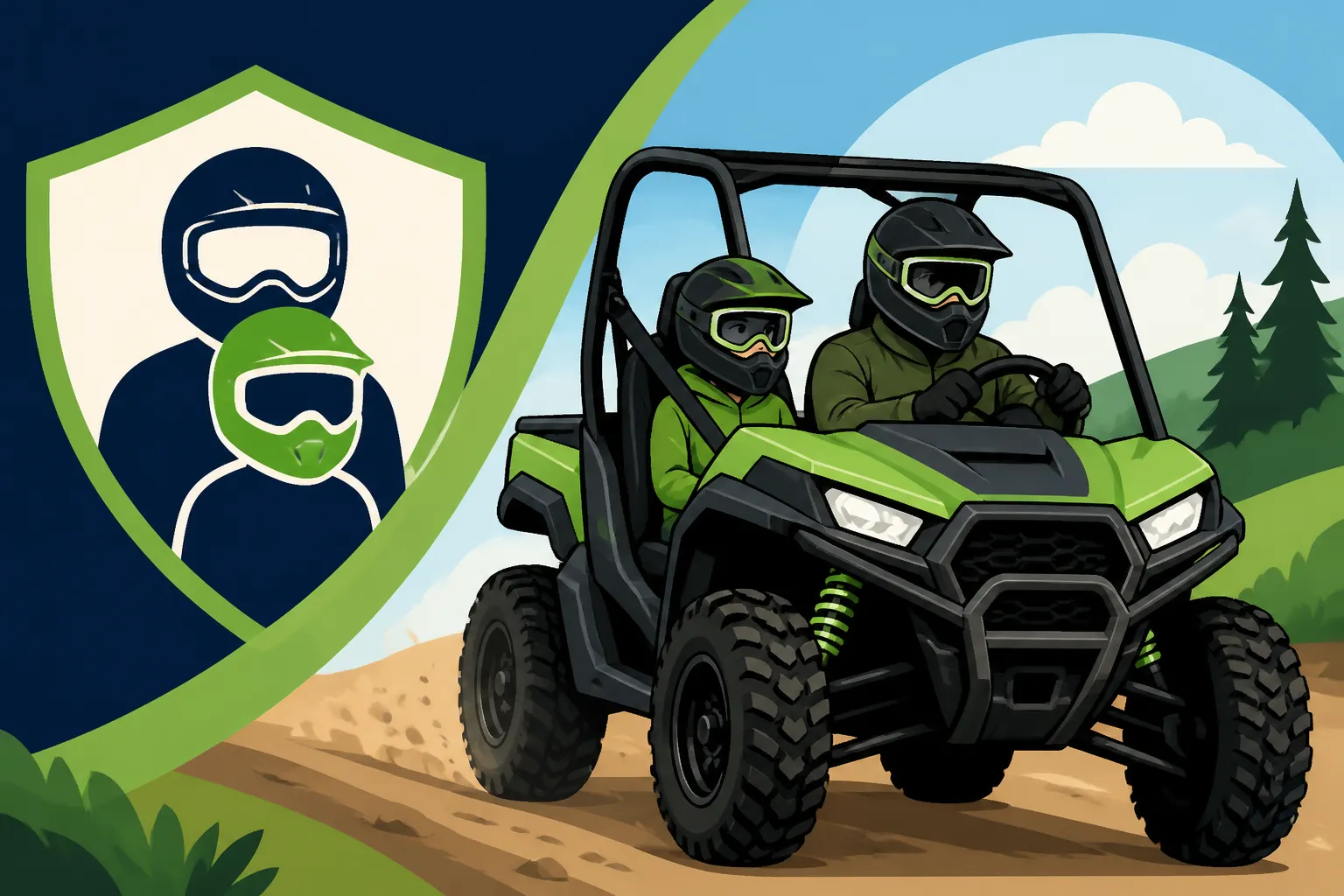
In New Hampshire, a passenger under 18 must wear a helmet while riding an OHRV. Do not treat a UTV’s roof, windshield or enclosed cab as a reason to skip the helmet. A passenger’s helmet should fit securely, be fastened, and be suitable for the type of riding planned. A loose helmet or one that shifts easily may not protect the rider as intended.
Eye protection is another part of the setup. Dust, grit, branches and debris can reach a passenger quickly, especially on a trail or behind another machine. Use appropriate protective eyewear, and check the applicable rule for any windshield exception before relying on the vehicle’s equipment. A windshield may affect eye-protection requirements, but it does not remove the under-18 helmet requirement. The related rules are covered in New Hampshire Helmet Law for Passengers and New Hampshire Eye Protection Requirement.
A practical pre-ride check for a young passenger should include:
- Confirm that the manufacturer designed the machine to carry a passenger.
- Check the owner’s manual and vehicle labels for the correct seating position and occupant limits.
- Fit and fasten the passenger’s helmet.
- Provide suitable eye protection, unless a clearly applicable rule allows the vehicle’s windshield to serve that purpose.
- On a UTV, fasten the seat belt or other restraint provided for that seat.
- Make sure the passenger can sit in the intended position and follow instructions before the machine moves.
The helmet and eye-protection rules apply to the passenger because they are riding, not because they are operating. A child who is only a passenger does not become the operator, and passenger safety gear does not substitute for the operator meeting age, training or supervision requirements.
The under-18 rule also calls for a little more planning than simply grabbing a helmet at the trailhead. Check that the helmet fits the passenger now, not just that it fit last season. Make sure the chin strap can be secured properly and that the eye protection works with the helmet. If the passenger wears prescription glasses, check that the protective eyewear fits over them without interfering with vision or comfort.
Keep passenger rules separate from operator age and supervision rules
A passenger under 18 is not automatically subject to the same age and supervision rules as a young operator. The rules that govern who may operate an OHRV depend on the operator’s age, safety education and other circumstances. A passenger, by contrast, is riding without controlling the machine. The adult at the handlebars or steering wheel remains responsible for operating safely and following the rules that apply to the route.
This distinction can be easy to miss when a child is old enough to ride but not old enough to operate independently. A safety certificate or an adult riding nearby does not authorize carrying that child on a machine that was not designed for passengers. Likewise, being a passenger does not itself mean a child must meet every requirement that applies to a young operator. For operator age and supervision details, see New Hampshire Age and Supervision Rules and New Hampshire’s Certificate Rule at Age 12.
No matter what the minimum legal age may be for a particular situation, the passenger must be able to ride safely in the seat provided. Consider whether the child can sit upright, keep their feet in the intended position, hold on, understand basic instructions and remain seated over uneven ground. If not, waiting is safer than trying to manage the risk with extra supervision.
Before moving, explain what the passenger should do if the machine slows, turns or stops. Ask them to stay seated, keep their hands and feet inside the intended riding area, and avoid shifting suddenly. On an ATV, sudden movement can change the way the machine handles. On a UTV, the passenger should stay belted and avoid leaning out or reaching outside the cab.
The operator should also adjust the ride to the passenger’s ability. That may mean choosing a slower pace, avoiding steep or rough sections, taking shorter loops, and stopping if the passenger is uncomfortable. A child who becomes tired, cold or frightened may move unpredictably or miss instructions. The operator should not assume that a helmet and belt make a difficult route appropriate.
For a young operator, the requirements can be more specific than they are for a passenger. Review New Hampshire Supervision Rules for Minors before deciding who can operate, and do not rely on another state’s rules to answer a New Hampshire question. If you are bringing a machine from elsewhere, registration and operating requirements are separate from passenger safety rules. See Riding New Hampshire With an Out-of-State Machine and Why New Hampshire Honors No Neighbor’s Registration.
Check registration, route access and the full ride plan
Passenger safety is only one part of a legal ride. If you plan to use public trails, make sure the OHRV has the registration required for New Hampshire and that the trail is open to that type of machine. A passenger does not need a separate trail pass simply for occupying a seat, but the machine and operator still need to meet the applicable requirements.
Do not assume that a registration from another state gives a visitor permission to ride New Hampshire trails. New Hampshire has its own registration rules, and those rules are separate from the question of whether a passenger may ride. The overview at New Hampshire OHRV Permits Explained can help clarify how registration relates to access. Visitors can also review New Hampshire Rules for a Visiting Rider.
Trail conditions and width restrictions matter too. A route that allows one kind of machine may not be suitable for another, and an open trail does not guarantee that every passenger setup is safe for that route. Check current trail information and the machine’s limits before leaving. Keep to marked routes, follow closures, and do not treat a passenger’s presence as a reason to use an easier-looking but unauthorized shortcut.
If you are riding on private land, get the landowner’s permission and follow any limits they set. If you are riding on public trails, check the route’s current access rules. The operator should also plan for weather, daylight, fuel and the passenger’s comfort. A child may need more frequent breaks than an adult, and a route that feels manageable for the operator may be too long or rough for a young passenger.
A useful final check is to ask three questions: Is this machine built for this passenger? Is the passenger equipped and able to sit securely? Is the operator allowed to ride this machine on this route under the current rules? If any answer is uncertain, pause and confirm it before heading out. That is safer than trying to resolve a seating, equipment or access problem after the ride has started.
Disclaimer
This article is for general informational purposes only and does not constitute professional advice. Laws, prices and regulations vary by location and change over time. Consult a qualified professional for guidance on your specific situation.