Registering an OHRV in New Hampshire
Oh, New Hampshire OHRV registration, it can feel like navigating a winding trail in the dark without a map, can't it? You've got your new-to-you quad or side-by-side, or maybe you're just looking to get your existing machine legal for the trails, and suddenly you're faced with a pile of questions. This guide is here to shed light on every twist and turn, helping you understand exactly what you need to do to get your Off-Highway Recreational Vehicle properly registered in the Granite State, so you can hit the trails with confidence.
Understanding Why New Hampshire Requires OHRV Registration
The Legal Imperative for Trail Access
You might be thinking, "Why do I even need to register my machine? It's just for recreation!" It's a fair question, and one many new riders or those visiting New Hampshire often ponder. The truth is, registering your Off-Highway Recreational Vehicle (OHRV) in New Hampshire isn't just a suggestion; it's a legal requirement if you plan to operate it anywhere other than your own private property. This isn't unique to the Granite State, but New Hampshire's expansive trail system makes it particularly important to understand.
Without a valid New Hampshire registration, you're essentially riding illegally on public trails, club trails, and even unposted private land where permission has been granted for registered machines. The moment your tires touch ground that isn't exclusively yours and fenced off, that registration becomes your ticket to ride. Ignoring this can lead to fines and a less-than-pleasant encounter with local law enforcement or Fish and Game officers, spoiling what should be a fantastic day out on the trails.
Think of it like a driver's license for your car – you wouldn't (or shouldn't!) drive on public roads without one. Your OHRV registration serves a similar purpose, confirming that your machine is recognized by the state for operation on designated trails and approved access roads. It's a foundational step to enjoying New Hampshire's incredible outdoor opportunities responsibly. The state has invested heavily in creating and maintaining these trails, and registration is how they manage and regulate access for everyone's safety and enjoyment.
Funding the Trails You Love
Perhaps one of the most compelling reasons behind New Hampshire's OHRV registration system is its direct impact on the trails themselves. When you pay your registration fee, a significant portion of that money goes right back into funding the very trail systems you're eager to explore. This isn't just a vague promise; it's how the state helps to maintain, improve, and expand thousands of miles of trails across New Hampshire.
These funds support critical infrastructure projects, such as building and repairing bridges, clearing fallen trees, grading surfaces, and installing signs. They also contribute to the vital grant programs that support the numerous volunteer OHRV clubs throughout the state. These clubs are the backbone of the trail network, often dedicating countless hours to hands-on maintenance, planning, and ensuring trails remain open and safe for everyone. Without this funding, our beloved trails would quickly fall into disrepair, becoming unsafe or even impassable.
So, while the fee might seem like just another expense, it’s actually an investment in the future of OHRV riding in New Hampshire. Every registered machine helps ensure that those beautiful, winding paths through the woods and over scenic vistas continue to exist and are well-maintained for years to come. It’s a collective effort, and your registration plays a crucial part. [Where New Hampshire OHRV Fees Go] is a great resource if you want to dive deeper into how your money is used and see the direct benefits of your registration dollars.
Shared Responsibility for Safety and Maintenance
Beyond legal access and trail funding, the registration process also fosters a sense of shared responsibility among riders. By registering your OHRV, you're acknowledging your role in the larger OHRV community and agreeing to abide by the state's rules and regulations, which are designed to keep everyone safe. It ensures that machines operating on public lands meet certain basic requirements, contributing to an organized and manageable recreational environment.
This collective adherence to registration helps the state and local clubs manage the trail system more effectively. For example, knowing the general number of registered machines helps in planning maintenance schedules, allocating resources, and even responding to emergencies. It creates a more organized and accountable environment for a recreational activity that inherently carries some risks, allowing authorities to better enforce safety standards and manage trail usage.
Furthermore, a registered OHRV is part of a system that can contribute to incident response and even environmental protection. By being part of the official system, you're participating in a framework that aims to balance recreation with preservation, ensuring that the natural beauty of New Hampshire can be enjoyed by all, both now and in the future, in a safe and sustainable manner. This communal aspect is vital for keeping our trails vibrant and accessible for generations to come.
Who Needs to Register an OHRV in New Hampshire?
Residents vs. Nonresidents: What Changes?
One of the first questions many people have is whether their residency status affects their OHRV registration requirements. The short answer is yes, it absolutely does. New Hampshire has different fee structures and certain nuances depending on whether you are a resident of the Granite State or if you're visiting from out of state. However, regardless of where you call home, if you plan to operate your OHRV off your own property within New Hampshire, you must register it with the state. There’s no reciprocity with other states; a Maine, Vermont, or Massachusetts registration won't cut it here.
For New Hampshire residents, the process is usually straightforward and tied to a specific annual fee, which is often the most economical. You'll register your machine and receive your decals and certificate, valid for the state's registration year. If you're a nonresident, you'll also go through a similar registration process, but the fee structure will be different, typically a bit higher. The state does offer a fantastic benefit for nonresidents who are members of approved OHRV clubs, significantly reducing their registration cost – a topic we’ll cover in more detail shortly. This encourages out-of-state riders to support the local clubs that maintain the trails.
So, whether you live year-round in New Hampshire or are trailering your machine in for a weekend getaway, expect to register. The state doesn't differentiate between occasional and frequent riders when it comes to the basic requirement of having a valid registration. It's all about making sure every machine on public or club trails is part of the system that supports and maintains them. You can find detailed breakdowns of these costs in articles like [Resident and Nonresident OHRV Fees in New Hampshire], which helps clarify the different rate categories.
When Your Own Property Is Not Enough
This is a common misconception: "I only ride my quad in my own backyard, so I don't need to register it, right?" In New Hampshire, that statement is mostly true, but with a crucial caveat. If your OHRV never leaves property that you own entirely and is not accessible to the public, then technically, you are not required to register it. You're free to ride your machine around your own private land without state registration.
However, the moment you even cross a public road to get to another section of your property, or ride on a neighbor's land (even with permission) that isn't exclusively yours and part of your contiguous parcel, you need to be registered. This applies even if you're just driving a short distance to a local trail connector or going to the gas station. Many people underestimate how quickly "my own property" can turn into "public access" or how easily you can inadvertently cross onto land requiring registration. A brief trip down a town road, even to another part of your property, makes registration mandatory.
It's vital to be absolutely clear about property lines and public access points. If there's any chance your machine will operate beyond the strict confines of your private, inaccessible land, then registering is the safest and most responsible course of action. It's always better to be prepared and legal than to risk a fine or, worse, an accident where legal questions about your unregistered machine could arise. [Leaving Your Own Property in New Hampshire] explains this in more detail, providing clarity on when you absolutely need that registration.
Machines That Qualify as OHRVs
New Hampshire's OHRV registration applies to a broad category of off-highway recreational vehicles. This isn't just about ATVs (All-Terrain Vehicles) anymore; the definition has expanded to include a variety of machines that traverse our beautiful trails. Generally, an OHRV in New Hampshire is defined as any motorized vehicle used off-highway for recreational purposes. This broad definition ensures that all motorized recreational vehicles that impact the trail system are accounted for and contribute to its upkeep.
This includes, but isn't limited to:
- ATVs (Quads): The classic four-wheelers we all know and love, suitable for a variety of terrains.
- Side-by-Sides (UTVs): These multi-passenger vehicles, often resembling small off-road cars, have become incredibly popular for family outings and group rides. If you're riding a [Registering a Side-by-Side in New Hampshire], it absolutely needs to be registered.
- Trail Bikes (Dirt Bikes): While they have two wheels, dirt bikes used off-highway for recreation fall under the OHRV umbrella and require registration for trail use.
- Snowmobiles: While they have their own specific rules and higher fees due to their unique operating environment and grooming costs, they are also a type of OHRV requiring registration. [Why Snowmobiles Cost More in New Hampshire] delves into this, explaining the specific needs of winter trail maintenance.
Essentially, if it's motorized, designed for off-road use, and you're planning to ride it on New Hampshire's trails or approved roads, you'll need to register it. There are specific rules regarding vehicle dimensions, like width, for certain trails, but the registration requirement is pretty universal for these types of machines. If you're unsure about your specific vehicle, it's always best to check with the New Hampshire Fish and Game Department, which oversees OHRV registration.
The New Hampshire OHRV Registration Process: Step-by-Step
Gathering Your Essential Documents
Before you even think about heading to a registration agent, the first and most crucial step is to gather all the necessary documentation. This preparation will save you a lot of time and potential frustration at the counter. Imagine driving all the way to a town clerk or a powersports dealer, only to realize you're missing a key piece of paper – frustrating, right? A little planning goes a long way here.
Here’s a general checklist of what you'll typically need:
- Proof of Ownership: This is paramount. For a new machine, you'll need the Manufacturer's Statement of Origin (MSO) or Certificate of Origin (MCO). If you're registering a used machine, you'll need a bill of sale signed by both the buyer and seller, which clearly identifies the machine by its Vehicle Identification Number (VIN) or frame number. While New Hampshire doesn't title OHRVs, a solid [New Hampshire ATV Bill of Sale Requirements] is essential for proving ownership. Reputable online services like LawDepot can help you generate a clear, legally sound bill of sale if you're buying privately, ensuring all the critical details are present.
- Previous Registration (if renewing): If you're renewing an existing registration, having your previous certificate makes the process much smoother as all your machine's details will be readily available. The agent can quickly look up your information, speeding up your transaction.
- Proof of Residency: A valid New Hampshire driver's license or state ID card is usually sufficient for residents. Nonresidents will need their out-of-state ID. This confirms your status for applying the correct fee structure.
- OHRV Club Membership Card (if applicable): If you're a member of an approved New Hampshire OHRV club and want to take advantage of the discounted rate, you must present your valid, current club membership card at the time of registration. This is crucial for getting [New Hampshire's Club Member Discount]. Without it, you’ll pay the full, higher rate.
Having these documents neatly organized will make your registration experience much more efficient. Don't assume anything; it's always better to over-prepare than to be caught short. A quick phone call to your chosen registration agent beforehand can also confirm any specific requirements they might have.
Choosing Your Registration Agent
Once your documents are in order, your next step is to decide where to register your OHRV. New Hampshire offers a few convenient options, each with its own advantages. The goal is to make it as accessible as possible for riders across the state and for visitors, recognizing that convenience can play a big role in compliance.
Your primary options for registering an OHRV include:
- New Hampshire Town Clerks: Many town clerks throughout New Hampshire are authorized to process OHRV registrations. This can be a very convenient option, especially if you live in a smaller town or prefer to support local government services. You can often handle your vehicle registration and OHRV registration in the same visit, making it a one-stop shop for your annual paperwork. [Registering at a New Hampshire Town Clerk] provides more specifics on this avenue.
- Powersports Dealers: Many authorized OHRV dealers in New Hampshire offer registration services right at their dealership, especially when you purchase a new machine from them. This is incredibly convenient as they can often handle all the paperwork for you as part of the sale, sometimes even before you drive the machine off the lot. Even if you didn't buy your machine there, some dealers will still offer registration services as a convenience to the riding community. [Registering at a Powersports Dealer] is a good resource here.
- New Hampshire Fish and Game Department: While not always the most geographically convenient for everyone, the Fish and Game Department headquarters and some regional offices can also process registrations. They are the ultimate authority, so if you have complex questions or unique situations that require expert clarification, they are often the best point of contact.
- Online Registration: For renewals, New Hampshire often provides an online renewal option through the Fish and Game Department website. This is incredibly convenient if your information hasn't changed and you just need to update your annual registration without leaving your home.
When choosing, consider convenience, operating hours, and whether you need to ask specific questions that a dealer or Fish and Game might be better equipped to answer. Always call ahead to confirm hours and what forms of payment they accept, as some smaller agents might have limited options. [Where to Register an OHRV in New Hampshire] offers a comprehensive overview of all available options.
The Application Form and What to Expect
Regardless of where you choose to register, you'll need to complete the official New Hampshire OHRV Registration Application. This form is designed to capture all the essential information about you and your machine to ensure accurate record-keeping and proper registration. Don't worry, it's generally straightforward, but attention to detail is key; mistakes can cause delays.
The application will typically ask for:
- Your personal information: Name, address, phone number, and a valid ID number. This ensures the registration is correctly linked to you as the legal operator.
- Your OHRV's details: This includes the make, model, year, color, and most importantly, the Vehicle Identification Number (VIN) or frame number. Double-check this number against your proof of ownership, as any discrepancy can cause significant issues and prevent successful registration.
- Proof of ownership details: Information from your MSO or bill of sale, confirming you have the legal right to register the machine.
- Club membership information: If you’re claiming the club discount, you'll list the name of your approved New Hampshire OHRV club and your membership number. This is critical for applying the reduced rate.
Once the form is completed and your documents are verified, the agent will process your registration. They will then issue you your official New Hampshire OHRV Certificate of Registration and two OHRV decals. Make sure to review the certificate before you leave to ensure all information is correct, including the expiration date and your machine's VIN. This whole process typically takes only a few minutes once you’re at the counter, provided you have all your documents in order. Services like LawDepot can assist with understanding or preparing various legal forms, including the underlying documents for proof of ownership, making your application smoother.
Deciphering New Hampshire OHRV Registration Fees and Discounts
Standard Annual Rates for Residents and Nonresidents
Navigating the costs of OHRV registration in New Hampshire can sometimes feel a bit like trying to read a complicated trail map in fading light. There isn't just one flat fee that applies to everyone; instead, the rates vary based on several factors, primarily whether you are a New Hampshire resident or a nonresident. This distinction is quite common in states with popular recreational opportunities, and it reflects the state's investment in maintaining infrastructure that benefits both its citizens and its visitors.
For New Hampshire residents, the standard annual registration fee for an OHRV will be one amount, and for nonresidents, it will be a different, typically higher, amount. These base rates cover the general cost of administering the registration system and contributing to the overall trail fund. It's a set figure that you'll encounter if you don't qualify for any special discounts or alternative registration types. You can expect these fees to be clearly posted at any registration agent or on the New Hampshire Fish and Game Department website, so you know exactly what you're paying.
It's also important to remember that these annual registrations typically follow a [New Hampshire's May to April Registration Year]. This means that regardless of when you register during that twelve-month period, your registration will expire on April 30th of the following year. So, if you register in October, you’re still paying for a full year of access, even though you’re getting less than seven months of riding before renewal. Keep this in mind when planning your registration, especially if you're a nonresident making an infrequent trip, to maximize your riding season value.
The Power of Club Membership: Saving You Money
Here's where things get really interesting, especially for nonresidents, but also for residents who are smart about their spending: joining an approved New Hampshire OHRV club can significantly reduce your annual registration fee. This isn't just a small token discount; it's a substantial saving that makes club membership a very attractive proposition for many riders. [Why Club Membership Saves $30 in New Hampshire] is a deep dive into this very benefit, illustrating just how impactful it can be.
For nonresidents, the club member rate offers a considerable reduction compared to the standard nonresident rate. This incentive is a genius way to encourage riders, particularly those from out of state who enjoy New Hampshire's trails, to support the volunteer clubs that do the hard work of building and maintaining them. These clubs are the boots on the ground, and their efforts are indispensable to the health and expansion of the trail network. By joining a club, you're not just saving money; you're directly contributing to the sustainability of your favorite riding spots and becoming part of the community that makes it all possible.
Residents also benefit, though typically the financial discount isn't as dramatic as for nonresidents. However, the true value of club membership extends beyond just registration savings. It connects you to a community of like-minded riders, offers opportunities for trail rides and events, and gives you a voice in the future of OHRVing in your area. For many, the sense of community and contribution is just as valuable as the monetary discount. When you go to register, make sure you have your current club membership card or proof of membership to receive this reduced rate. [New Hampshire's $59 Club Rate] or [A Nonresident Club Member Pays $78] are examples of how these rates look for different rider types.
Special Registrations: Ten-Day and Antique Options
New Hampshire also understands that not every rider needs a full annual registration, or that some machines have a unique status. To cater to these specific needs, there are a couple of special registration options available: the Ten-Day Nonresident Registration and the Antique OHRV Registration. These cater to different use cases and offer flexibility, ensuring more riders can access the trails legally.
The Ten-Day Nonresident Registration is a fantastic option for visitors who are only planning a short trip to New Hampshire and don't want to commit to a full annual registration. As the name suggests, this registration is valid for ten consecutive days, allowing you to enjoy a concentrated period of riding without paying for a full year. This is particularly popular for weekend trips or short vacations, offering great value for money for short-term visitors. However, it's primarily designed for wheeled OHRVs (ATVs and UTVs), not snowmobiles, and there are limits on how many ten-day registrations a single machine can have per season. [New Hampshire's Ten-Day Nonresident Registration] provides all the details you’ll need to plan your short visit.
For owners of vintage machines, the Antique OHRV Registration offers a unique benefit. If your OHRV is at least twenty-five years old, you may qualify for a permanent antique registration. This is a one-time fee, meaning you register it once, and it's valid for the life of the machine in your ownership – no annual renewals! This is a wonderful way to honor the history of off-roading and keep older machines on the trails legally without the recurring cost. However, antique OHRVs might have certain restrictions on their use or areas they can operate, so it's always good to verify those details with Fish and Game. If you're passionate about older machines, [A Permanent Antique Registration for $54.50] might be just what you're looking for, offering a unique and cost-effective way to enjoy your vintage ride.
What You Get: Decals, Certificates, and What They Mean
Where to Affix Your New Hampshire Decals
Once you've successfully navigated the registration process, paid your fees, and completed the paperwork, you'll be handed two very important items: your Certificate of Registration and your OHRV decals. These aren't just pieces of paper and stickers; they are your official proof that your machine is legally allowed on New Hampshire's trails. Understanding what to do with them, especially the decals, is crucial before you head out, as improper placement can lead to issues.
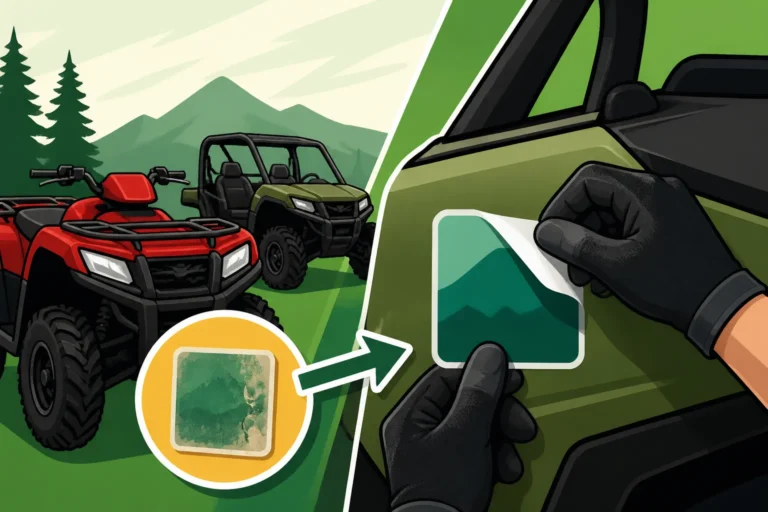
The decals are designed to be affixed directly to your OHRV in specific, visible locations. New Hampshire law is quite clear about this to ensure that law enforcement and trail wardens can easily verify your machine's registration status from a distance. Typically, you will receive two identical decals. One decal must be placed on the front of your OHRV, and the other on the rear. Both must be clearly visible and permanently attached.
For ATVs and UTVs, common placement areas include the fenders, the front or rear rack, or any flat surface that ensures maximum visibility and isn't prone to being covered by mud or gear. The key is that they shouldn't be obstructed by mud, gear, or anything else that would make them difficult to read or identify. [New Hampshire OHRV Decal Placement] covers this in detail, ensuring you get it right the first time. Make sure the surface is clean and dry before applying the decals to ensure good adhesion, so they don't peel off mid-ride, which can lead to further issues. These decals are your machine's visual "license plate" for the trails, signalling to everyone that you're a registered and responsible rider.
Carrying Your Certificate: Your Proof on the Trail
While the decals provide visible proof of registration, your Certificate of Registration is the official document that contains all the details about your machine and its legal status. This piece of paper is just as important as the decals, and in New Hampshire, you are legally required to carry it with you whenever you are operating your OHRV off your own property. It's not enough to have it at home; it needs to be with you on the trail.
Think of it as your OHRV's vehicle registration card. It will include your name, address, the machine's make, model, VIN, and the expiration date of your registration. Should you encounter a New Hampshire Fish and Game officer or local law enforcement on the trails, they will likely ask to see this document along with your decals. Not having it on your person can lead to delays, inconvenience, or even a citation, even if your machine is technically registered. It's often the first thing they'll ask for after observing your decals.
Many riders choose to laminate their certificate or place it in a waterproof bag to protect it from the elements. Keep it in a secure, easily accessible compartment on your OHRV, or even in your riding jacket. The goal is to keep it safe, dry, and readily available for inspection. Do not leave it at home thinking the decals are enough; they are not. Both the decals and the certificate form the complete legal proof of your OHRV's registration status. [New Hampshire OHRV Decals and the Certificate] clarifies the importance of both, emphasizing that one without the other is incomplete.
What Happens If You Lose Your Registration Items?
Life happens, and sometimes, despite our best efforts, things get lost or damaged. What if your OHRV decal peels off during a particularly aggressive mud bog, or your registration certificate falls out of your pocket on a rocky trail? Don't panic, but also don't ignore it. Operating an OHRV without proper, visible decals or the certificate of registration is a violation, and it's best to address it promptly.
If you lose a decal or if it becomes unreadable (peeled, faded, torn), you'll need to apply for a replacement. The process for [Replacing Lost New Hampshire Decals] usually involves contacting the New Hampshire Fish and Game Department or visiting a local registration agent. There will typically be a nominal fee for replacement decals to cover administrative costs and materials, similar to replacing a license plate sticker. It's always best to get these replacements as soon as possible to avoid any issues on the trails, as an unreadable or missing decal is an open invitation for a stop by an officer.
Similarly, if your Certificate of Registration is lost, stolen, or damaged beyond recognition, you can also obtain a duplicate. Again, this usually involves contacting Fish and Game or visiting a registration agent. You'll likely need to provide your personal information and the machine's VIN to verify your ownership and original registration. While a missing certificate is less immediately visible than a missing decal, it can cause problems if you are stopped and unable to produce the required document. Always prioritize getting these crucial items replaced promptly to ensure your continued legal and worry-free enjoyment of New Hampshire's trails.
Unique Situations: Buying, Selling, and Transferring OHRVs
Registering a Used Machine Bought Privately
Buying a used OHRV can be a fantastic way to get into the sport without the hefty price tag of a new machine. However, when you buy privately in New Hampshire, the registration process has a critical step: proving ownership. Since New Hampshire doesn't issue titles for OHRVs, a robust bill of sale becomes your most vital document. Many people overlook this, assuming a simple handshake is enough, but it’s the legal backbone of your purchase and your ability to register the machine.
When you purchase an OHRV from a private seller, you'll need a comprehensive bill of sale that includes specific information about both the buyer and the seller, and most importantly, the machine itself. This includes the date of sale, the purchase price, the full names and addresses of both parties, and the seller's signature. Crucially, the bill of sale must clearly state the OHRV's make, model, year, and its Vehicle Identification Number (VIN) or frame number. Without a proper bill of sale, proving you own the machine for registration purposes can be incredibly difficult, if not impossible, as the state needs clear documentation. LawDepot offers excellent templates for bills of sale that can simplify this process and ensure you have all the necessary information documented correctly, protecting both buyer and seller.
Once you have your properly executed bill of sale, you'll take it, along with your proof of identity and any club membership card, to a New Hampshire OHRV registration agent. The agent will use the bill of sale as proof of your new ownership to issue a fresh registration certificate and decals in your name. Never buy a used OHRV without getting a proper bill of sale; it's your only proof of ownership and the key to getting it registered legally. [Buying a Used ATV in New Hampshire] is an essential read before making a private purchase, guiding you through the critical steps to avoid future headaches.
Transferring a Registration to a New OHRV
Sometimes, you already have a registered OHRV in New Hampshire, but you decide to upgrade, sell your old machine, and buy a new one. What happens to your existing registration? Good news: New Hampshire allows you to transfer an active OHRV registration from one machine to another. This is a convenient option that can save you some money compared to buying a completely new registration for your new machine, especially if you upgrade mid-season.
The transfer process involves a specific transfer fee and requires you to bring the registration certificate from your old machine, along with proof of ownership for your new machine (either an MSO/MCO for a new purchase or a bill of sale for a used one). You'll visit a registration agent, complete the necessary paperwork, pay the [New Hampshire's $25.50 OHRV Transfer Fee], and your existing registration will be transferred. Your old machine's registration is then cancelled, and a new certificate and decals will be issued for your new OHRV, valid until the original expiration date. This ensures a clean record and a smooth transition.
It's important to understand that you're transferring the unexpired portion of your existing registration, not getting a whole new year. This means the expiration date on your newly transferred registration will be the same as the original registration's expiration date (April 30th of the following year). This option is designed for seamless transitions when you change machines mid-season, ensuring you remain legal on the trails with minimal fuss and without having to pay for a whole new annual registration right away.
Inherited or Gifted Machines
Life can bring unexpected changes, and sometimes an OHRV might come into your possession through inheritance or as a gift. While it's a generous gesture or a bittersweet legacy, the process for registering such a machine has its own set of requirements, particularly because there's no traditional "purchase" transaction. The key is establishing a clear chain of ownership, even without a financial transaction.
If you inherit an OHRV, you'll typically need official documentation to prove your right to the machine. This might include a copy of the previous owner's death certificate, relevant probate court documents, or an affidavit of heirship, depending on the specifics of the estate. Along with these documents, you'll also need the last valid registration certificate for the OHRV, if available, to help verify the machine's details, such as its VIN and previous registration history. This ensures the state can accurately transfer ownership to you.
For a gifted OHRV, the process is similar to a private sale, but instead of a purchase price, the bill of sale will indicate that the machine was "gifted" for zero monetary consideration. The bill of sale should still include all the necessary identifying information about the previous owner (the giver), the new owner (the recipient), and the OHRV itself, including its VIN, just as with a regular sale. A clear, signed document is crucial here to prevent any ambiguities about ownership. Services like LawDepot can help you draft a proper gift transfer document to ensure all legalities are covered, making the registration process smoother. Once you have the appropriate documentation, you can then proceed to a registration agent to get the OHRV registered in your name. [Registering an Inherited Machine in New Hampshire] provides more specific guidance for these situations, ensuring you have all your bases covered.
Common Questions and Troubleshooting Your New Hampshire OHRV Registration
Out-of-State Machines and Reciprocity
One of the most frequent questions from visitors to New Hampshire is about reciprocity: "I have my ATV registered in Maine/Vermont/Massachusetts; do I need to register it again in New Hampshire?" The answer, unequivocally, is no, New Hampshire does not honor out-of-state OHRV registrations. If you plan to ride your off-highway vehicle on any trail system, club trail, or approved public land in the Granite State, it must be registered with the New Hampshire Fish and Game Department, regardless of where you normally register it.
This policy is in place for several reasons, primarily to ensure that all machines using New Hampshire's trail infrastructure contribute to its maintenance and support. As discussed earlier, a significant portion of registration fees directly funds trail upkeep, bridge building, and club grants, which benefits everyone. By requiring all users to register, the state ensures that everyone who benefits from the trails also helps to pay for them, fostering a fair system for trail access. [Why a Home State Registration Is Not Enough] is a concept many visitors struggle with, but it's crucial to understand before you trailer your machine north.
For nonresidents, you have two primary options: the full annual nonresident registration (with the potential for a club member discount if you join an approved NH OHRV club) or the [New Hampshire's Ten-Day Nonresident Registration] for shorter visits. Choosing between these often comes down to how frequently you plan to visit New Hampshire's trails throughout the year. If you're only coming once or twice for a weekend, the ten-day might be more cost-effective. However, if you plan multiple trips, the annual registration, especially with a club membership, often makes more financial sense over the course of the season.
Age Requirements for Registrants and Riders
Understanding age requirements can be a bit tricky because there are different rules for who can register an OHRV versus who can ride one, and under what conditions. It's important to distinguish between these two aspects to ensure full compliance with New Hampshire law and to keep everyone safe on the trails. Misunderstanding these rules can lead to fines or, more importantly, put younger riders at risk.
First, when it comes to registering an OHRV, the person applying for the registration and whose name will appear on the certificate must be at least 18 years old. This is a straightforward legal requirement, as registration involves entering into a formal agreement with the state and implies a certain level of legal responsibility. If you're under 18 and want to own and operate an OHRV, an adult (parent, guardian) must register the machine in their name, taking on that legal responsibility. [Why New Hampshire Registrants Must Be Eighteen] is a clear guideline here.
For riding the OHRV, the rules are more nuanced and depend on the rider's age and whether they possess an OHRV Safety Certificate or a valid driver's license:
- Under 12 years old: Can only operate on land owned by their parent/guardian, or on land where they have written permission, and must be under the direct supervision of an adult who is at least 25 years old. They cannot operate on public trails.
- 12-15 years old: Must possess an OHRV Safety Certificate OR a valid driver's license (from any state). They can ride on approved trails but must be supervised by an adult at least 25 years old who also has a valid driver's license or OHRV Safety Certificate.
- 16 years and older: If they have a valid driver's license (from any state), they can operate an OHRV on approved trails without direct adult supervision. If they do not have a driver's license, they must have an OHRV Safety Certificate to ride on public trails.
These rules are designed to ensure safety, particularly for younger riders, and emphasize responsible operation. Always check the latest regulations from the New Hampshire Fish and Game Department for the most current information.
Renewing Your Registration Annually
Once you've gone through the initial registration process, it becomes an annual routine to keep your OHRV legal on New Hampshire's trails. Remember, OHRV registrations in the Granite State operate on a specific cycle: the [New Hampshire's May to April Registration Year]. This means all annual registrations expire on April 30th, regardless of when you originally registered during the preceding year. Mark your calendar, because an expired registration can quickly lead to an unexpected ticket.
Fortunately, renewing your New Hampshire OHRV registration is typically much simpler than the initial process. You'll usually receive a renewal notice in the mail from the New Hampshire Fish and Game Department as your expiration date approaches. This notice will often include pre-filled information about you and your machine, making the renewal quick and easy, requiring only a review of the details and payment.
You have a few convenient options for renewal:
- Online: For many riders, renewing online through the New Hampshire Fish and Game Department's website is the most convenient method. You can typically use a credit card and print a temporary proof of registration until your new decals and certificate arrive in the mail. This is often the fastest way to get back on the trails on May 1st.
- Mail: You can often mail back your renewal form with a check or money order. This method requires a bit more lead time to account for postage and processing.
- In Person: Visiting a town clerk or an authorized powersports dealer is always an option if you prefer to handle it in person, have questions, or need to clarify any changes to your information.
Just like with the initial registration, remember to have your OHRV club membership information handy if you qualify for the discounted rate. Proactive renewal ensures you can hit the trails on May 1st without any interruption or risk of being caught with an expired registration. [Renewing a New Hampshire OHRV Registration] is a topic worth reviewing each year to stay on top of the process.
Beyond Registration: What Else to Know for New Hampshire OHRV Riding
Safety Certificates: Who Needs Them?
While getting your OHRV registered is the first big step, it's certainly not the only requirement for safe and legal riding in New Hampshire, especially for younger operators. One critical component is the OHRV Safety Certificate. This certificate demonstrates that a rider has completed an approved safety education course, equipping them with essential knowledge about safe operation, trail etiquette, and New Hampshire's OHRV laws. It's about skill and knowledge, not just ownership.
So, who exactly needs this certificate?
- Any person 12 years of age or older who does not possess a valid motor vehicle driver's license (from any state) is required to have an OHRV Safety Certificate to operate an OHRV on any public land, trail, or approved private land. This ensures a baseline of knowledge for those without driving experience.
- If you are 16 or older and have a valid driver's license, that license effectively serves as your safety certificate, so you do not need to take the OHRV safety course. Your existing driving knowledge is considered sufficient.
- Children under 12 have specific supervision rules and are generally restricted to private land or need very close adult supervision on approved trails, and do not need a certificate for these limited operations.
You can obtain an OHRV Safety Certificate by completing a course offered by the New Hampshire Fish and Game Department or through approved online providers. These courses cover everything from basic riding skills and equipment inspection to environmental awareness and emergency procedures. They are designed to make you a more responsible and safer rider, which benefits not just you, but everyone on the trails, and helps to preserve the riding opportunities we all cherish. [New Hampshire Safety Certificate Requirements] explains who needs it and how to get one, offering guidance on course options.
Insurance and Legal Responsibilities
This is one area where New Hampshire stands out compared to many other states: New Hampshire does not legally require OHRV owners to carry liability insurance for their machines. This can be surprising to many, especially those used to mandatory auto insurance. While it might sound like a relief to some, this absence of a legal requirement does not diminish your personal responsibility should an incident occur.
Even though it's not mandated by law, carrying OHRV insurance is highly, highly recommended. Accidents can and do happen, and without insurance, you would be personally liable for any damages or injuries you cause while operating your OHRV. This could lead to significant financial burdens, including medical bills, property repair costs, and legal fees. Imagine an incident where another rider is injured or a landowner's property is damaged; the costs could be astronomical and fall entirely on your shoulders. Protecting yourself financially is just plain smart and responsible.
Furthermore, some OHRV clubs or landowners might require you to carry insurance as a condition of riding on their property or using their trails, even if the state doesn't. Always check with specific trail systems or clubs if you plan on particular rides, as their rules might differ from state law. While the state doesn't demand it, being a responsible and prepared rider often means opting for adequate insurance coverage, securing your peace of mind and financial well-being. [Why New Hampshire Requires No OHRV Insurance] explains this in detail and strongly suggests considering insurance anyway, despite the lack of a legal mandate.
Trail Rules and Etiquette
Beyond legal requirements like registration and safety certificates, being a respectful and responsible OHRV rider in New Hampshire means understanding and adhering to a comprehensive set of trail rules and etiquette. These unwritten and written rules are crucial for maintaining good relationships with landowners, protecting the environment, and ensuring a pleasant experience for all users of the trails. Ignoring these can lead to trail closures and a negative perception of our sport.
Key aspects include:
- Stay on Marked Trails: This is paramount. Riding off-trail can damage sensitive ecosystems, trespass on private property, and erode positive landowner relations, potentially leading to trail closures for everyone. If a trail isn't marked as open, assume it's closed.
- Respect Private Property: Even on a designated trail system, you will often be crossing private property where clubs have secured permission. Treat this land with the utmost respect, staying strictly on the marked path and avoiding any actions that might upset the landowner.
- Speed Limits and Yielding: Observe all posted speed limits, especially in congested areas, near residential zones, or at trailheads. Always yield to hikers, bikers, horses, and any non-motorized traffic; they often have the right-of-way. Slow down and be courteous.
- Leave No Trace: Pack out everything you pack in. Do not litter, and avoid damaging natural features. The goal is to leave the trail in better condition than you found it.
- Sound Limits: Be mindful of your machine's noise. Excessive noise can disturb wildlife and nearby residents. New Hampshire has decibel limits, and aftermarket exhausts that exceed these limits can lead to fines and complaints that jeopardize trail access.
These rules aren't just about avoiding fines; they're about being a good steward of the land and a considerate member of the riding community. By following them, you contribute to a positive perception of OHRV riding and help ensure that New Hampshire's incredible trails remain open and enjoyable for everyone. Always check with the local clubs or the Fish and Game Department for specific trail conditions and rules before you ride, as things can change with seasons or events.
Document Checklist for OHRV Registration in New Hampshire
| Document Category | Required for New Machine | Required for Used Machine (Private Sale) | Required for Renewal | Required for Transfer | Key Information Included |
|---|---|---|---|---|---|
| Proof of Ownership | Manufacturer's Statement of Origin (MSO/MCO) | Bill of Sale (Seller/Buyer Info, VIN, Price) | Previous Registration Certificate (if available) | Proof of ownership for NEW machine | VIN/Frame #, Make, Model, Year, Seller/Buyer Details |
| Proof of Identity | Valid Driver's License or State ID | Valid Driver's License or State ID | Valid Driver's License or State ID | Valid Driver's License or State ID | Name, Address, Photo |
| Club Membership | Current OHRV Club Card (optional for discount) | Current OHRV Club Card (optional for discount) | Current OHRV Club Card (optional for discount) | Current OHRV Club Card (optional for discount) | Club Name, Membership #, Expiration (for discount) |
| Old Registration | N/A | N/A | Previous Registration Certificate | Old Registration Certificate (for the machine being replaced) | Your info, machine info, previous registration details |
| Payment | Applicable Fees | Applicable Fees | Applicable Fees | Transfer Fee + any remaining balance if applicable | Cash, Check, Credit Card (confirm accepted methods) |
Disclaimer
This article is for general informational purposes only and does not constitute professional advice. Laws, prices and regulations vary by location and change over time. Consult a qualified professional for guidance on your specific situation.