Washing a Machine at a Trail Town
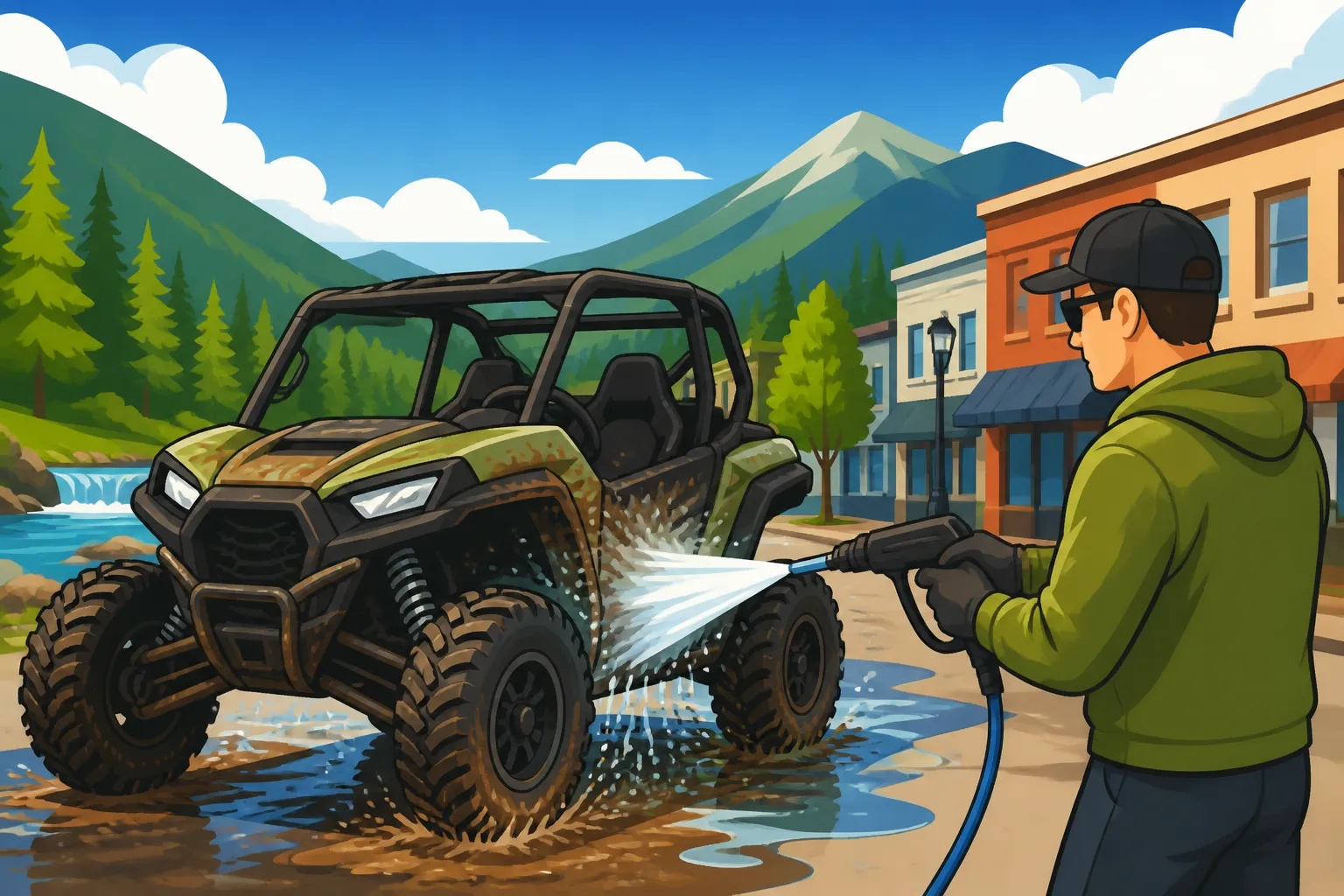
A muddy ATV can turn a pleasant ride around Berlin, Gorham, Pittsburg, or another New Hampshire trail town into a cleanup headache—especially when you’re staying somewhere without a wash area. This guide explains where to wash, how to protect your machine and the surrounding land, and what to check before you use a hose or pressure washer.
Choose a wash location that can handle the mess
Ask before washing at a hotel, campground, or rental property
A parking space and an outdoor spigot do not automatically mean washing is allowed. Muddy runoff can spread across walkways, enter a storm drain, stain a driveway, or leave a mess for the property owner to deal with. Before unloading the pressure washer or reaching for a hose, ask the lodging host or campground staff where—if anywhere—they allow machines to be cleaned.
Be specific when you ask. Explain that you want to rinse mud from the tires, frame, and underside, and ask whether there is a designated wash area, a drain that can handle runoff, or a rule against pressure washing. Some properties may allow a quick rinse but not a high-pressure wash. Others may ask riders to remove heavy mud before returning to a cabin or parking area.
That conversation is easier before you arrive than after a machine has left a muddy trail across a shared driveway. If you are camping, check the property’s rules while planning your stay; New Hampshire ATV Camping Near the Trails can help you think through the practicalities of staying close to your riding area. For a private property or a place you do not own, get permission rather than assuming a hose or outdoor area is available. The same caution applies to land that appears unoccupied: New Hampshire Rules for Riding Private Land is a useful reminder that access and permission should not be taken for granted.
Look for an appropriate commercial wash area
A designated wash bay or commercial vehicle wash may be a better option than cleaning at your lodging, but check first that the business permits ATV or UTV washing. A facility designed for cars may not be prepared for packed trail mud, unusually wide machines, or debris dropping from skid plates. Ask whether off-road machines are accepted, whether there are size restrictions, and how the business wants you to handle heavy mud.
Do not assume that a public parking area, trailhead, roadside pull-off, or staging lot is a wash area. Those places are meant for access and parking, not for hosing dirt into storm drains or leaving mud on the pavement. If you need to stop after a ride, use the lot as intended and take the machine somewhere that has expressly allowed washing. For parking and unloading logistics, Parking a Trailer at a Club Staging Lot is a helpful related topic, but a staging lot should not be treated as a wash station unless its rules say so.
Before you drive to a business, call ahead. A quick call can prevent the awkward experience of arriving with a muddy machine only to discover that the wash area is closed, unsuitable, or reserved for other vehicles. If you are riding in the North Country, do not count on finding a convenient option at the last minute; services can be spread out, and a weak cell signal can make an unplanned search frustrating.
Keep wash water and mud out of waterways
Trail mud is not just dirt. It can contain leaves, gravel, oil residue, or other material picked up along the route. Keep wash water away from streams, ponds, wetlands, roadside drains, and areas where it can flow directly into a waterway. Even a rinse that looks harmless can carry sediment and residue downhill.
If a facility has a designated wash bay, follow its directions for runoff and waste. If you are unsure where the water goes, ask before washing. Never treat a riverbank, lake edge, or trail-side ditch as a convenient drain. A location may look isolated, but water can carry what you wash away into places used by wildlife and people.
Prepare the machine before you start rinsing
Remove the thick mud first
A heavy coating of wet mud can take a surprising amount of water to shift, and blasting it immediately with a pressure washer can push grit into places you do not want it. Start by letting the worst of the mud drain or loosen, then remove clumps by hand with a plastic scraper, brush, or other non-damaging tool. Pay attention to packed material around the tires, footwells, skid plates, and suspension.
This first pass makes the rinse more controlled. It can also help you spot sticks, stones, or debris caught in the undercarriage before they become harder to remove. Avoid using a sharp metal tool against hoses, wiring, plastic body panels, or painted surfaces. When mud has dried hard, soften it with a gentle stream rather than digging aggressively at the machine.
Think about where the removed mud will go. Do not sweep it into a storm drain or leave a pile in a parking area. At a wash facility, use the collection or disposal method the operator provides. At lodging, clean only where you have permission and follow the property’s instructions for debris.
Protect sensitive areas from high pressure
A pressure washer can make a machine look clean quickly, but its force can also drive water and grit past seals or into electrical connections. Keep the nozzle at a sensible distance, use a broad spray rather than a concentrated jet, and avoid directing high pressure at bearings, seals, radiator fins, electrical connectors, air intakes, and other vulnerable areas. If your owner’s manual gives specific cleaning instructions, follow those over general advice.
Use extra care around the radiator. Mud can block airflow, but radiator fins can bend if hit with a narrow, forceful stream. Rinse gently and let the water move debris out rather than trying to punch through it at close range. The same patient approach is useful around the underside: reposition yourself and the spray instead of holding the nozzle in one spot.
If you are not sure how a particular component should be cleaned, check the machine’s manual before washing. A quick rinse that causes water intrusion can become a longer repair problem, while a careful wash gives you a chance to inspect for loose parts, damaged guards, or leaks. After cleaning, let the machine dry and check for anything that looks out of place before the next ride.
Use a practical cleanup checklist
The right approach depends on how much mud the machine picked up and what the owner’s manual recommends. This checklist can help you work methodically without turning a simple rinse into an avoidable repair:
| Area | What to do | What to avoid |
|---|---|---|
| Tires and wheel wells | Loosen and rinse away packed mud | Spraying close to valves or seals |
| Undercarriage | Remove large clumps and rinse gently | Forcing debris into joints or wiring |
| Radiator | Clear debris with a careful, low-force rinse | Using a narrow jet against the fins |
| Controls and electrical areas | Wipe or rinse cautiously as appropriate | Direct high pressure at connectors |
| Body panels and seat | Use a gentle rinse and suitable cleaner | Abrasive tools that scratch surfaces |
| Wash area | Collect or direct runoff as instructed | Letting mud run into a drain or waterway |
A small brush, microfiber cloth, gloves, and a towel can make cleanup easier without needing to bring a full washing setup. If you have a group, agree in advance on who is responsible for rinsing each machine and where the mud will be collected. That prevents the “everyone thought someone else would clean up” situation that can leave a host or business with the mess.
Plan cleanup around the ride
Decide before you leave the trailhead
The easiest wash plan is the one you make before the machine is covered in mud. Check trail conditions, estimate how much mud the route is likely to involve, and decide where you will clean the machine afterward. If you are staying overnight, ask your host about washing rules before booking or before unloading. If you expect to use a commercial facility, call to confirm it accepts off-road machines and can accommodate your machine’s width.
Trail conditions can change the cleanup you need. A route that is dry and dusty may call for a light rinse, while wet sections can pack mud into the underside and wheel wells. Checking New Hampshire Trail Conditions Before You Ride and New Hampshire Trail Status Before You Ride helps you make a more realistic plan. Club or local updates are particularly useful when a route has recently had rain, flooding, or a closure that could affect where you can ride or park.
If your route crosses a broad area with limited services, plan fuel and stops as well as cleanup. Fuel Stops Across the North Country is a useful companion when you are mapping a longer outing. onX Offroad can help you review and keep track of your planned route, but do not rely on a navigation app alone to determine where riding is permitted or where washing is allowed. Confirm trail access and cleanup arrangements with the relevant club, business, or property owner.
Carry a compact cleanup kit
A modest kit can make it easier to remove the worst of the mud without improvising in a parking lot. Consider packing work gloves, a soft brush, a plastic scraper, a few towels, a small bag for muddy items, and any cleaning supplies recommended for your machine. Keep the kit contained so wet gear does not spread mud through the tow vehicle or lodging.
A portable sprayer may be useful for a light rinse, but it does not replace permission or a suitable place to manage runoff. Do not empty dirty water beside a road, into a parking lot drain, or onto the ground near a waterway. If a cleanup kit includes a pressure washer or water tank, account for its weight and secure it properly during transport.
For remote rides, think about cleanup in stages. You may only need to knock off the thickest clumps before trailering, then do a more complete wash at an approved location. That can be easier than trying to make the machine spotless at the trailhead. If you use onX Offroad to keep your route organized, pair it with local trail information and written directions to any confirmed wash location; app mapping does not establish that a property is open to riders or has a wash area.
Leave the trail town as clean as you found it
When you finish, check the ground around the machine and the wash area. Pick up loose debris, remove muddy towels or gear, and make sure mud has not been tracked onto a walkway or neighboring parking space. Follow the facility’s instructions about shutting off water, clearing the bay, and disposing of material. If a business has supplied a wash area, leave it ready for the next customer.
If you discover a problem—such as a clogged drain, a spill, or damage to a wash area—tell the owner or staff rather than leaving it for someone else to find. The same goes for mud that has spread onto a shared driveway at lodging. A little cleanup and a straightforward conversation help maintain good relationships between riders and trail-town businesses.
That matters because trail access often depends on cooperation among riders, clubs, landowners, and local communities. Respecting a property’s washing rules is one small way to help keep those relationships positive. Before the next ride, check route access and conditions again, especially if rain or seasonal closures may have changed what is open. onX Offroad may be useful for navigating a planned route, while local club updates remain important for trail status and access details.
Disclaimer
This article is for general informational purposes only and does not constitute professional advice. Laws, prices and regulations vary by location and change over time. Consult a qualified professional for guidance on your specific situation.