Riding the Run to the Hills Four-by-Four Trail
Run to the Hills is not a casual ATV loop: it is a purpose-built four-by-four challenge at Jericho Mountain State Park, where rocky terrain and changing conditions can turn a short outing into a demanding day. This guide explains what to expect, how to prepare your machine and group, and what to check before you head to Berlin, New Hampshire.
What the Run to the Hills trail is
A four-by-four challenge, not a standard ATV loop
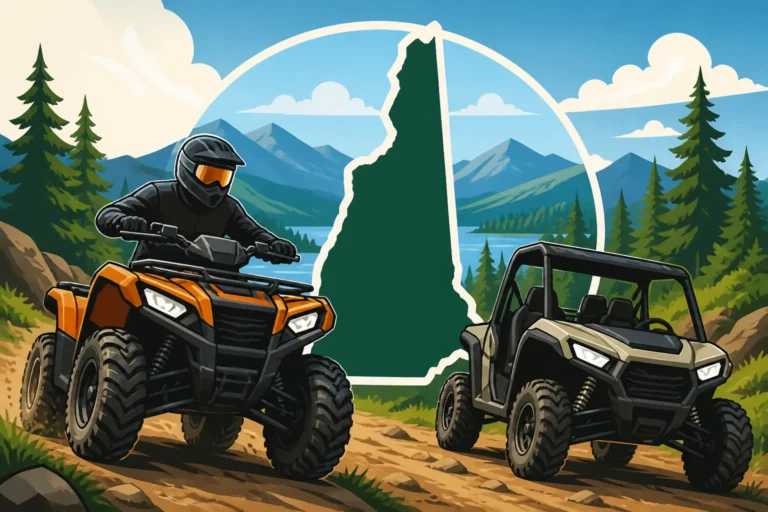
Run to the Hills is associated with Jericho Mountain State Park in Berlin, in New Hampshire’s North Country. It is known as a four-by-four trail, with rugged terrain that makes it a different proposition from a typical ATV or UTV ride. The name can be easy to read as a general invitation for any off-road machine, but the route’s intended vehicle type and current access rules matter. Confirm that your particular vehicle is allowed before planning around the trail.
The difference is practical as well as technical. A four-wheel-drive truck or Jeep has a different size, turning radius, weight, and approach angle from an ATV or side-by-side. A machine that is welcome on nearby OHRV trails may not be permitted on a four-by-four route, and a route intended for larger four-wheel-drive vehicles may not suit a smaller machine. Start by checking the current park information rather than assuming that all trails in the same area share the same rules.
Jericho Mountain has a broader network of off-road trails, so it helps to treat Run to the Hills as one part of a larger riding destination—not as a substitute for checking the rest of the park. If you are comparing route options, [Jericho's 75 Miles of Trail] gives useful context for the wider riding area. The park’s other routes may offer a better match for your group’s machine, experience, or comfort with technical ground.
Expect rock, uneven ground, and a slower pace
The trail is known for rocky, technical riding. That description should change how you plan the day. Smooth cruising is not the point: uneven surfaces, ledges, and obstacles can demand careful wheel placement, controlled throttle, and patience. Some sections may be straightforward for a well-equipped, experienced driver, while the same ground can feel intimidating to someone who is new to rock crawling.
A short route can still take a long time. Drivers may need to stop, look at a line, reposition, or wait for another vehicle to clear an obstacle. In a group, those pauses add up. Give yourself a generous time window and avoid scheduling the trail as a quick detour before a fixed lunch reservation or a long drive home. On technical terrain, rushing is a poor way to save time.
It is also sensible to plan for changing conditions. Rain, standing water, loose material, and trail wear can make a familiar obstacle harder to judge. A previous visitor’s description—or a memory of how the route looked on another trip—is not a guarantee of current conditions. For other rocky route ideas and terrain considerations, see [New Hampshire Trails With Rock and Ledge], then use current local information to judge whether the challenge is right for your group.
Choose a machine and group that fit the route
Match your vehicle to the trail’s rules
Before you load up, confirm that your vehicle type is permitted on Run to the Hills. Do not rely only on a general description such as “off-road trail” or “four-wheel drive.” Check the park’s current rules, route designation, and any vehicle restrictions. If your machine is a side-by-side, ATV, or another OHRV rather than a highway-registered four-wheel-drive vehicle, verify that the route is specifically open to it.
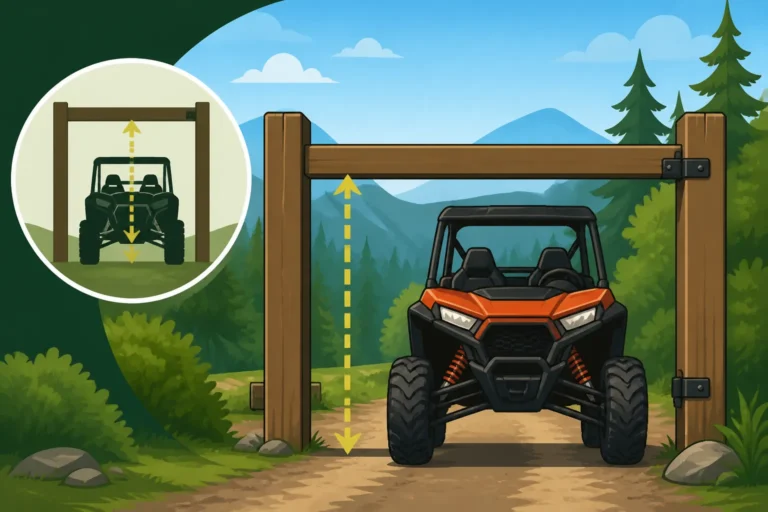
Dimensions matter, too. A wide machine may be unable to pass through a narrow gate or may not be allowed on a route with a width restriction. Turning space, clearance, and the vehicle’s overall footprint all affect whether a technical trail is a sensible choice. Even when a machine can physically fit, that does not automatically mean it is allowed. Review [New Hampshire Rules for a Machine Over 50 Inches] and [Measuring Your Machine Before You Drive North] if your vehicle is close to a stated limit or you are unsure how to measure it.
For ATVs and UTVs, do not assume that park access and access to every individual trail are the same thing. Routes can differ in permitted machine types, width limits, and seasonal status. A quick confirmation before travelling can prevent the frustrating discovery that your machine is not allowed on the route you came to ride. If the route’s vehicle designation is unclear, contact the park or the appropriate local authority before departure.
Be honest about experience and vehicle setup
A technical trail is a poor place to discover that your tires, ground clearance, or recovery gear are inadequate. Look over the machine before leaving home: check tire condition and pressure according to the vehicle maker’s guidance, inspect visible steering and suspension components, and confirm that the battery and lights work. For a four-wheel-drive vehicle, check that the system engages properly and that you know how to use it before you reach an obstacle.
Experience matters just as much as equipment. A driver who has handled uneven ground, used low-range gearing when appropriate, and made careful line choices is better prepared than someone whose only experience is on smooth gravel roads. If you are new to this kind of terrain, ride with a more experienced companion, learn the controls in a less demanding area, or choose an easier route. There is no prize for attempting an obstacle that feels beyond your ability.
Group composition can affect the whole outing. A convoy moves at the pace of its least-prepared vehicle, and one disabled machine can hold everyone up. Before setting out, agree on a plan for spacing, stopping, and communicating. Keep enough distance that the driver ahead can work through an obstacle without pressure, while still keeping the group together. If a route is beyond one vehicle or driver, splitting into a separate outing is safer than trying to make everyone continue.
| Before you go | What to verify | Why it matters |
|---|---|---|
| Vehicle eligibility | Whether your exact vehicle type may use the trail | Nearby trails may have different rules |
| Size and clearance | Width limits and physical fit at gates or obstacles | A machine that is too wide or low may not be suitable |
| Trail status | Whether the route is open and in usable condition | Seasonal closures and damage can change access |
| Registration | Applicable New Hampshire registration requirements | A machine’s home-state paperwork may not settle local requirements |
| Driver readiness | Experience, controls, and recovery plan | Technical terrain can require slow, deliberate decisions |
| Park access | Current entry procedures and day-use requirements | Access arrangements may differ from trail authorization |
Prepare for access, registration, and trail status
Check the rules before you travel
Do not assume that a New Hampshire registration question has one answer for every vehicle. Requirements can depend on the vehicle type, how it is being used, and where it will be ridden. If you are taking an ATV or UTV, confirm the rules that apply to that machine and route rather than relying on a friend’s experience with a different vehicle. [New Hampshire OHRV Registration Cost] is a useful starting point for understanding registration, but confirm the current details through the relevant official channels.
Registration is only one part of access. You may also need to follow park-specific rules, pay an applicable day-use charge, or meet conditions for a particular route. A registration does not automatically mean every trail is open to your vehicle, and a park admission arrangement does not replace a required registration. Check [Jericho's Day Use Fees in New Hampshire] for the park access question, and verify current procedures before setting out.
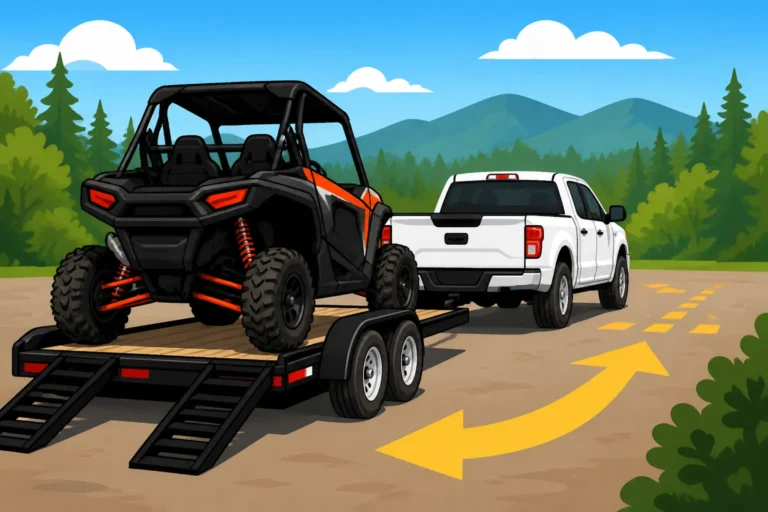
If you are arriving from out of state, be especially careful not to assume that your home registration automatically authorizes riding in New Hampshire. Requirements for visiting riders can differ from those at home. Make sure the vehicle, operator, and intended route each meet the applicable rules. Carry the relevant paperwork and make it accessible; digging through a packed trailer or glove compartment at the trailhead is an avoidable start to the day.
Confirm openings and conditions close to your ride date
Trail status is a planning item, not a formality. Conditions can change after rain, maintenance work, seasonal closures, or damage to the route. Check [New Hampshire Trail Status Before You Ride] and [New Hampshire Trail Conditions Before You Ride] before leaving, then confirm any park-specific information that applies to Run to the Hills. If a closure or restriction is posted, treat it as the deciding information, even if a map or older trip report suggests the route is available.
Try to check more than once when the trip is a long drive. Look first while choosing a date, then check again shortly before departure. For a weekend outing, this extra step can spare you from hauling a vehicle north only to find the route closed or unsuitable. If trail information is unclear, call the relevant office or park contact instead of interpreting silence as permission.
Keep a backup plan. The broader Jericho Mountain area may offer other activities or routes, but their rules and conditions still need checking. A backup should be a genuinely suitable option for your vehicle—not simply another trail whose name appears on the same map. If you are relying on an app such as onX Offroad to help plan or navigate, compare its map information with official trail notices and local signs. A digital map is a planning aid, not permission to enter a closed or restricted route.
Ride the trail with care and good judgment
Take obstacles slowly and communicate
On rocky ground, speed is not a substitute for skill. Slow down enough to assess the surface, select a sensible line, and make smooth inputs. Sudden throttle, sharp steering, or trying to climb an obstacle at speed can increase the chance of losing traction or damaging the vehicle. If you cannot see what is beyond a rock or ledge, stop and look before committing.
In a group, clear communication prevents avoidable confusion. Agree on simple signals or use radios if your group has them. Let the driver handling an obstacle focus on the task; do not crowd the vehicle or pressure the driver to hurry. Wait in a safe spot, keep people away from the vehicle’s path, and avoid standing where a machine could slide or roll. If someone needs to get out to inspect a line, make sure the vehicle is secured and the driver knows where everyone is.
Be willing to turn around. A route does not become mandatory just because the group has already driven to the trailhead. If an obstacle appears unsafe for your machine, experience, or conditions, stop and reassess. Continuing simply to avoid disappointment can turn a challenging ride into a recovery problem. A sensible retreat is a successful decision, not a failed trip.
Protect the trail and respect other users
Stay on the designated route. Cutting around an obstacle can widen the trail, damage surrounding ground, or put you onto land that is not open to riding. Follow signs and barriers, and do not treat an unmarked opening as an alternate route. Trail access depends on responsible use and landowner relationships; one shortcut can create problems for future riders.
Share the area thoughtfully. You may encounter other vehicles or people using nearby facilities. Slow down when visibility is limited, leave room for others, and avoid unnecessary noise or aggressive driving. If you meet another group at a narrow section, communicate calmly and work out a safe order of travel. Courtesy is particularly important where vehicles must wait or maneuver carefully.
Carry out what you bring in, including food wrappers, broken straps, and repair materials. Do not leave vehicle parts or trash at the trailhead. If you notice a hazard, damage, or a confusing closure sign, report it through an appropriate park or local contact rather than attempting an unauthorized repair. A clean, respectful visit helps keep a difficult trail available for people who follow.
Plan a smoother visit to Jericho Mountain
Pack for a remote and demanding outing
Pack for the possibility that the ride takes longer than expected. Bring water, food, suitable clothing, and a first-aid kit. Weather in northern New Hampshire can feel different from what you left at home, and a cool, wet day can become uncomfortable if you are standing around while a group works through an obstacle. Sturdy footwear and gloves help with walking and basic tasks, but avoid putting yourself in a risky position around a moving or unstable vehicle.
Bring the recovery and repair equipment that matches your vehicle and your skill. That might include basic tools, a tire repair kit, a spare tire or other suitable tire plan, and recovery gear rated for the machine and the intended use. Know how to use the equipment before you need it. A recovery strap that is poorly attached, or a winch used without understanding its limits, can create a new hazard instead of solving one.
Plan communications as if cell service might be unreliable. Save important information before you leave, tell someone where you are going, and agree on a check-in plan. If you use onX Offroad, download the relevant map information in advance when available and learn how to access it without relying on a live connection. Keep an official map or another backup as appropriate, and remember that map lines do not replace posted signs or current closure notices.
Build a realistic day plan
Allow time for the drive, access procedures, vehicle checks, and a slower pace on the trail. If you are going with a group, agree on a meeting point and a latest turnaround time before you start. That makes it easier to avoid riding into the evening because one obstacle or repair consumed more time than expected. Keep enough daylight for loading up and driving out without feeling rushed.
Think about the comfort level of everyone coming along. A first-time passenger may find technical terrain stressful, even in a capable vehicle. Explain what the ride may involve, make sure everyone has appropriate protective equipment, and agree that anyone can ask to stop. If a child or less experienced participant is part of the group, check the relevant safety and age rules in advance rather than relying on assumptions about what is allowed.
Finally, be flexible about the day’s goal. You might arrive and find that conditions are not right for Run to the Hills, or that your machine is not a fit for the route. That does not have to ruin the outing. Use current local trail information to identify an allowed alternative, or choose a different activity in the area. A plan that leaves room to adapt is more useful than one that depends on a single trail being open and suitable.
Disclaimer
This article is for general informational purposes only and does not constitute professional advice. Laws, prices and regulations vary by location and change over time. Consult a qualified professional for guidance on your specific situation.