Sharing a Corridor With Snowmobiles
There’s nothing quite like the crisp air of a New Hampshire winter or the vibrant green canopy of summer when you’re out on the trails. But if you’ve spent any time exploring our state's incredible network, you've probably encountered a unique situation: trails that transform from quad country in the summer to snowmobile superhighways in the winter. This guide is all about navigating those shared corridors, understanding the rules, and ensuring a safe, enjoyable experience for everyone, regardless of whether you're on two skis or four wheels.
Understanding New Hampshire's Multi-Use Trail System
New Hampshire boasts an extensive trail system, a true gem for outdoor enthusiasts. What makes it so special is often the flexibility and ingenuity behind its design, much of which involves making the most of the same strips of land throughout the year. But with that flexibility comes a shared responsibility.
The Concept of Shared Corridors
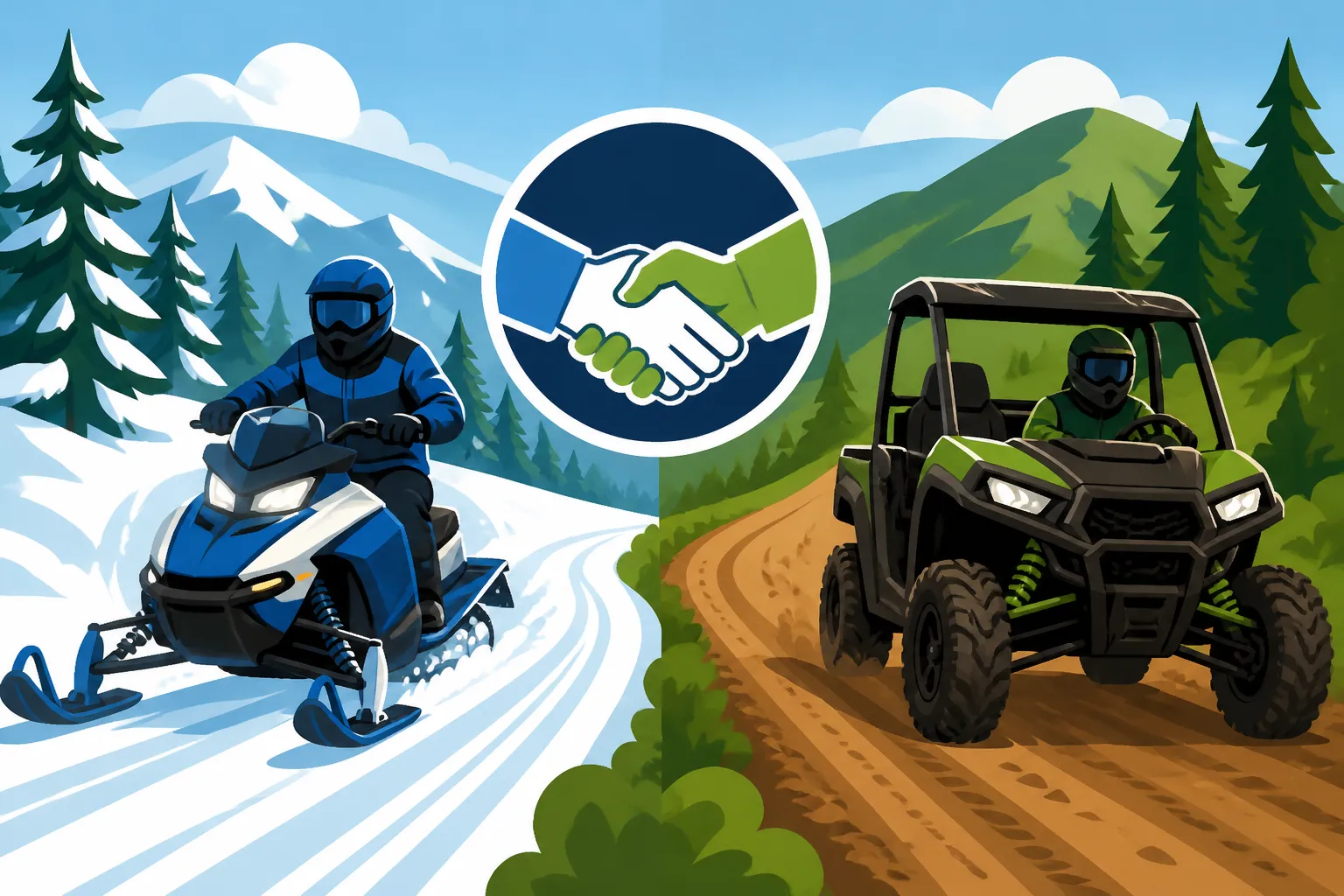
Imagine a path winding through the woods, maybe a decommissioned rail line, an old logging road, or even a utility easement. In New Hampshire, many of these natural and man-made passages serve double-duty. During the warmer months, from late May to early October, these "corridors" are alive with the rumble of ATVs, UTVs, and dirt bikes. Folks are out exploring, enjoying the sun, and perhaps heading to a trailside diner. Then, as the snow flies and the ground freezes, the same paths become the domain of snowmobiles, connecting towns and offering breathtaking winter rides. This brilliant system allows us to maximize our limited trail resources, providing year-round access for different kinds of machines.
It’s a fantastic concept because it allows for an incredible amount of mileage and connectivity across the state without having to build entirely separate trail networks for every user group. However, it also means that riders need to be acutely aware of the rules that apply to their particular machine during the relevant season. It’s not uncommon, for example, for a warm October day to see OHRV riders enjoying the last gasp of fall, while a sudden early snowfall might bring out the first snowmobilers, leading to a temporary overlap. Knowing who has the "right" to the trail at that moment, or how to respectfully share, becomes paramount.
Seasonal Changes and Trail Designations
The key to understanding New Hampshire's shared corridors often lies in the calendar and the signage. The majority of the state's official OHRV trail system operates from May 23rd to October 31st. Once winter hits and snow accumulates, these same trails, or sections of them, transition to snowmobile use, typically from December 1st through March 31st or later, depending on snow conditions. It's a fundamental shift, transforming the landscape and the machines that traverse it.
Trail designations are usually pretty clear, thanks to the tireless work of local clubs and the Bureau of Trails. You'll often see signs indicating "Snowmobile Trail – No Wheeled Vehicles" in winter, or "OHRV Trail" in summer, sometimes with specific opening and closing dates. Some trails are true multi-use trails, allowing various forms of recreation simultaneously, but even then, there are often specific regulations for motorized versus non-motorized users, or for different types of motorized machines. For instance, a particular rail trail might be open to ATVs up to 50 inches wide during the summer, but then fully convert to snowmobile use only in the winter. It's vital to [Checking the Trail Status Board] before you head out, because conditions and openings can change rapidly, especially around the shoulder seasons. Remember, riding a [Snowmobile Corridor in Summer] is often prohibited to protect the trail base and prepare it for winter use, just as riding an ATV on a groomed snowmobile trail can ruin it for sledders.
Rules and Regulations for Sharing Trails Safely
Navigating multi-use trails isn't just about knowing when to ride; it's also about knowing how to ride respectfully and safely alongside other enthusiasts. We all want to enjoy the outdoors, and that means being mindful of others who share our passion for the trails, whether they're on a powerful side-by-side or a quiet pair of snowshoes.
Respecting the Right-of-Way and Trail Etiquette
The golden rule on any shared trail, whether you're on an OHRV or a snowmobile, is courtesy and safety. Generally, slower traffic should yield to faster traffic, and all motorized vehicles should yield to non-motorized users like hikers, cyclists, and equestrians. However, within the motorized community, there are still best practices. When you encounter another machine, slow down immediately. Give them a wide berth, especially if you're passing on a narrow section. A friendly wave goes a long way towards fostering good trail relations. Dust is a major concern for OHRV riders in dry conditions, so reducing speed significantly when passing hikers or other groups is not just polite, it's essential for their comfort and safety. Similarly, in winter, snowmobilers should be aware of the spray they can kick up.
Think about it this way: if you're on a four-wheeler and you come around a blind corner to find a family walking with their dog, you want to be going slow enough to stop or maneuver safely without startling them. The same applies if you're on a snowmobile and you encounter a group of cross-country skiers. Your machine might be loud and powerful, but your responsibility is to ensure everyone's safety and enjoyment. Many of the same principles that apply to [New Hampshire Equipment Rules for Road Riding] regarding visibility and control also apply to shared trails, ensuring you can react to unexpected situations.
Speed Limits and Sound Requirements
Speed limits are in place for a reason, and on shared corridors, they become even more critical. While some open sections might allow for higher speeds, you'll find reduced limits near trailheads, residential areas, and intersections with other trails or roads. Typically, a 10 mph limit applies when passing groups or in congested areas. Always obey posted speed limits and adjust your speed to conditions, visibility, and traffic. A trail might be clear for miles, but that doesn't mean you can open it up completely if you're in a known multi-use section.
Sound is another significant factor on shared trails. Excessive noise can disturb wildlife, residents near trails, and other users seeking a peaceful outdoor experience. New Hampshire has strict regulations regarding OHRV sound levels, generally capping them at 96 decibels. It's not just about the law; it's about being a good neighbor. Aftermarket exhausts, even high-performance ones from brands like SuperATV, must comply with these limits. If you've modified your machine, it's your responsibility to ensure it still meets the [New Hampshire's OHRV Decibel Limit]. Getting pulled over for a sound violation can lead to fines, and it certainly doesn't help foster a positive image for the riding community. Always run a spark arrester too; not only is it required, but it's crucial for preventing wildfires, especially on dry trails.
Equipment Considerations for Shared Trails
Ensuring your machine is properly equipped is a non-negotiable part of responsible trail riding. This isn't just about personal safety; it's about being visible and predictable to everyone else on the trail. For OHRVs, working headlights and taillights are essential, especially if there's any chance you might be riding near dusk or in low-light conditions, or if you're on a connector that briefly uses a town road. A rear-view mirror is often required for road crossings and provides vital situational awareness on any trail, helping you see approaching traffic or machines behind you.
Snowmobiles, of course, also need proper lighting. Regardless of your machine, maintain your brakes, ensure your tires or tracks are in good condition, and always carry a basic repair kit. Think about it: a broken-down machine on a shared trail creates a hazard for everyone else, and the last thing you want is to be stranded. Many riders invest in high-quality parts and accessories, and even items like SuperATV winches or heavy-duty suspension components can contribute to reliability, ensuring you stay moving and don't become an obstacle. These practical considerations are part of the commitment to sharing trails responsibly.
Navigating Specific Scenarios on Shared Trails
The beauty of New Hampshire's multi-use trail system is its adaptability, but this also means riders need to be adaptable themselves. The trails aren't static; they change with the seasons, the weather, and the sheer volume of different users. Being prepared for these specific scenarios can make all the difference between a great day out and a frustrating experience.
Riding During Transition Seasons
The transition periods, late fall and early spring, are often the trickiest for shared corridors. In late fall, you might find trails still technically open for OHRVs, but an early snowfall could bring out snowmobilers. Or, conversely, in early spring, a late-season snowstorm might still have snowmobilers enjoying the last ride while OHRV enthusiasts are eager to hit the melting trails. This is where understanding specific closing and opening dates is absolutely critical.
Local clubs and the Bureau of Trails work hard to set these dates, often with an eye on weather forecasts and ground conditions. Riding an OHRV on a soft, thawing trail during what's known as [New Hampshire's Mud Season Ban] can cause significant damage, leading to washouts and ruts that are expensive and time-consuming for clubs to repair. This damage affects all users, not just the mud boggers. Similarly, riding a snowmobile on a trail that isn't fully frozen or has insufficient snow can damage the track and the trail bed. Always assume the stated season for your machine is paramount, and if you see signs of transition (like melting snow on an OHRV trail, or exposed ground on a snowmobile trail), err on the side of caution. It's about respecting the land and the volunteers who maintain it.
What to Expect from Different Trail Users
When you're out on a multi-use trail, you're not just sharing it with other OHRVs or snowmobiles; you might encounter hikers, mountain bikers, cross-country skiers, or even horseback riders. Each group has different speeds, awareness levels, and expectations. As a motorized user, you carry the greater responsibility for safe interaction. Expect the unexpected. A hiker might have headphones on and not hear you until you're very close. A horse might be easily spooked by engine noise.
Always slow down when you see other users, give them ample space, and be prepared to stop. Communicate with a friendly "hello" or a nod, rather than relying solely on your horn (which can be startling). For example, if you're on a UTV with wide, aggressive tires from SuperATV, you might kick up more dust or throw more debris, so your caution should be even greater. The key is to anticipate that you might be the fastest, loudest, and largest object on the trail, and therefore, it's your job to ensure everyone feels safe and welcome. This also applies when you're riding a trail that explicitly states it's one of the [Trails That Carry Quads in Summer and Sleds in Winter] – the rules of common courtesy always apply, even if the primary users change seasonally.
The Role of Trail Clubs and Volunteers
Behind every mile of well-maintained, clearly marked trail in New Hampshire are dedicated volunteers and local trail clubs. These clubs are the backbone of our trail system. They clear fallen trees, repair culverts, groom snowmobile trails, and negotiate access with private landowners. The state's registration fees contribute to these efforts through programs like [New Hampshire Trail Grants From Registration], but club members are the boots on the ground, doing the heavy lifting.
When you purchase an OHRV or snowmobile registration, a portion of that fee goes to these grant programs, which in turn support the clubs. This is why joining a local club is so highly encouraged. Many clubs offer a discounted registration rate for members, such as [The New Hampshire Club Registration Rate], making membership a financial win-win. But beyond the discount, your membership dues directly support the trail work, and your participation, even if it's just showing up for a few hours on a work day, is invaluable. Often, club volunteers use machines equipped with sturdy aftermarket accessories, perhaps even from SuperATV, to help clear brush or haul materials, demonstrating the practical application of robust equipment for trail maintenance. These clubs are integral to keeping our shared corridors open and safe for all.
When Corridors Are Not Shared: Exclusivity and Restrictions
While the spirit of sharing is strong in New Hampshire's trail community, it's equally important to recognize that not all trails are created equal, and some corridors are strictly designated for specific uses or machine types. Understanding these distinctions prevents fines, preserves trails, and maintains positive relationships with landowners and other user groups.
Designated Single-Use Trails
Not every path through the woods is a multi-use marvel. There are numerous trails, both public and private, that are explicitly designed and designated for a single purpose. You might find hiking-only trails, mountain biking paths, or even certain snowmobile-only corridors that never transition to OHRV use in summer, or vice versa. These designations are put in place for various reasons: perhaps the terrain isn't suitable for certain machines, environmental concerns dictate restricted access, or a landowner has granted permission for only one type of use.
Always be on the lookout for signage. "No Motorized Vehicles" or "Snowmobile Trail Only" signs are not suggestions; they are directives. Ignoring them can lead to fines, trail closures, and damage to the reputation of responsible riders. It’s crucial to know that while your OHRV registration gives you access to the OHRV trail system, it doesn't give you blanket permission to ride on any trail. Before venturing out, consult updated trail maps from the New Hampshire Bureau of Trails or specific club maps, as these will clearly delineate single-use versus multi-use sections.
Width Limits and Machine Compatibility
One of the most common restrictions, especially on rail trails and certain club trails, is a width limit. Many trails, particularly those designed around older rail beds, have gates or barriers that are exactly 50 inches wide. This means that while standard ATVs (often 48-50 inches wide) can pass through, many UTVs and larger side-by-sides simply cannot. Attempting to force a wider machine through these gates can damage the trail infrastructure, your machine, or even lead to injury.
It's absolutely essential to measure your machine before you plan a trip, especially if you're venturing into new territory or riding a larger UTV. Aftermarket modifications, such as wide A-arms or lifted suspension kits from SuperATV, can easily push a machine beyond the 50-inch threshold. While these modifications might be great for performance and stability, they can severely limit your access to large portions of New Hampshire's trail system. Always check for [New Hampshire Trails for a Wide Machine] before you go. Respecting these width limits is crucial for maintaining access and not creating problems for the trail system or the clubs that work tirelessly to keep them open.
Landowner Permission and Posted Land
At the heart of New Hampshire's expansive trail network is the generosity of private landowners. A vast percentage of our trails, especially club trails, traverse private property, and access is granted through specific agreements. This means that even if a trail appears open, it's only open because a landowner has given permission.
"Posted" land in New Hampshire clearly indicates private property where entry is prohibited without express permission. Even if land isn't posted, it's still private property, and you should assume you don't have permission unless it's a designated, marked trail. Riding off a marked trail, or ignoring "No Trespassing" signs, jeopardizes the entire trail system. Landowners who feel their generosity is being abused can, and often will, revoke trail access, leading to permanent closures that impact everyone. Always be aware of your surroundings, stay on marked trails, and if you're unsure, turn back. The responsibility is on us, the riders, to protect these valuable relationships. You can learn more about this by reviewing [New Hampshire Landowner Permission Rules].
Disclaimer
This article is for general informational purposes only and does not constitute professional advice. Laws, prices and regulations vary by location and change over time. Consult a qualified professional for guidance on your specific situation.