Coming to a Full Stop at the Pavement Edge
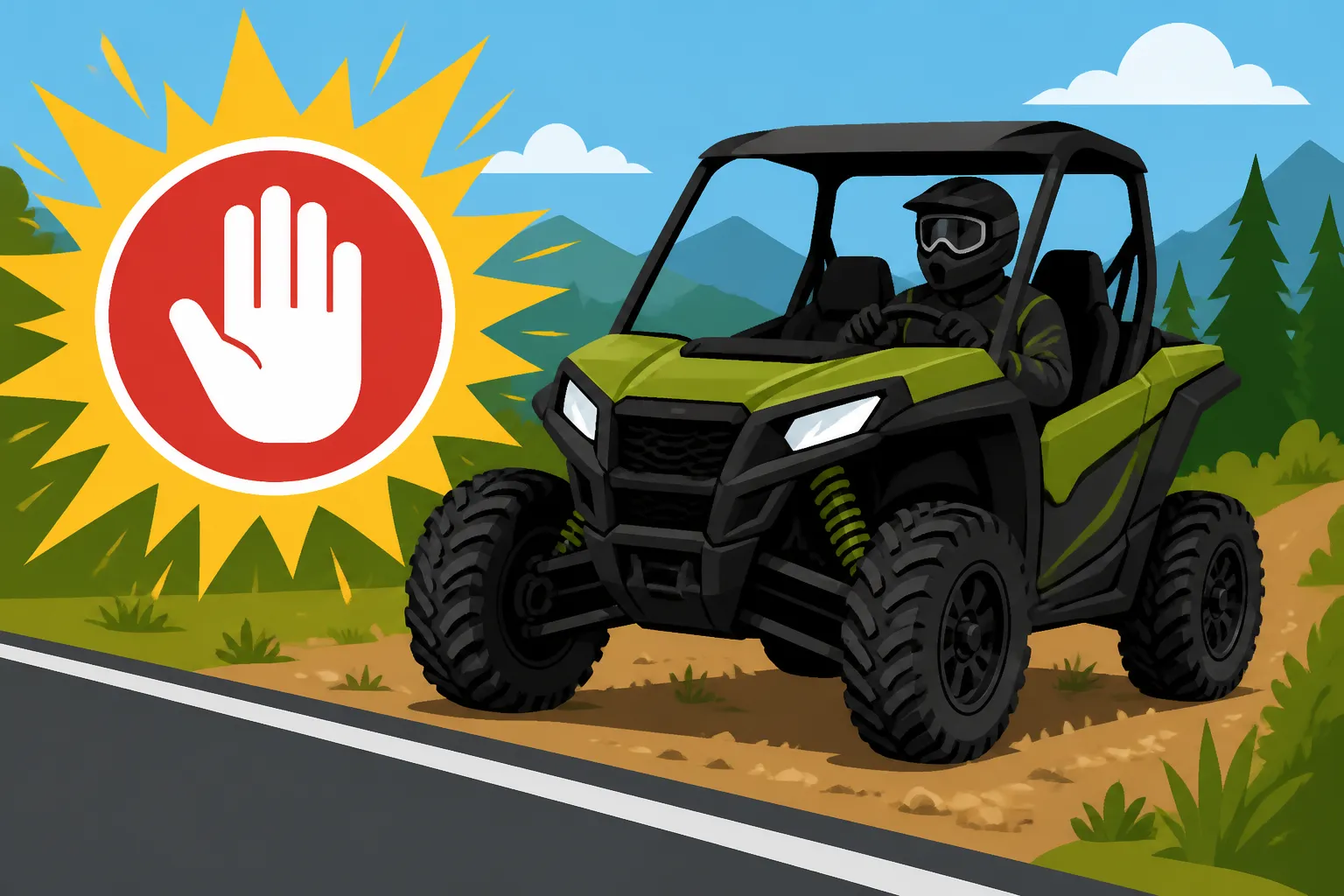
It's happened to all of us. You're out enjoying a fantastic ride on a winding New Hampshire OHRV trail, the wind in your hair, the machine purring beneath you, and then, suddenly, a road appears. Your adrenaline might be up, you're enjoying the flow, and that little voice in your head might say, "Just roll through quickly, nobody's coming." But that instinct is exactly what this guide is here to counter. Crossing any public road in New Hampshire on your ATV or UTV requires a very specific, full stop at the pavement edge – a rule that's not just about avoiding a ticket, but about ensuring your safety, the safety of others, and protecting the very future of OHRV access in our beautiful state.
Why That Full Stop at the Pavement Edge Isn't Just a Suggestion
When you're out on the trails, the sense of freedom is incredible, right? You feel removed from the hustle and bustle of everyday traffic. But here in New Hampshire, our trail systems often intersect with, or briefly utilize, town roads, state highways, and even bustling village streets. This unique setup, while providing fantastic connectivity, also introduces moments of high risk. That's why the full stop at the pavement edge isn't merely a formality; it's a foundational rule with deep implications for safety, legality, and the reputation of our entire riding community.
The Safety Imperative: A Matter of Life and Limb
Let's be brutally honest: OHRVs and conventional road vehicles operate in fundamentally different environments and at different speeds. What might seem like a quick, innocent roll-through at a rural intersection can turn into a life-altering event in a split second. Cars and trucks are often moving much faster than you anticipate, especially on those open stretches of road. As an OHRV rider, you're less protected than someone in a car, and your machine might not be as visible as you think, particularly if you're emerging from a treeline or a dusty trail.
A full, complete stop gives you precious seconds. It allows you to shift your focus from the immediate demands of the trail to the potentially complex and fast-moving dynamics of road traffic. You get a chance to assess sightlines, listen for approaching vehicles that might be out of view, and truly gauge the speed and distance of any oncoming traffic. This isn't just about protecting yourself; it's about not putting drivers of conventional vehicles into a dangerous situation where they have to react suddenly to avoid you. The consequences of not stopping can range from minor scrapes to tragic accidents, impacting not only the riders involved but also their families and the emergency responders who have to clean up the aftermath. This rule is a non-negotiable step in keeping everyone safe.
The Legal Mandate: What New Hampshire Law Expects
Beyond the moral imperative of safety, there's the cold, hard letter of the law. New Hampshire is very clear about the requirements when an OHRV rider encounters a paved road. You must bring your machine to a complete stop at the pavement edge. This isn't a "yield," it's not a "slow down and look," it's a stop. Think of it exactly like a stop sign you'd encounter in your car. Your wheels must cease rotating. Failure to do so can result in a citation, and let me tell you, those fines can add up.
New Hampshire Fish and Game officers, as well as local police, are well aware of these regulations and frequently patrol areas where trails intersect roads. They're not out to ruin your fun, but to enforce laws designed to protect lives. Ignoring this simple rule makes you an easy target for a ticket, and nobody wants that kind of souvenir from a great ride. It’s also crucial to remember that [What New Hampshire Requires to Cross a Road] goes beyond just stopping; it involves yielding to traffic and following specific crossing procedures. Every OHRV operator should know these rules inside and out.
Preserving Our Riding Privileges: Community and Landowner Relations
Here in New Hampshire, we are incredibly fortunate to have such extensive trail access, thanks to a network of dedicated clubs, landowners, and a supportive state agency. This privilege, however, is fragile. Every time an OHRV rider behaves irresponsibly – whether it's speeding, making excessive noise, or, yes, rolling through a road crossing without stopping – it chips away at the goodwill that makes our trail system possible. [New Hampshire Fines for an OHRV Violation] can be steep, but the broader cost to the OHRV community is even higher.
When residents witness riders disregarding traffic laws, it fuels negative perceptions. They see OHRVs as a menace, not a valuable recreational activity. This can lead to increased complaints to local selectboards and state officials, potentially resulting in trail closures, stricter regulations, or even the loss of crucial road connectors that link different parts of our vast trail networks. Landowners, who generously allow trails on their property, might revoke permission if they perceive riders as unsafe or disrespectful. Our ability to continue enjoying these trails depends heavily on a collective commitment to responsible riding, and that starts with something as fundamental as a full stop at every pavement edge. It's about demonstrating that we are responsible users of the land and roads.
Navigating the Crossing: What "Pavement Edge" Truly Means and How to Execute a Safe Stop
Understanding why we stop is critical, but knowing how and where to execute that stop is just as important. The "pavement edge" isn't always a clearly defined painted line, especially out in the more rural areas where many of our beloved trails crisscross the landscape. Successfully navigating these intersections requires a keen eye, good judgment, and a consistent approach every single time.
Defining the Edge: Where the Trail Ends and the Road Begins
When the regulation mentions "pavement edge," it's referring to the physical boundary where the paved surface of the road begins. This means, if there's a dirt or gravel shoulder, you should stop before your tires touch the asphalt. You want to be completely off the traveled portion of the roadway, but close enough to the edge to have a clear view of approaching traffic in both directions.
Consider a typical scenario: you're on a forest trail that suddenly opens up to a town road. There might be a short stretch of gravel or packed dirt between the trail's end and the actual paved surface. Your stopping point should be at the very start of that paved surface. It's about drawing a clear line in your mind – and with your machine – between the off-road environment and the on-road environment. Don't creep out onto the shoulder or, heaven forbid, partially into the lane of travel. This is where [Crossing a Road on an OHRV in New Hampshire] becomes a precise maneuver, not a casual one.
Executing the Stop: Coming to a Complete Halt
This isn't a suggestion to slow down; it's an absolute command to stop. Your machine's wheels must come to a complete and utter standstill. This isn't a "California roll" or a brief hesitation; it's a full stop, just as if you were in a car at a stop sign. The purpose of this isn't just legal compliance, but practical safety. When you stop completely, you give your brain the opportunity to process the environment, listen for sounds of approaching vehicles, and truly assess the situation without the added task of controlling a moving machine.
It's a moment to take a deep breath, recalibrate your focus from the nuances of trail riding to the potential dangers of road traffic. Ensure your brakes are in good working order – a critical part of [New Hampshire Equipment Rules for Road Riding]. Before you even hit the trails, give them a quick check. A sudden stop can sometimes be necessary, and you want your machine to respond predictably.
The Critical Scan: Looking for Traffic and Making Eye Contact
Once you've come to that full stop, the work isn't over. This is when the crucial "look both ways" really comes into play. But on an OHRV, it's often more complex than just a quick glance. You need to perform a thorough scan of the roadway, checking far down in both directions. Visibility can be tricky, especially at intersections with blind spots, curves in the road, or dense foliage. Don't assume the road is clear just because you don't immediately see something.
If you do see a vehicle approaching, you need to be able to judge its speed and distance accurately. This is a skill that comes with practice, but always err on the side of caution. If there's any doubt, wait. It's better to lose a few extra seconds than to risk an accident. When a driver is approaching, try to make eye contact. A nod, a wave – anything that signals you've seen them and they've seen you. This small gesture can go a long way in preventing misunderstandings. Remember, [Yielding to Every Conventional Vehicle] is also a core requirement. You always give way to road traffic.
Beyond the Stop: Best Practices and Consequences of Neglecting the Rule
The act of stopping is foundational, but it's part of a larger set of best practices for road crossings that ensure safety and maintain the positive image of our sport. Ignoring these protocols can lead to serious legal and personal repercussions, impacting not only individual riders but also the future of OHRV access for everyone.
Crossing Protocols: When to Go, When to Wait
After you've come to a full stop and thoroughly scanned the road, the next step is deciding when to cross. The rule is simple: only proceed when it is safe to do so. This means there's ample time and distance to cross the road without interfering with the flow of traffic or causing any conventional vehicle to alter its speed or direction. Don't try to "beat" an oncoming car; it's simply not worth the risk.
When riding in a group, the crossing requires even more coordination. It's usually best for one rider to cross at a time, allowing each individual to make their own judgment about safety. Never cross abreast or in a staggered formation if it impedes visibility or creates confusion for drivers. Sometimes, especially on busier roads or during peak times, you might have to wait for several minutes for a safe gap in traffic. Be patient. Use hand signals if you can, to indicate your intentions to other riders in your group and to passing motorists. [New Hampshire Rules for Crossing a Highway] reinforces these safety measures, emphasizing caution and clear communication.
The Risk of Non-Compliance: Fines and Accidents
Let's not sugarcoat it: failing to come to a full stop at the pavement edge is a clear violation of New Hampshire law. A law enforcement officer observing this can and will issue you a citation. While I can't give specific figures, I can tell you that OHRV violation fines are designed to be a deterrent and can certainly put a damper on your riding budget. Beyond the immediate financial penalty, repeated violations or more serious infractions can lead to loss of riding privileges.
Far more serious than a fine, however, is the risk of an accident. OHRV accidents involving road vehicles can be devastating. Because OHRVs lack the protective enclosure of a car or truck, riders are highly vulnerable. Even a low-speed impact can result in severe injuries or fatalities. An accident can lead to extensive property damage, sky-high medical bills, and potentially civil lawsuits that could haunt you for years. Furthermore, such incidents garner negative media attention, strengthening the arguments of those who wish to restrict OHRV access on public roads. It's a reminder that [Why You Must Stop Before Every Road Crossing] isn't just bureaucratic red tape; it's a fundamental safety measure.
Gear and Machine Readiness: Ensuring Your OHRV is Ready for the Road
Your personal safety gear and the condition of your machine play a crucial role in safe road crossings. First, always wear appropriate safety gear, including a helmet, even if you're an adult and New Hampshire law might not require it on all road sections. [New Hampshire Helmet Law for OHRV Riders] provides details, but erring on the side of maximum protection is always wise. Eye protection, too, is a must – you need an unobstructed view of the road.
Your OHRV itself needs to be in tip-top shape. Beyond good brakes, ensure your headlights and taillights are functional, especially if there's any chance you'll be riding near dusk or dawn, or on roads with poor visibility. While not always required for simply crossing a road, a properly installed rearview mirror can be invaluable for situational awareness. Accessories from companies like SuperATV can help improve visibility and safety features on your machine, from enhanced lighting to durable mirrors, giving you an edge when navigating these tricky transitions. Regularly inspect your tires, steering, and suspension. A machine that handles predictably and reliably is a safer machine, especially when you're making critical maneuvers like stopping and crossing.
Crossing Scenarios and Required Actions
| Scenario | Stopping Requirement | Additional Actions |
|---|---|---|
| Trail to Paved Public Road | Full Stop at Pavement Edge | Yield to all traffic, look both ways, make eye contact, cross only when safe. |
| Trail to Class VI Road (unmaintained) | Recommended Full Stop | Treat as private way, proceed with caution, be aware of other users (walkers, mountain bikers, residents). |
| Trail to Private Driveway (crossing) | Recommended Full Stop | Respect private property, be aware of vehicles entering/exiting, yield to residents. |
| Entering Paved Road for OHRV-Designated Section | Full Stop at Pavement Edge | Yield to all traffic, check local town ordinances for specific speed limits or time restrictions, stay to extreme right. |
This table illustrates the necessity of the full stop in most common scenarios you'll encounter here in New Hampshire. Always prioritize safety, and when in doubt, stop.
Disclaimer
This article is for general informational purposes only and does not constitute professional advice. Laws, prices and regulations vary by location and change over time. Consult a qualified professional for guidance on your specific situation.