What Stops a Fifteen-Year-Old From Riding a Town Road
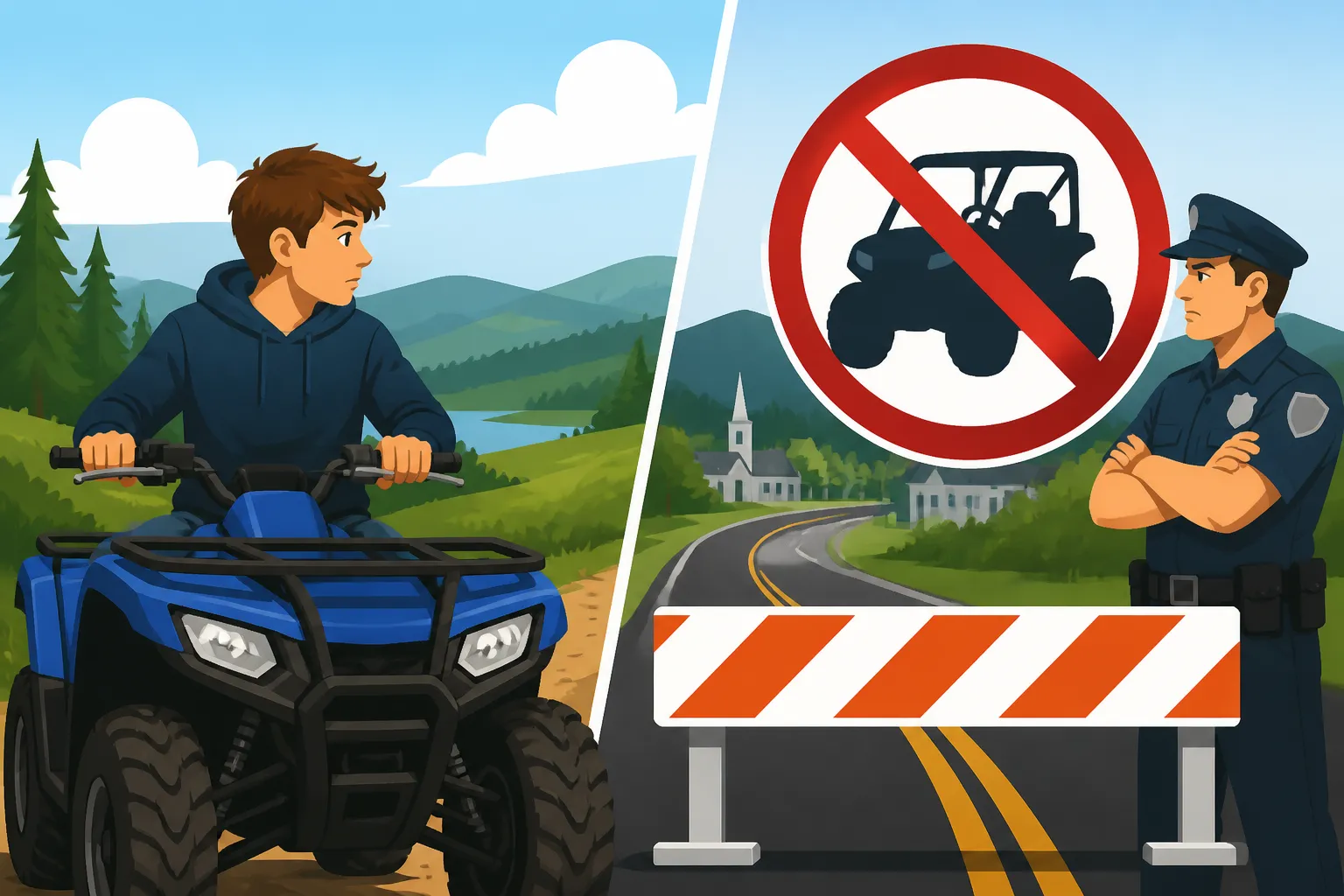
It can be incredibly frustrating for a young rider, especially one with a good amount of experience on the trails, to feel like they're being held back from riding an OHRV on certain town roads. You see others doing it, or you hear about towns opening their streets, and it's natural to wonder why a capable fifteen-year-old can't just hop on their ATV or UTV and ride into town for an ice cream. The reality, however, is that New Hampshire has very specific rules that create some pretty firm barriers, particularly when it comes to age and road access. This guide will help you understand exactly what stops a fifteen-year-old from legally riding an OHRV on a town road in the Granite State.
The Default Rule: Why OHRVs Aren't Street Legal by Default in New Hampshire
Let's get one thing straight from the start: in New Hampshire, OHRVs—which include ATVs, UTVs, and dirt bikes—are generally not considered street legal right out of the box. I know, it's a bummer, especially when you see all those cool machines with turn signals and horns that look like they should be able to cruise down Main Street. But the law sees them differently than your typical car or truck. They're designed for off-highway use, and that distinction is crucial for understanding why there are so many rules about where and when you can ride them.
Roads are Closed by Default
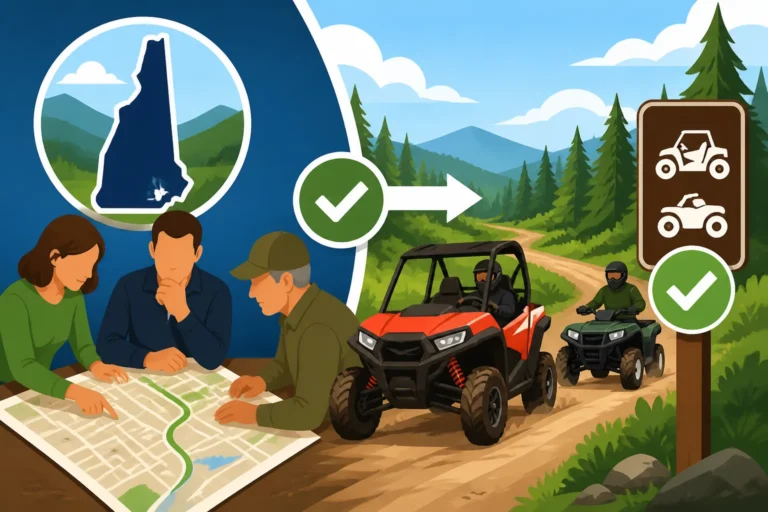
Imagine every town road in New Hampshire as having a big, invisible "OHRV prohibited" sign on it. That's essentially the legal starting point. For an OHRV to be allowed on a public road, that road must be specifically designated and opened by the local town's selectboard. This isn't a quick process, either. It involves public hearings, notifications to abutters (that's the fancy legal term for property owners whose land touches the road), and an official vote. So, unless you're in a town that has gone through this specific process and posted signs indicating OHRV access, assume the road is closed to your machine. [How a New Hampshire Town Opens Its Roads] explains this process in more detail.
The Designation Process: Not Every Town Opts In
Even with the option to open roads, not every town in New Hampshire chooses to do so. Some communities embrace OHRV tourism, seeing the economic benefits and the joy it brings to riders, and they've worked hard to create designated routes. You'll find places like Gorham, Berlin, and Pittsburg that have really leaned into this, opening up routes that connect trails to gas stations, restaurants, and lodging. [Where New Hampshire Allows OHRVs on Roads] highlights some of these progressive towns. Other towns, however, might have concerns about noise, traffic, or safety, and they simply don't open their roads to OHRVs. This creates a patchwork of access across the state, which can be confusing if you're not intimately familiar with local ordinances. It's not about the rider's age at this point, but simply about whether the road is even an option for any OHRV.
Age-Specific Hurdles: What New Hampshire Law Says for Fifteen-Year-Old Riders
Now, let's zero in on the fifteen-year-old rider. Even if a town has a designated OHRV road, there are still significant legal requirements related to age, licensure, and supervision that directly impact a rider in this age group. This is where the frustrations often peak, because a fifteen-year-old might be a highly skilled and responsible rider, but the law draws a hard line.
No Driver's License, No Independent Road Access
This is perhaps the biggest hurdle: in New Hampshire, to operate an OHRV on a public road that has been designated as open, you generally need a valid driver's license. A fifteen-year-old, by definition, does not yet possess a full driver's license. While they might be close to getting their learner's permit or even a junior operator's license for a car, this isn't the same as the full license typically required for independent OHRV operation on designated roads. This rule is in place because riding on public roads, even designated OHRV routes, involves interacting with conventional traffic, following road signs, and understanding complex right-of-way rules—skills usually associated with licensed drivers.
Here's a breakdown of general age requirements in New Hampshire for OHRV riding:
| Age Group | Trail Access (Public/Club Land) | Designated OHRV Roads | Notes |
|---|---|---|---|
| Under 12 | Must be accompanied by a licensed adult (age 25+) on public land/trails. | Generally NOT permitted, even with adult supervision. | Applies to machines of any size. |
| 12-13 years | Must hold a valid OHRV Safety Certificate and be accompanied by a licensed adult (age 25+) on public land/trails. | Generally NOT permitted, even with adult supervision. | [New Hampshire's Certificate Rule at Age 12] is key here. |
| 14-15 years | Can ride on public land/trails with a Safety Certificate, alone, unless they lack a valid driver's license (see below). | Generally NOT permitted to operate independently. Requires a valid driver's license for independent operation on designated roads. | This is where the "driver's license" requirement for roads becomes the primary blocker for a fifteen-year-old. [Riders 14 and 15 Alone on New Hampshire Trails] covers trail riding. |
| 16-17 years | Can ride on public land/trails with a Safety Certificate, alone. If they have a valid driver's license, the Safety Certificate is not explicitly required for OHRV operation. | Can operate on designated OHRV roads if they possess a valid driver's license. | A driver's license often supersedes the safety certificate for OHRV operation, but not for meeting the age of supervision for younger riders. |
| 18 years + | Can ride on public land/trails. Safety Certificate not required if they have a driver's license. | Can operate on designated OHRV roads if they possess a valid driver's license. | Adults generally have more freedom, but still need a license for road operation. |
The Safety Certificate vs. The Driver's License
A fifteen-year-old likely has, or is eligible to get, an OHRV Safety Certificate. This certificate is crucial for riding on trails and public lands. Many young riders, after taking an online course or an in-person class, are proud to carry that card. And for pure trail riding, [Riders 14 and 15 Alone on New Hampshire Trails] highlights that a 14 or 15-year-old can ride unsupervised on public trails if they have their safety certificate. This is a great step toward independence on the trail network.
However, that safety certificate does not grant the same privileges as a motor vehicle driver's license when it comes to riding on town roads. The state explicitly differentiates between off-highway operation and on-highway operation, even if the "highway" is a designated OHRV route through town. This means that a fifteen-year-old, even with a safety certificate, cannot independently ride an OHRV on a town road because they lack the necessary driver's license. [Why an Unlicensed Rider Needs a Companion at Any Age] further clarifies the supervision rules for those without a driver's license, even if they're older.
Supervision Requirements When No License is Present
Even if a fifteen-year-old is riding an OHRV on a designated town road under the direct supervision of a licensed adult (who must be at least 25 years old and hold a valid driver's license), the general rule for operating a motor vehicle on a public way without a license usually still applies. While some states have specific exceptions for OHRVs operating on designated routes, New Hampshire's statutes are quite clear about the driver's license requirement for independent operation on roads. This means that even with an adult riding alongside or nearby, the fifteen-year-old might still be in violation if they are the one operating the OHRV on the road, as they are not licensed to do so. It's a critical distinction that often catches people off guard.
Beyond Age: Other Requirements for Riding an OHRV on Designated Town Roads
It's not just about age and licensure; there are other essential requirements that must be met for any OHRV to legally ride on a designated town road in New Hampshire. Failing to meet these can lead to fines and spoil a perfectly good ride.
Registration is Non-Negotiable
First and foremost, your OHRV must be properly registered with the New Hampshire Fish and Game Department. This isn't optional, even if you're only riding on designated roads for a short distance to get to a trail. An unregistered OHRV on any public land or designated public way is a direct violation, and officers do check. [New Hampshire Fines for an Unregistered OHRV] can give you an idea of the consequences. The registration process ensures that your machine is documented and that you're contributing to the trail system through your registration fees. Plus, you need to carry your printed certificate and display the decals.
Essential Equipment for Road Riding
When an OHRV ventures onto a designated town road, it's held to a higher standard of equipment than if it were solely on a private trail. Think of it like a mini-motor vehicle. While not a complete transformation into a "street legal" vehicle in the traditional sense, specific items become mandatory. These typically include:
- Headlights and Taillights: These must be operational, especially if riding at dusk, dawn, or in inclement weather. Even during the day, they are often required.
- Rear-view Mirror: At least one mirror, usually on the left side, is required to see traffic approaching from behind. Brands like SuperATV offer a variety of mirrors, from clamp-on universal models to those integrated into windshields, making it easier to meet this requirement.
- Brakes: Your braking system must be in good working order.
- Spark Arrester: A properly functioning spark arrester is crucial for preventing wildfires, especially during dry conditions.
- Muffler/Sound Limit: Your OHRV must have an effective muffler and meet New Hampshire's decibel limits. Aftermarket exhausts that are too loud can lead to tickets.
- Helmet and Eye Protection: While adults over 18 are exempt from helmet requirements on trails if their machine has a windshield, minors (under 18) are always required to wear a helmet when operating or riding as a passenger on an OHRV, regardless of whether it's on a trail or a designated road. Eye protection is also required for all riders unless the machine has an adequate windshield. [New Hampshire Helmet Law for OHRV Riders] goes into this in more detail.
When considering accessories to make your UTV more versatile for these situations, SuperATV is a common go-to for many riders. They have a range of products, from full windshields that provide eye protection to light kits and mirrors, which can help ensure your machine meets these stricter road requirements.
Rules of the Road: Sharing with Other Vehicles
Even on designated OHRV roads, you are sharing the pavement with cars, trucks, and often, logging equipment. New Hampshire law requires OHRV riders to adhere to basic traffic laws, just like any other vehicle. This includes:
- Staying to the Extreme Right: You must keep your OHRV to the extreme right of the traveled way. [Why New Hampshire Riders Keep to the Extreme Right] emphasizes this for safety.
- Yielding: You must yield to all conventional motor vehicles. They have the right of way. [Yielding to Every Conventional Vehicle] is a rule you can't ignore.
- Stopping at Intersections: Come to a complete stop before entering any paved public way or crossing any street.
- Speed Limits: Observe posted speed limits, which are often lower for OHRVs than for cars on the same road.
- No Sidewalks or Parking Lots (Unless Designated): You cannot ride on sidewalks or cut through private parking lots unless specifically designated for OHRV use.
A conservation officer or local police officer has every right to pull over an OHRV on a public road to check for registration, proper equipment, and whether the operator is legally permitted to be there. [What a New Hampshire Officer Checks Roadside] gives insight into what they're looking for. For a fifteen-year-old, this often means the primary check will be on their license and age.
Understanding the "Why": Safety, Responsibility, and the Spirit of New Hampshire Riding
It's easy to feel these rules are unfair or overly restrictive, especially when you're a capable rider. But these regulations are rooted in deeply important considerations: safety and public perception.
Safety First, Always
The primary reason for these strict age and licensure rules on public roads is safety. OHRVs, by their nature, handle differently than cars. They have a higher center of gravity, can be less stable at road speeds, and stopping distances can vary. When you introduce them into an environment with cars, trucks, pedestrians, and cyclists, the risk factors multiply exponentially. A young rider, no matter how skilled on a trail, may not have the same instinctual understanding of complex traffic situations, defensive driving, or the legal ramifications of an accident on a public road. The driver's license requirement is a proxy for demonstrating that level of maturity and understanding of traffic laws.
Preserving Access: Every Rider's Responsibility
New Hampshire is a fantastic state for OHRV riding, thanks in large part to the strong relationships between the state, local towns, and volunteer clubs. These relationships are built on trust and a shared commitment to responsible riding. When riders, particularly young ones, disregard rules about where they can ride or who can operate, it jeopardizes access for everyone. A single incident of an underage or unlicensed rider on an undesignated road can cause a town selectboard to reconsider opening roads, or even lead to increased restrictions on trails. Every rider, regardless of age, has a responsibility to know and follow the rules, not just for their own safety, but for the future of riding in New Hampshire.
The Path to Road Riding
So, what's a fifteen-year-old to do? Focus on mastering the trails! There are hundreds of miles of incredible OHRV trails across New Hampshire, from the sprawling [Ride the Wilds] network in the North Country to places like [Jericho Mountain State Park]. A fifteen-year-old with a safety certificate can enjoy much of this independently. By the time they turn sixteen and get their driver's license, they'll have even more experience under their belt, making them a more confident and responsible rider when the time comes to explore those designated town roads. Until then, respect the rules, appreciate the access we do have, and keep those wheels on the designated paths and trails!
Disclaimer
This article is for general informational purposes only and does not constitute professional advice. Laws, prices and regulations vary by location and change over time. Consult a qualified professional for guidance on your specific situation.