Riders 14 and 15 Alone on New Hampshire Trails
One common concern for parents and teenage riders in New Hampshire is understanding the precise rules for operating Off-Highway Recreational Vehicles (OHRVs), especially when those young riders are itching for more independence on the trails. It's a tricky balance between fostering a love for the outdoors and ensuring safety and legal compliance. This guide aims to clear up the confusion and lay out exactly what's required for 14 and 15-year-olds to ride alone on New Hampshire's extensive network of OHRV trails, helping you navigate the regulations with confidence.
Understanding New Hampshire's OHRV Age and Supervision Framework
New Hampshire has a well-defined set of rules when it comes to who can operate an OHRV, and these regulations are specifically designed to progressively grant more independence as riders mature and gain experience. It's not a one-size-fits-all approach, and understanding these distinctions is crucial for anyone planning to hit the trails, particularly with younger family members.
The Core Age Tiers for OHRV Operation
The state's framework breaks down OHRV operation by age, each tier bringing its own set of privileges and responsibilities. For riders under 12, the rules are quite strict; they must be under the direct supervision of an adult and are often limited in where they can ride. As they move into the 12 and 13-year-old bracket, there's a significant step: they can operate an OHRV on public property if they hold a valid OHRV safety certificate, but they still need to be accompanied by a licensed adult who is at least 25 years old. This adult must be riding on their own machine, keeping the minor in sight. This early stage is all about building foundational skills and understanding trail etiquette under watchful eyes.
Then we get to the 14 and 15-year-old age group, which is where things open up considerably, but with specific conditions. This is the age where New Hampshire recognizes a greater capacity for independent judgment and skill, allowing for solo riding under certain circumstances. Finally, at 16, if they hold a valid motor vehicle driver's license, many of the OHRV-specific age restrictions fall away, though other rules like helmet laws for minors still apply until 18. Each step is deliberate, designed to ensure that riders are prepared for the increased freedom that comes with age.
Why the Rules Shift for 14 and 15-Year-Olds
The shift in regulations for 14 and 15-year-olds isn't arbitrary; it reflects a recognition of their developing physical abilities, cognitive skills, and a growing understanding of risk assessment. By this age, many young riders have accumulated significant experience, often starting on smaller machines and progressing through safety courses. New Hampshire's approach acknowledges this development, granting a level of independence that allows them to explore trails without direct, constant adult supervision. This doesn't mean a complete free-for-all, however. The state mandates specific qualifications, primarily the OHRV safety certificate, which serves as proof that the rider has formally learned about safe operation, laws, and responsibilities.
This age group is often eager to join friends on rides or explore longer, more challenging trails at their own pace. The rules are designed to facilitate this healthy desire for adventure while embedding a strong sense of personal accountability. It's about empowering young riders to make their own decisions on the trail, provided they've met the state's safety benchmarks. This balance fosters not only skilled riders but also responsible stewards of New Hampshire's trail system.
What "Alone on New Hampshire Trails" Really Means for This Age Group
When we talk about 14 and 15-year-olds riding "alone" in New Hampshire, it's important to understand the specific context and where this independence applies. It's not a blanket permission to ride anywhere and everywhere without an adult. The state is very clear about the types of areas where this solo riding is permissible, primarily focusing on dedicated OHRV trails.
Independent Riding on Club Trails and State Lands
For a 14 or 15-year-old to legally ride an OHRV unsupervised on New Hampshire's trails, the golden ticket is the OHRV safety certificate. With this certificate in hand, a rider in this age bracket is permitted to operate their machine on any designated OHRV trail that is open to the public, whether it's part of the extensive club trail network, a state park like Jericho Mountain, or other state-managed lands. This means they can venture out for a ride with friends, or simply enjoy a solo excursion, provided they have met the certification requirements.
These designated trails are specifically built and maintained for OHRV use, and they are typically well-marked and managed by clubs or the state. The idea is that these environments are designed to be relatively safe and predictable for recreational riding. It’s on these trails that the independence granted to this age group truly comes into play, allowing them to experience the thrill of New Hampshire's scenic backcountry. For example, a 15-year-old from Colebrook, having completed their safety course, could head out on the Metallak ATV Club trails independently, enjoying the freedom of the ride. Riders 14 and 15 Alone on New Hampshire Trails is a privilege earned through safety education.
Limitations and Exceptions: Where Solo Riding Isn't Permitted
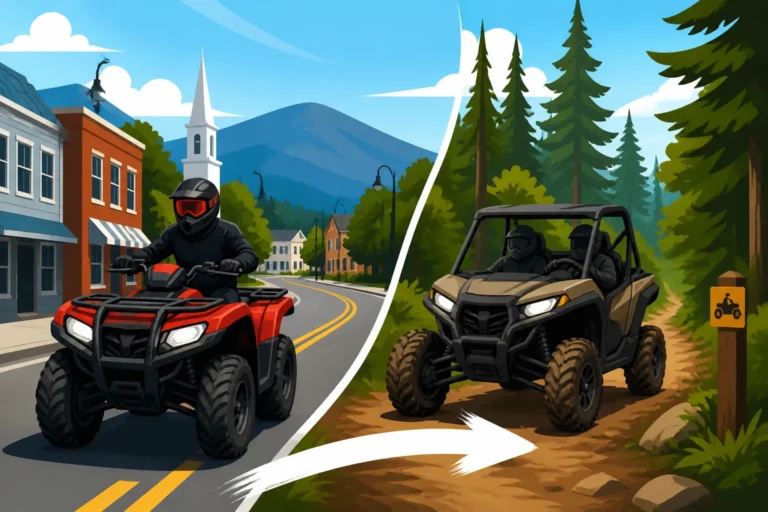
While 14 and 15-year-olds gain significant freedom, there are crucial limitations to where they can ride alone. The most significant restriction comes when OHRVs interact with public roadways. Even in towns that have opened their streets to OHRVs, a 14 or 15-year-old still needs to be accompanied by a licensed adult (25 years or older) on a separate machine when riding on these public ways. This rule is designed to mitigate the risks associated with mixing OHRVs with conventional vehicle traffic, where complex judgment calls and quick reactions are often required. [New Hampshire Rules for Riding a Town Street] clearly outlines the need for supervision in such scenarios.
Furthermore, riding on private land always requires explicit permission from the landowner. While a 14 or 15-year-old can technically ride alone on private property with permission, the responsibility for obtaining and understanding that permission falls to them or their guardian. It's not enough to simply assume permission, especially on unposted land; [New Hampshire Landowner Permission Rules] dictates that written permission is always the safest bet. There might also be specific local ordinances or private trail systems that impose stricter age or supervision requirements, so it's always wise to check with local authorities or trail managers before riding in an unfamiliar area.
Essential Requirements for 14 and 15-Year-Old Solo Riders
For a 14 or 15-year-old to enjoy the freedom of solo OHRV riding in New Hampshire, there are several non-negotiable requirements that must be met. These aren't just suggestions; they are legal mandates designed to ensure the safety of the rider and others on the trail.
The Non-Negotiable OHRV Safety Certificate
This is the cornerstone of independent OHRV operation for young riders in New Hampshire. A 14 or 15-year-old must possess a valid OHRV safety certificate to ride alone on public trails. This certificate demonstrates that the rider has successfully completed an approved safety education course, covering topics such as safe operating practices, trail etiquette, environmental considerations, and New Hampshire OHRV laws. It's more than just a piece of paper; it's proof of foundational knowledge that is critical for safe riding.
There are two primary ways to obtain this certificate. One option is to take an online OHRV safety course. These courses offer flexibility, allowing riders to complete the curriculum at their own pace from home. Be aware that most online courses do involve a fee, typically a set amount (for instance, the online OHRV safety course costs around $34.95, though this can vary by provider). [The Online OHRV Safety Course Costs $34.95] will give you an idea. The other excellent option is to enroll in a free, in-person classroom course offered by certified instructors. [The Free Classroom Course in New Hampshire] provides direct interaction with experienced instructors and peers, which can be invaluable for some learners. Regardless of the method, the goal is the same: to instill responsible riding habits and a thorough understanding of the rules. [New Hampshire's Safety Certificate at Twelve] is where the requirement begins, extending through these critical teenage years.
Machine Registration and Equipment Compliance
Beyond the rider's qualifications, the OHRV itself must meet specific state requirements. Every OHRV operated on public trails or designated roads in New Hampshire must be properly registered with the state. This means carrying the current registration certificate and displaying the decals prominently on the machine. The registration ensures that the state has a record of the machine and that a portion of the fees collected goes directly back into trail maintenance and development. You can learn more about this process and fees in resources like [Registering an OHRV in New Hampshire].
Furthermore, the machine must be equipped to meet New Hampshire's safety and environmental standards. This typically includes a working spark arrester to prevent trail fires, as outlined in [New Hampshire Spark Arrester Requirement], and ensuring the machine's exhaust system meets the state's sound limits. The [New Hampshire Sound Limit for OHRVs] is a strict 96 decibels, and aftermarket exhausts that exceed this can lead to fines. While not always mandatory for trail riding, if the machine will ever be ridden on a public road where OHRVs are allowed, it might also need a rear-view mirror and appropriate lighting. Regular maintenance, including checking tire pressure, brakes, and fluid levels, is also crucial for safe operation, and ensuring quality parts from brands like SuperATV can contribute to a safer, more reliable ride.
Helmets and Eye Protection: Always Required (for this age)
When it comes to safety gear, New Hampshire has clear, unwavering rules for young riders. Any OHRV operator or passenger under the age of 18 must wear a safety-approved helmet at all times while riding. This isn't just a recommendation; it's a legal mandate designed to protect against head injuries, which are among the most serious risks in OHRV accidents. [New Hampshire Helmet Law for OHRV Riders] makes this explicitly clear.
In addition to helmets, eye protection is also compulsory for all OHRV operators and passengers, unless the machine is equipped with a windshield or screen that offers sufficient protection. Goggles or a face shield on the helmet are generally the go-to options to shield the eyes from dust, debris, insects, and branches. Ignoring this rule not only puts the rider at risk but can also result in citations. [New Hampshire Eye Protection Requirement] underscores this critical safety measure. Even though adults might have some exemptions in very specific road-riding contexts, for 14 and 15-year-olds on any trail or road, helmets and eye protection are absolute necessities. Investing in high-quality helmets and goggles is not just about compliance; it's about minimizing risk and ensuring a comfortable, safe riding experience, sometimes with durable accessories from companies like SuperATV.
Navigating the Trails: Practical Considerations for Young Riders
Beyond the legal requirements, there are practical considerations that 14 and 15-year-old solo riders need to be aware of to ensure a safe and enjoyable experience on New Hampshire's trails. Understanding these nuances can make the difference between a great day out and an unexpected challenge.
Understanding Trail Designations and Limitations
New Hampshire's OHRV trail system is diverse, ranging from wide, groomed corridors to narrow, rocky paths. Many trails have specific designations or limitations that riders need to heed. For instance, some rail trails, particularly in the southern part of the state, might have width restrictions, often capping machines at 50 inches. This is crucial for riders of wider side-by-sides to know before heading out. [Riding a Rail Trail in the South] can give you more context on these limitations. It's not uncommon for clubs to also have their own specific rules regarding trail usage, sometimes including temporary closures for maintenance, logging, or hunting seasons.
Young riders should always check trail status updates from local clubs or the New Hampshire Bureau of Trails before heading out. A quick check can prevent frustration from encountering a closed gate or an impassable section. Understanding trail difficulty ratings is also wise; some trails are clearly marked as more challenging and might be better suited for experienced riders. Being aware of these details ensures that the rider is on a trail appropriate for their skill level and machine, preventing potential issues.
Planning and Safety for Independent Adventures
While 14 and 15-year-olds can ride alone, a smart rider always plans their adventure. This means more than just knowing where you're going; it means preparing for the unexpected. Before leaving, young riders should always inform someone reliable about their planned route and estimated return time. Carrying a charged cell phone, even in areas with spotty service, can be a lifeline. A small backpack with essentials like water, snacks, a basic first-aid kit, a small tool kit, and perhaps a small GPS device pre-loaded with trail maps is highly recommended. Many riders even equip their machines with robust storage solutions or protection from providers like SuperATV, ensuring gear stays secure and machines are less prone to damage.
Knowing basic troubleshooting for common issues like a flat tire or a dead battery can be a huge asset. It's also important to ride within one's limits, especially when alone. The concept of "responsible speed" and maintaining a safe distance from other riders or obstacles is paramount. Accidents can happen, and being prepared, even if it's just knowing how to call for help and describe your location, is a fundamental aspect of independent riding.
What About Riding on Roads or Private Land?
The freedom to ride alone as a 14 or 15-year-old is primarily for designated OHRV trails. When it comes to venturing onto public roads or private property, the rules become different, and usually, the requirement for adult supervision or explicit permission re-enters the picture. It's vital to distinguish between these scenarios to avoid legal issues and ensure safety.
OHRVs on Public Roads: Still Requiring Supervision
This is a point of frequent misunderstanding. While New Hampshire has a growing number of towns that allow OHRVs on certain designated public roads, enabling riders to connect trails or access services, the age rules for solo operation on these roads are stricter. For 14 and 15-year-olds, even if the road is open to OHRVs, they cannot operate their machine on it without the direct supervision of a licensed adult (who is at least 25 years old) riding on a separate machine. [New Hampshire Rules for Riding a Town Street] confirms this need for supervision.
The rationale is clear: public roads present a different set of hazards compared to a secluded trail. There's interacting with other vehicles, understanding traffic laws, navigating intersections, and dealing with unpredictable situations. The state deems that the added complexity and risk of road riding warrant adult oversight for this age group, even if they're otherwise competent on trails. So, if a young rider wants to grab lunch in a trail-friendly town like Gorham, they'll need their designated adult companion to ride with them on the road sections.
Riding on Private Property: Landowner Permission is Key
Riding on private land is a completely separate category and is governed by the owner's permission, regardless of the rider's age. New Hampshire law is clear: you cannot ride an OHRV on private property without express permission from the landowner. This permission is ideally in writing to avoid any misunderstandings or disputes. [New Hampshire Landowner Permission Rules] emphasizes this requirement. Even if land appears unposted or unfenced, it does not imply permission to ride. Trespassing with an OHRV can lead to significant fines and damaged relationships with landowners, which can ultimately threaten trail access for everyone.
For a 14 or 15-year-old riding alone, this means that while they might be legally able to operate their machine, they or their guardian are fully responsible for ensuring they have secured the necessary permission for any private land they traverse. This often involves working with local OHRV clubs, as these organizations typically secure permission from multiple landowners to create interconnected trail systems. Riders benefit from this collective effort, but the underlying principle of landowner respect remains paramount.
Fines and Consequences of Non-Compliance
Ignoring New Hampshire's OHRV laws, especially those concerning age, certification, and registration, carries significant consequences. These aren't just minor inconveniences; they can result in substantial fines, legal trouble, and even the loss of riding privileges. Understanding the potential penalties is a strong motivator for adherence to the rules.
Penalties for Unregistered Machines or Uncertified Riders
If a 14 or 15-year-old is found riding an OHRV on public trails or designated roads without the mandatory OHRV safety certificate, or if their machine is unregistered, the penalties can be severe. An unregistered OHRV can result in a significant fine, often in the hundreds of dollars. Furthermore, if a minor is caught operating without the required safety certificate or proper supervision where it's mandated, both the rider and their parent or guardian could face fines. [New Hampshire Fines for an Unregistered OHRV] highlights the monetary impact of non-compliance. These fines are designed to be a deterrent, emphasizing the state's commitment to safe and legal OHRV operation.
Beyond monetary penalties, repeated violations could lead to more serious consequences, such as the suspension of OHRV operating privileges. An OHRV could even be impounded in some cases. It's not just about the immediate financial hit; it's about the potential for future restrictions on an activity that many young riders cherish. Ensuring that all paperwork is in order and that the rider has completed their safety course is an investment in uninterrupted enjoyment of New Hampshire's trails.
The Importance of Responsible Riding for the Future of Trails
Every time a rider, especially a young rider, adheres to the rules, they're contributing positively to the future of OHRV riding in New Hampshire. Conversely, every violation, whether it's riding without a certificate, trespassing, or damaging property, can have ripple effects that extend far beyond the individual incident. Landowners who experience issues might withdraw their permission for trails to cross their property, leading to trail closures and fragmented systems. This is particularly impactful for clubs that depend on landowner goodwill to maintain their networks.
The state's Bureau of Trails and various OHRV clubs work tirelessly to maintain positive relationships with landowners, advocate for rider rights, and secure funding for trail improvements. When rules are broken, it undermines these efforts and can make it harder to expand or even maintain existing trail access. By riding responsibly, staying on marked trails, respecting private property, and ensuring all legal requirements are met, 14 and 15-year-olds (and all riders) play a crucial role in safeguarding the sport they love for generations to come. It's a shared responsibility to protect and preserve New Hampshire's incredible OHRV opportunities, making sure that good quality aftermarket parts, like those from SuperATV, are used responsibly to keep machines running cleanly and quietly on the trails.
Disclaimer
This article is for general informational purposes only and does not constitute professional advice. Laws, prices and regulations vary by location and change over time. Consult a qualified professional for guidance on your specific situation.