Where the Fee Money Goes
It's a familiar feeling for any off-highway recreational vehicle (OHRV) enthusiast in New Hampshire: you pay your registration fee, get your decals, and you're ready to hit the trails. But have you ever paused to wonder where that money actually goes? It's easy to feel like it just disappears into a big state budget, leaving you curious if your hard-earned dollars are truly making a difference for the trails you love. This guide is here to pull back the curtain and show you precisely how New Hampshire's OHRV registration fees are invested back into the riding community, ensuring the Granite State remains a premier destination for ATV and UTV adventures.
The New Hampshire OHRV Fund: Not Just a Black Hole
When you register your ATV or UTV in New Hampshire, you're not just sending money into a generic state coffers. No, this isn't some arbitrary tax where your dollars get lost in a sea of other expenditures. Instead, your registration fees contribute to a very specific and dedicated fund. This fund is designed with OHRV enthusiasts in mind, ensuring that the financial contributions of riders directly support the sport they cherish. It’s a pretty neat system, actually, and it provides a transparent way to see how every dollar works for you.
A Dedicated Fund for OHRV Enthusiasts
Imagine if every time you bought gas, a portion of it went only to fixing the roads you drive on. That's essentially the philosophy behind the New Hampshire OHRV fund. The legislature specifically mandated that money collected from OHRV registrations, fines, and related fees would be set aside in a special fund. This isn't just good governance; it's a testament to the state's commitment to supporting the vibrant OHRV community. The intent is clear: riders' contributions should directly benefit OHRV programs, trail maintenance, safety initiatives, and enforcement efforts. This dedicated funding mechanism is crucial for the long-term health and accessibility of New Hampshire's extensive trail network. It allows for consistent planning and investment, which means better riding experiences for everyone.
The Role of New Hampshire Fish and Game
So, who's in charge of making sure this dedicated fund is used wisely and effectively? That would be the New Hampshire Fish and Game Department. They play a pivotal role in overseeing the administration of these funds, acting as the stewards of the OHRV program. Their responsibilities are vast, encompassing everything from managing the registration process to allocating grants to local OHRV clubs. Think of them as the orchestrators of the entire OHRV ecosystem in the state. They work to ensure compliance with state regulations, promote safe riding practices, and protect the natural resources that make New Hampshire such a stunning place to ride. Their commitment ensures that the financial resources generated by OHRV registrations are strategically deployed to foster safe, enjoyable, and sustainable OHRV recreation across the state. They’re the folks behind the scenes making sure those trails stay open and rideable.
Fueling the Trails: Maintenance, Construction, and Grants
This is where the rubber meets the trail, literally. A significant chunk of your registration fee goes directly into the physical infrastructure that makes New Hampshire riding so incredible. Without these funds, our beloved trails would quickly fall into disrepair, becoming impassable or unsafe. It’s a direct investment in your next adventure, every time you hit the throttle.
Direct Support for Trail Maintenance and Development
Have you ever ridden a perfectly groomed trail, smoothly navigated a well-built bridge over a stream, or easily followed clear signage through a dense forest? That wasn't magic; it was the direct result of OHRV registration fees at work. A substantial portion of your registration dollars is channeled into the ongoing maintenance and development of New Hampshire's vast OHRV trail system. This includes critical tasks such as grading trails to smooth out rough patches, replacing or repairing culverts to ensure proper drainage and prevent erosion, and installing new signage to keep riders on the right path and prevent them from inadvertently trespassing.
Consider the effort involved in clearing fallen trees after a winter storm or repairing sections of trail washed out by heavy rains. These aren't minor tasks; they require equipment, materials, and labor, often coordinated by dedicated volunteers from local clubs. Your registration fees help cover these essential costs, directly contributing to a safer, more enjoyable, and consistently open trail experience. Without this continuous investment, the quality of riding would quickly decline, and some trails might even become unusable. It truly makes a tangible difference in the quality of every ride you take.
Empowering Local Clubs Through Grants
The backbone of New Hampshire's OHRV trail system is undoubtedly its network of dedicated volunteer clubs. These clubs are the boots on the ground, often doing the heavy lifting of trail maintenance, landowner relations, and community engagement. Your registration fees play a crucial role in empowering these local clubs through a vital grant program. These grants are essentially financial lifelines, allowing clubs to purchase necessary equipment like excavators or trail groomers, buy materials for bridge repairs, and cover expenses related to securing and maintaining land-use agreements with private landowners.
When you see a [Bridges Built With Registration Money] or notice freshly cut brush along a trail, there's a good chance it was made possible by a grant awarded to a local club. [How a Club Wins Trail Grant Money] involves a detailed application process where clubs outline their proposed projects, demonstrate their need, and show how the funds will benefit the riding community. This partnership between the state and local clubs is incredibly efficient; the state provides the funding through your registration fees, and the clubs contribute countless volunteer hours, stretching those dollars even further. It's a prime example of community collaboration, ensuring that the trails are not just maintained, but continually improved.
Infrastructure Projects: Bridges and Signage
Beyond routine maintenance, OHRV registration fees also support larger, more significant infrastructure projects. Picture riding along and smoothly crossing a stream on a sturdy wooden bridge. Building such structures requires substantial investment, and the OHRV fund contributes significantly to these endeavors. These bridges are not just for convenience; they are often critical for protecting sensitive wetlands and stream crossings, preventing environmental damage, and ensuring that trails remain continuous and accessible.
Similarly, clear and consistent [Signs Paid for by Registrations] are paramount for rider safety and navigation, especially in the vast and sometimes remote areas of New Hampshire. Funds go towards producing, installing, and maintaining everything from directional signs and trail markers to informational kiosks and safety warnings. These signs prevent riders from getting lost, indicate important junctions, and help enforce speed limits or other regulations. It's about creating a coherent and safe riding environment for everyone, from seasoned veterans to those just starting their OHRV journey.
Education, Safety, and Enforcement
While trails are the physical arteries of the OHRV experience, safety and knowledge are its lifeblood. Your registration fees also contribute significantly to ensuring that riders are educated, safe, and that the rules designed to protect everyone are properly enforced. This means a safer, more responsible riding community for all.
Promoting Rider Safety Through Education
Riding an OHRV can be exhilarating, but it also carries inherent risks. That's why safety education is so vital, and your registration fees help fund these critical programs. A portion of the OHRV fund is dedicated to supporting safety education courses and the development of instructional materials. These courses, often available both online and in classrooms, teach riders about responsible operation, trail etiquette, environmental considerations, and emergency procedures. They are especially crucial for younger riders, ensuring they develop good habits early on and understand the responsibilities that come with operating an OHRV.
Think about the confidence that comes from knowing you've learned the ropes from experienced instructors. These courses, which fulfill [New Hampshire Safety Education Requirements], help prevent accidents, reduce trail conflicts, and cultivate a culture of respectful riding. The administrative costs associated with running these programs, from developing curricula to certifying instructors, are also supported by your registration fees, demonstrating a holistic approach to rider well-being.
Enforcement and Ranger Presence on Trails
Unfortunately, not everyone always follows the rules. That's where enforcement comes in, and your registration fees play a part in funding the presence of conservation officers and local law enforcement on New Hampshire's OHRV trails. These dedicated officers are there to ensure compliance with registration requirements, safety regulations (like helmet use for minors), and environmental protection laws.
Their presence isn't just about handing out tickets; it's about maintaining order, responding to emergencies, and serving as a visible reminder that responsible riding is expected. They investigate accidents, resolve disputes, and ensure that unregistered machines aren't damaging trails or endangering other riders, which can lead to [New Hampshire Fines for an Unregistered OHRV]. This enforcement aspect is crucial for keeping our trails safe and discouraging the kind of irresponsible behavior that could jeopardize land access for everyone. It’s about protecting the privilege of riding in the Granite State.
Administrative Costs and Program Oversight
Let's be realistic: running a state-wide OHRV program isn't free. While the vast majority of your fees go directly to tangible trail improvements and safety initiatives, a necessary portion covers the essential administrative costs of the program itself. This includes everything required for the smooth operation of the registration system: the processing of applications, the printing and distribution of those colorful decals you affix to your machine, the maintenance of the state's OHRV database, and the salaries of the dedicated staff who manage these operations day-to-day.
These overheads, while perhaps less exciting than a new bridge, are absolutely vital. They ensure that your registration is accurately recorded, that you receive your necessary documents, and that the entire system functions efficiently. Without these administrative gears turning, the whole program would grind to a halt, making it impossible to collect the funds that then go out to clubs and trail work. It's the necessary operational glue that holds everything together, ensuring the system continues to work for all New Hampshire OHRV riders.
The $2 Surcharge: A Small Fee, a Big Impact
You might have noticed a small, consistent extra charge on your registration receipt: a $2 surcharge. This isn't a hidden fee or an accidental addition; it's a specifically legislated component of your OHRV registration that serves a very particular purpose. Every dollar counts, and this small amount is no exception.
The Dedicated Purpose of the Surcharge
Whenever you register an OHRV in New Hampshire, an additional $2 is tacked onto the base fee. This isn't just an arbitrary add-on; it's part of a state statute, with a very clear and dedicated purpose. This particular surcharge is often directed towards specific statewide funds or initiatives that benefit all aspects of outdoor recreation, or sometimes specifically to the administrative oversight of the registration system. It might contribute to a broader fund that supports various outdoor activities, ensuring the longevity and health of recreational opportunities beyond just OHRVs. It’s a way to spread a small portion of the cost of statewide recreational oversight across many users.
Where That Specific $2 Goes
While the exact allocation can sometimes be subject to legislative review, historically, these $2 surcharges have been earmarked for funds that support the administrative and operational needs of the Fish and Game Department or for broader outdoor recreational infrastructure. This could mean contributing to the agency's general operations that indirectly support OHRV use, or it might feed into a specific fund that helps cover the costs of managing various outdoor programs that OHRV riders also benefit from. For example, it might help with general conservation efforts, or the upkeep of state-owned lands where OHRV trails are located. So, when you see [Why $2 Is Added to Every Registration], understand that this small sum is purposefully collected to support the wider outdoor recreation and conservation efforts that ultimately create and maintain the beautiful landscapes we get to ride in.
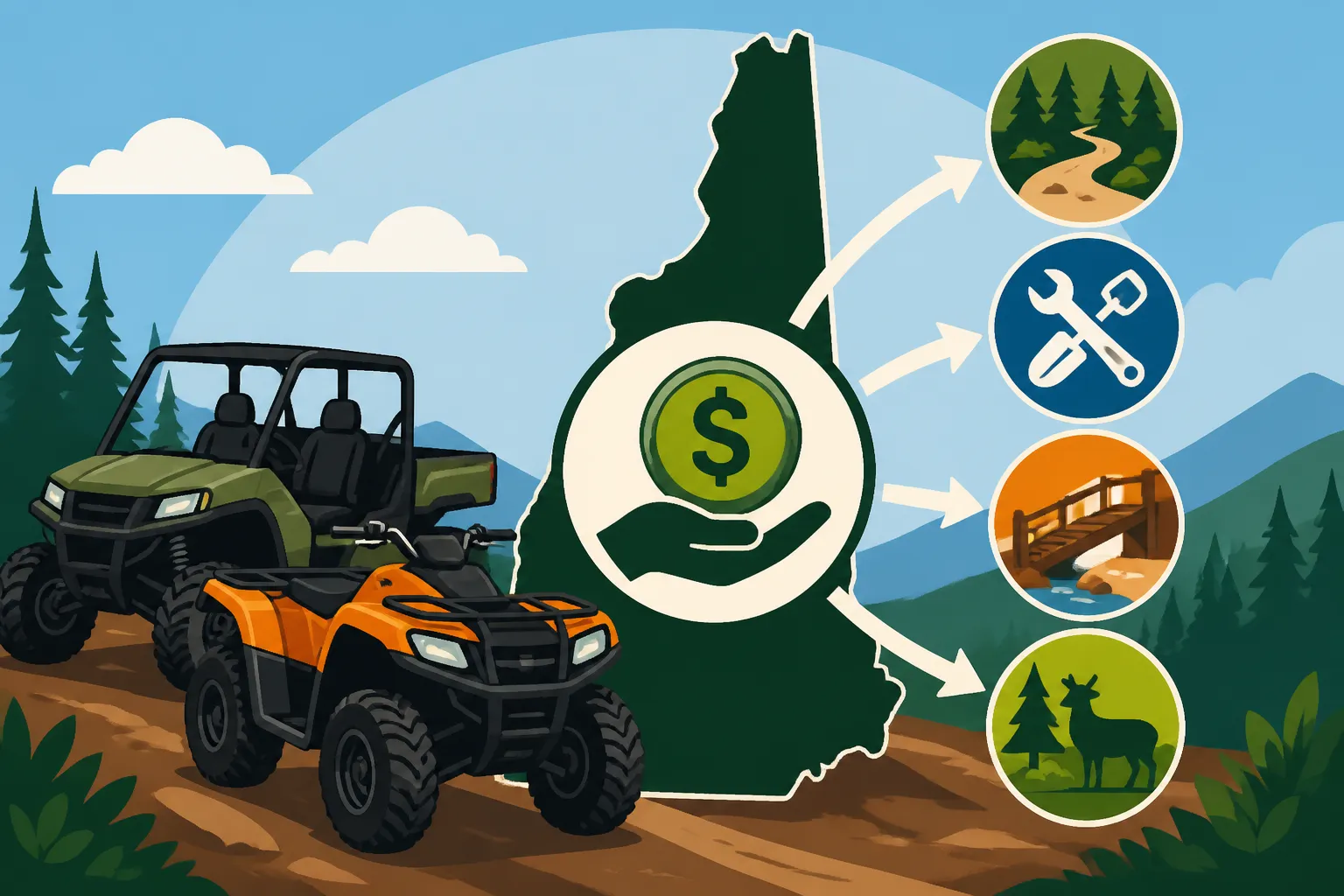
Here's a quick overview of where your New Hampshire OHRV registration fees typically go:
| Category | Primary Purpose | Key Benefits to Riders |
|---|---|---|
| Trail Maintenance | Grading, clearing, debris removal, culvert repair, erosion control, bridge construction, signage installation. | Smoother, safer, and more accessible trails; reduced risk of damage to machines; clear navigation; continuous riding experiences; protection of natural resources. |
| Club Grant Program | Financial aid for local OHRV clubs to purchase equipment, materials, and support landowner relations for trail development and upkeep. | Empowers volunteer clubs to perform essential trail work; fosters a strong community network; secures and maintains land access; leverages volunteer hours for greater impact; allows for larger projects that individual riders couldn't fund. |
| Safety Education | Funding for OHRV safety courses (online and classroom), development of educational materials, instructor training, and program administration. | Increased rider knowledge and skill; reduced accident rates; promotes responsible riding practices; ensures compliance with safety requirements, especially for minors; creates a safer environment for all trail users. |
| Enforcement | Supports conservation officers and local law enforcement presence on trails to ensure compliance with OHRV laws, investigate incidents, and respond to emergencies. | Maintains order and safety on trails; deters irresponsible and illegal riding; protects land access by preventing damage; quick response to accidents or issues; ensures all riders follow registration and safety rules. |
| Administration | Costs associated with processing registrations, printing decals, maintaining the OHRV database, staff salaries, and general program oversight within NH Fish and Game. | Ensures the efficient operation of the entire registration system; accurate record-keeping; timely delivery of decals and certificates; supports the overall management structure needed to run the OHRV program effectively, making sure you receive your [New Hampshire OHRV Decals and the Certificate] on time. |
| $2 Surcharge | Contributes to broader outdoor recreation funds or specific administrative needs, often related to the overall management of state lands or recreational programs. (This is [Where New Hampshire OHRV Fees Go] in a slightly different direction for a very specific purpose.) | Supports the wider ecosystem of outdoor recreation in New Hampshire; contributes to general conservation efforts; helps fund essential administrative functions that benefit various recreational activities beyond just OHRVs, ensuring a beautiful environment for all types of outdoor enthusiasts, including those who like to ride [Registering a Quad You Trailer in New Hampshire] or Registering a Side-by-Side in New Hampshire. |
Understanding where your OHRV registration fees go can really change your perspective when you're riding New Hampshire's incredible trails. Every time you see a clear sign, cross a new bridge, or enjoy a smooth section of trail, you can know that your contribution, combined with that of countless other riders, is what makes it all possible. It's a system designed to keep you riding, safely and responsibly, for years to come. So next time you're filling out the [The New Hampshire OHRV Registration Application] or wondering about [New Hampshire OHRV Registration Cost], remember that you're investing directly into the future of OHRV riding in the beautiful Granite State!
Disclaimer
This article is for general informational purposes only and does not constitute professional advice. Laws, prices and regulations vary by location and change over time. Consult a qualified professional for guidance on your specific situation.