Do You Need a Title for an ATV in New Hampshire?
It’s a common moment of confusion for many off-highway recreational vehicle (OHRV) enthusiasts moving to or buying a machine in New Hampshire: you’re ready to finalize the deal, you’ve got your cash or loan ready, and then it hits you – where’s the title? This guide is here to clear up that mystery, explaining why the Granite State operates a little differently when it comes to ATV and UTV ownership paperwork and what you really need to ensure a smooth, legal transaction and enjoyable ride.
The Granite State's Unique Approach: No OHRV Titles
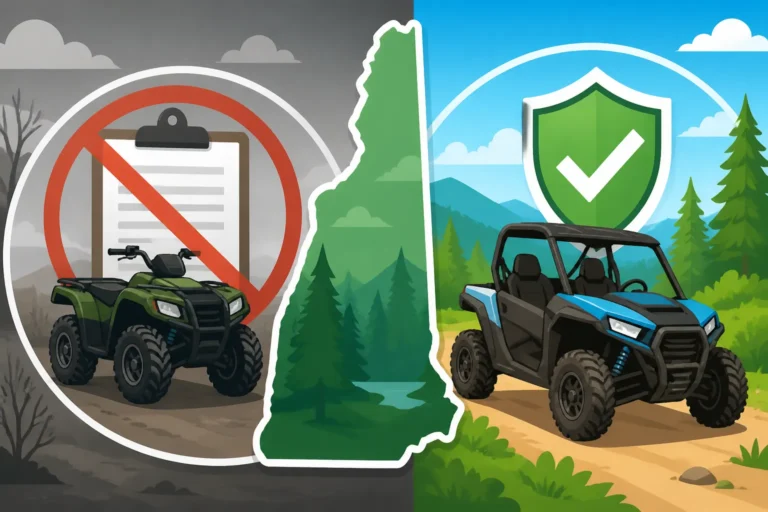
If you're coming from a state where a title is as fundamental to vehicle ownership as the keys themselves, you're not alone in scratching your head when you learn New Hampshire doesn't issue titles for ATVs, UTVs, or other OHRVs. It's a significant difference, and it can definitely throw a wrench in your expectations if you're not prepared for it. The state's focus has always been less on formal ownership titles for these recreational machines and more on their registration for trail access and public safety. This system has its roots in how these vehicles were historically viewed and regulated here – as tools for outdoor recreation rather than road-going vehicles requiring a deep administrative trail of ownership.
Why New Hampshire Skips the Title
You might wonder why New Hampshire opts out of the titling process when so many other states embrace it. Frankly, it boils down to a few key reasons, largely centered around keeping things relatively simple for recreational users and focusing resources where they believe they're most needed. Unlike cars or trucks that are primarily used on public roads and require robust ownership documentation for liability and regulatory purposes, OHRVs are designed for off-road use. The state's primary concern with these machines is ensuring they are registered for trail access, that owners are paying into the system that maintains those trails, and that they meet safety requirements. [Why New Hampshire Issues No OHRV Title] dives deeper into the historical context, but in essence, it's about streamlined administration for a specific type of vehicle.
For decades, the system has relied on a different set of documents to establish ownership and facilitate sales. This isn't to say it's a free-for-all; rather, it means you need to be acutely aware of what documents do serve as proof of ownership and how to handle them properly when buying or selling. It's a system that can work very well, provided everyone understands the rules of the road (or, in this case, the trail!).
The Realities for Buyers and Sellers
For buyers, the absence of a state-issued title means you won't be looking for that official, embossed piece of paper. Instead, your focus shifts to the previous owner's Certificate of Registration and, critically, a solid Bill of Sale. Without a title, these documents become paramount. For sellers, it means you don't have to worry about transferring a title, but you have a greater responsibility to provide clear, indisputable proof of your ownership and the machine's history. This means keeping meticulous records of your purchase and any subsequent registrations. Many folks find this aspect a bit unnerving at first, especially if they've only ever bought and sold vehicles with titles. It requires a bit more diligence on both sides of the transaction, but it's entirely manageable once you know what to expect.
What You Do Need: The Pillars of OHRV Ownership
Since there's no title to transfer, your proof of ownership in New Hampshire hinges on a couple of key documents: the Bill of Sale and the Certificate of Registration. Think of these as your dynamic duo, working together to establish who legally owns the machine and who has the right to register it and ride the trails. Getting these right is absolutely crucial, whether you’re a seasoned rider or just dipping your toes into the ATV and UTV world here in the Granite State.
The Mighty Bill of Sale
The Bill of Sale is, without a doubt, your single most important document when buying or selling an OHRV in New Hampshire. It's the legal contract that formally transfers ownership from one party to another. Because there's no state title acting as a primary ownership document, this piece of paper takes on immense importance. It needs to be clear, comprehensive, and legally sound to protect both the buyer and the seller.
When you're drafting or reviewing a Bill of Sale, make sure it includes at least these essential pieces of information:
- Seller's Full Legal Name and Address: This confirms who is selling the machine.
- Buyer's Full Legal Name and Address: This confirms who is buying it.
- Date of Sale: Crucial for establishing when the transfer occurred.
- Detailed Description of the OHRV: Include the year, make, model, color, and most importantly, the Vehicle Identification Number (VIN). The VIN is like the machine's fingerprint, unique to that specific ATV or UTV. [New Hampshire ATV Bill of Sale Requirements] provides a great checklist for this.
- Purchase Price: Clearly state the amount paid.
- Signatures of Both Buyer and Seller: This makes it a legally binding agreement. Some people also opt to have it notarized for an extra layer of protection, especially for higher-value machines, though it's not strictly required by the state for ownership transfer.
A robust Bill of Sale protects the buyer by proving they legally acquired the machine, which is necessary for registration. It protects the seller by documenting that they no longer own the machine, which can be important for liability down the road. If you're unsure how to draft one, resources like LawDepot can provide templates for a comprehensive Bill of Sale, ensuring you cover all your bases and don't miss any critical details.
The Certificate of Registration
While not a title, the Certificate of Registration is the state's official document proving that a particular OHRV has been registered for use in New Hampshire. When you buy a used machine, the seller should provide you with their most recent Certificate of Registration. This, combined with the Bill of Sale, forms the chain of ownership. When you go to register the machine in your name, you'll need to present the Bill of Sale and, ideally, the prior owner's registration certificate.
The registration certificate includes:
- The owner's name and address
- The OHRV's description (make, model, VIN)
- The registration number and decal numbers
- The expiration date of the registration
It’s vital that the VIN on the Certificate of Registration matches the VIN on the Bill of Sale, and, most importantly, the VIN on the physical machine itself. Any discrepancies here are major red flags and should be thoroughly investigated before you proceed with a purchase. The Certificate of Registration is what you carry with you when you ride, proving that your machine is legally allowed on the trails. [New Hampshire OHRV Decals and the Certificate] explains more about these documents.
Navigating the Purchase and Sale Without a Title
Buying or selling an ATV or UTV in New Hampshire can feel a bit like uncharted territory if you're expecting a title. However, with the right knowledge and a bit of diligence, it's a straightforward process. The key is to understand the state's reliance on the Bill of Sale and the Certificate of Registration as your primary documentation.
For the Buyer: Due Diligence is Your Best Friend
As a buyer, you are responsible for ensuring the machine you're purchasing is legitimate and that you're getting clear ownership. Here's how to approach it:
- Demand a Comprehensive Bill of Sale: Never, ever buy an OHRV without a detailed, signed Bill of Sale. Make sure it includes all the information we discussed above, especially the VIN. If the seller is hesitant or refuses, walk away. Using a reputable template from a service like LawDepot can give you peace of mind that all necessary clauses are included.
- Verify the VIN: This step cannot be stressed enough. Physically locate the VIN on the ATV or UTV itself. It's usually stamped into the frame. Compare this VIN to the one on the Bill of Sale and, if available, the previous owner's Certificate of Registration. If these numbers don't match, or if the VIN appears tampered with, do not buy the machine. This is your best defense against inadvertently buying a stolen vehicle. [Checking a Frame Number Before You Buy] is a great resource.
- Review Previous Registration: Ask the seller for their most recent Certificate of Registration. This helps establish a chain of ownership and proves the machine was legally registered in New Hampshire. While not strictly required to register in your name, it helps establish legitimate prior ownership.
- Ask for Maintenance Records: While not ownership documents, maintenance records can give you valuable insight into the machine's history and how well it was cared for.
- Consider a Background Check (if possible): While New Hampshire doesn't title, some states do. If the machine originated from a titling state, a VIN check might reveal more about its history, including any liens or salvage status. You can also contact local law enforcement to see if the VIN appears on any stolen vehicle databases.
- Register Promptly: Once you've purchased the OHRV, take your Bill of Sale and, if applicable, the previous owner's registration certificate to a New Hampshire OHRV registration agent as soon as possible to register the machine in your name. This formalizes your ownership with the state and allows you to legally ride. [Where to Register an OHRV in New Hampshire] will guide you to the right place.
For the Seller: Transparency and Documentation are Key
If you're selling your OHRV in New Hampshire, your goal is to make the process as smooth and transparent as possible for the buyer, while also protecting yourself.
- Provide a Clear Bill of Sale: Be ready to create a detailed Bill of Sale for the buyer. Don't leave anything vague. The more information, the better. Consider using a template from LawDepot for professionalism and completeness. This protects you from any future claims or disputes regarding ownership.
- Hand Over the Latest Registration Certificate: Give the buyer your current, valid Certificate of Registration. This helps them confirm the VIN and facilitates their own registration process.
- Disclose Known Issues: Be honest about the condition of the machine. Any known mechanical issues or damage should be disclosed to the buyer. While "as-is" sales are common, transparency helps build trust and avoids future headaches.
- Keep a Copy of the Bill of Sale: Always make a copy of the signed Bill of Sale for your own records. This proves you no longer own the machine and helps protect you from any liability if the new owner does something unlawful with it.
- Remove Your Decals (Optional but Recommended): While the registration certificate goes with the machine, you might choose to remove your current registration decals from the OHRV. The new owner will receive their own decals upon registration.
It’s worth noting that if you’re buying a machine from an out-of-state seller who does have a title, you’ll typically treat that title as a primary ownership document, along with a Bill of Sale. When you bring it into New Hampshire, however, you'll still only receive a Certificate of Registration, not a new title. [Registering an Out-of-State Machine in New Hampshire] offers more specific advice on that scenario.
Common Scenarios and How to Handle Them
The "no title" rule can create some unique situations. Let's look at a few common ones you might encounter.
Buying From a Private Seller with No Previous Registration
This is where things can get a little tricky, but it's not insurmountable. Maybe the seller bought it used years ago, never registered it, and has lost the original Bill of Sale. This is a higher-risk scenario for the buyer.
- Buyer's Action: You absolutely need a Bill of Sale from the current seller, even if it's the only piece of paper they can provide. Insist on a thorough VIN verification. It might be wise to ask for a notarized Bill of Sale for extra security. You'll then present this Bill of Sale to the registration agent, who will verify the VIN and, assuming everything checks out, issue a new Certificate of Registration. If the machine seems suspicious (e.g., incredibly cheap, seller seems evasive, VIN looks altered), it's always best to err on the side of caution and walk away. [Buying an OHRV With No Certificate] provides more detailed advice.
Inheriting an OHRV
If you've inherited an OHRV, congratulations – but now you need to sort out the paperwork!
- Your Action: You'll typically need a copy of the death certificate and documentation proving you are the legal heir (e.g., a will, probate court documents, or an affidavit of heirship). Along with this, you'll ideally have the previous owner's Certificate of Registration. You'll present these documents to the registration agent to transfer the registration into your name. A Bill of Sale isn't applicable here, as it's not a purchase. [Registering an Inherited Machine in New Hampshire] has more specifics.
Registering a Minor's Machine
New Hampshire law dictates that the person registering an OHRV must be at least 18 years old. So, if a teenager owns an ATV, an adult must register it in their name.
- Adult's Action: As the adult, you would go through the normal registration process, providing the Bill of Sale (if it was a purchase) and your identification. The Certificate of Registration would be issued in your name. Even though the minor might be the primary rider, the adult is the legal registrant. This ensures accountability. [Registering a Minor's Machine in New Hampshire] covers this in detail.
Transferring a Registration to a New Machine
What if you sell your old OHRV and buy a new one? You can actually transfer your current registration to the new machine, saving you some money and extending your existing registration period.
- Your Action: When you sell your old OHRV, make sure you keep the decals (don't give them to the buyer of the old machine). Then, when you buy your new OHRV, you take your Bill of Sale for the new machine, your old Certificate of Registration, and the old decals to a registration agent. They will process a transfer, issuing a new Certificate of Registration and new decals for your new machine, effectively moving your unexpired registration to it. This usually involves a transfer fee. [Transferring a Registration to a New Machine] explains the process and costs.
Considerations for Safety and Liability
While the lack of a title simplifies some aspects, it doesn't diminish your responsibilities as an OHRV owner or rider. In fact, it might even heighten the need for careful documentation and awareness of safety regulations.
Safety Certificates and Age Restrictions
Remember that regardless of ownership documents, New Hampshire has strict rules about who can ride an OHRV and under what conditions. Riders aged 12 and older generally need to hold an OHRV Safety Certificate or a valid driver's license to operate on approved trails. Riders under 12 have even tighter restrictions and require direct adult supervision. These rules are critical for everyone's safety on the trails. [New Hampshire's Certificate Rule at Age 12] and [New Hampshire's Age and Supervision Rules] are excellent resources to review.
Insurance: Highly Recommended, Though Not Always Required
New Hampshire does not mandate OHRV insurance for private owners, which is another unique aspect of the state's approach to these vehicles. However, just because it's not required by law doesn't mean it's a good idea to go without it. Accidents happen, and OHRVs, like any vehicle, can be involved in incidents resulting in property damage or personal injury.
- Your Action: Seriously consider purchasing OHRV insurance. It can protect you financially in case of an accident, theft, or damage to your machine. Think about liability coverage, collision, and comprehensive options. The peace of mind alone is often worth the investment. Many homeowners' policies might offer limited coverage, but a dedicated OHRV policy is usually more robust. [Does New Hampshire Require OHRV Insurance?] explains more.
Secure Storage and Theft Prevention
Without a state-issued title, proving ownership in case of theft can rely heavily on your Bill of Sale and Certificate of Registration.
- Your Action: Keep your Bill of Sale and all registration documents in a safe, secure place (not on the machine itself, unless it’s the current registration certificate you carry while riding). Photograph your OHRV, record its VIN, and use robust security measures like chain locks, alarms, or GPS trackers to deter theft. If your machine is stolen, your detailed documentation will be crucial for law enforcement and insurance claims.
Summary of Key Documents
To help consolidate what you need to remember about OHRV ownership in New Hampshire, here's a quick reference table:
| Document Type | Purpose | Is it a "Title" in NH? | Key Information to Look For | Importance for Buyers | Importance for Sellers |
|---|---|---|---|---|---|
| Bill of Sale | Legal contract transferring ownership | No | Buyer/Seller info, Date, VIN, Purchase Price, Signatures | Absolutely Critical | Absolutely Critical |
| Certificate of Registration | State proof that the OHRV is registered for trail use | No | Owner info, OHRV details, VIN, Registration/Decal numbers | Highly Important | Highly Important |
| OHRV Safety Certificate | Proves rider has completed required safety training (age 12+) | No | Rider's name, Certificate number, Date issued | Critical for riders | N/A |
| Previous Title (if applicable) | Original ownership document if machine came from a titling state | No (becomes Bill of Sale for NH) | Original owner, VIN, Lien info (check carefully) | Important if OOS | Important if OOS |
Remember, while the Granite State's system might seem a bit unusual at first, it's designed to keep things focused on recreational use and trail access. By understanding the role of the Bill of Sale and the Certificate of Registration, you'll be well-prepared for any OHRV transaction and ready to hit the beautiful trails of New Hampshire safely and legally.
Disclaimer
This article is for general informational purposes only and does not constitute professional advice. Laws, prices and regulations vary by location and change over time. Consult a qualified professional for guidance on your specific situation.