Registering an Out-of-State Machine in New Hampshire
It’s a pretty common scenario: you’ve packed up your trusty ATV or UTV, trailered it all the way to beautiful New Hampshire, eager to hit those incredible trails, only to wonder if your home state’s registration actually covers you here. The reality is, navigating the registration requirements for an out-of-state machine in the Granite State can feel like trying to decipher a secret code, and it often leads to a lot of frustration and confusion for visitors. This comprehensive guide is here to untangle that complexity, giving you all the nitty-gritty details you need to get your machine legally registered and ready to roll on New Hampshire's vast and scenic OHRV trail system.
Why Your Home State Registration Isn't Enough for New Hampshire
One of the biggest surprises for riders visiting New Hampshire is the realization that their machine's registration from back home doesn't cut it on our trails. It’s a common misconception, especially since car registrations are usually recognized across state lines. However, for Off-Highway Recreational Vehicles (OHRVs) – which include ATVs, UTVs, and dirt bikes – New Hampshire operates under a different set of rules. This often catches visitors off guard, leading to last-minute scrambles or, worse, fines.
The 'Live Free or Die' State's Unique Rules for OHRVs
New Hampshire prides itself on its unique approach to many things, and OHRV registration is certainly one of them. Unlike passenger vehicles, OHRVs are considered recreational machines primarily for off-road use, and each state has the autonomy to set its own specific regulations for them. New Hampshire's system is designed to directly support and manage its extensive trail network, which is predominantly on private land generously opened to riders. If your machine isn't registered in New Hampshire, it simply doesn't fall under the system that funds, maintains, and oversees these trails. This means that a registration from Maine, Vermont, or Massachusetts, while perfectly valid in your home state, holds no legal weight on New Hampshire's public and club trails. It’s not about disrespect for other states; it's about our state's specific framework for managing these recreational opportunities.
The "Live Free or Die" motto might make you think regulations are lax, but when it comes to OHRVs and access to public and private lands, there are clear and strict guidelines. The state wants to ensure that every machine using its trails contributes to their upkeep and that all riders are aware of and abide by local rules. This uniformity simplifies enforcement and ensures fairness among all users. So, while it might feel like an extra hoop to jump through, understanding this fundamental difference is the first step toward a hassle-free visit.
The Importance of New Hampshire's Trail System Funding
Perhaps the most crucial reason your home state registration isn't recognized here is the direct link between registration fees and the funding of New Hampshire's OHRV trail system. The money collected from OHRV registrations, whether from residents or nonresidents, goes directly into a dedicated fund managed by the New Hampshire Fish and Game Department. This fund is then disbursed as grants to volunteer OHRV clubs across the state. These clubs are the backbone of our trail network; they’re the ones out there, rain or shine, building bridges, clearing fallen trees, maintaining signage, and grooming trails. They often leverage these funds, along with countless volunteer hours, to keep the trails safe, enjoyable, and open. You can learn more about this by checking out [Where New Hampshire OHRV Fees Go].
When you register your machine in New Hampshire, you are directly contributing to the preservation and expansion of this incredible resource. An out-of-state registration doesn’t provide this vital financial support to New Hampshire’s trails or its dedicated clubs. The entire system relies on these fees. Think of it as buying a membership to use a vast, state-spanning park that’s largely maintained by passionate volunteers. Without your registration, that contribution simply isn't made, and the system can't sustain itself. This is why the state is so diligent about requiring local registration for anyone using the trails, whether they're here for a weekend or the entire season.
What Happens If You Ride Unregistered
Riding an unregistered OHRV in New Hampshire isn't just a minor oversight; it's a violation that can lead to significant consequences, truly ruining what should be a fun trip. Law enforcement, including local police and New Hampshire Fish and Game conservation officers, actively patrol the trails. They are well-versed in OHRV regulations and can spot an unregistered machine quickly, often by the absence of the distinctive New Hampshire decals.
If you’re caught riding an unregistered machine, you can expect to receive a citation. The fines for riding an unregistered OHRV can be substantial, and those penalties are enforced to deter non-compliance. Beyond the financial hit, your machine could potentially be impounded, leaving you stranded and facing even more costs to recover it. Imagine having your long-anticipated trip cut short, your machine towed away, and a hefty fine to pay, all because of an unrecognized registration. It’s a frustrating and completely avoidable situation. This is why it’s imperative to understand and comply with New Hampshire’s registration laws before you even unload your machine from the trailer. For specific details on potential fines, you can refer to [New Hampshire Fines for an Unregistered OHRV]. The state's stance is clear: if you’re riding on our trails, you need to be registered with us.
Understanding New Hampshire's Registration Options for Nonresidents
Okay, so your home state registration isn't enough – got it. Now, what are your options for getting properly registered in New Hampshire as a nonresident? The good news is that New Hampshire offers a couple of straightforward choices, designed to accommodate both casual visitors and those who plan to spend more time exploring our extensive trail networks. It's all about picking the option that best fits your riding habits and length of stay.
The Annual Nonresident Registration
For many out-of-state riders who visit New Hampshire frequently or plan an extended stay, the annual nonresident registration is the most practical choice. This registration is valid for an entire OHRV season, running from May 1st through April 30th of the following year. This long validity period makes it ideal for those who know they’ll be back multiple times throughout the spring, summer, and fall, or even those who plan to store their machine in New Hampshire for an entire season.
The cost for the annual nonresident registration varies depending on whether you are a member of an approved New Hampshire OHRV club. For non-members, the cost is higher, reflecting the direct contribution to the trail system without the added support that comes from club membership. However, if you join an approved New Hampshire OHRV club, you unlock a significant discount on the registration fee. This club rate is a fantastic incentive and makes joining a club a very wise financial decision for many nonresidents. Details on the specific costs can be found in [What a Nonresident Pays Without Joining a Club] and [A Nonresident Club Member Pays $78]. Remember, the registration year always ends on April 30th, so if you register mid-season, say in September, you're still paying for a registration that expires the following April. It's something to factor into your decision if you're only planning a single late-season trip. More information about the registration year is available in [New Hampshire's May to April Registration Year].
The Ten-Day Nonresident Registration: A Short-Term Solution
If your visit to New Hampshire is more of a one-off adventure, or if you're just dipping your toes into the OHRV scene here, the ten-day nonresident registration might be exactly what you need. This option is specifically designed for casual visitors who only plan to ride for a short period. It provides a convenient and more affordable way to legally access the trails without committing to a full annual registration.
There are a few key things to understand about the ten-day registration. Firstly, it's primarily for wheeled vehicles, meaning ATVs and UTVs, and typically runs from May through October. Secondly, it's generally limited to one ten-day registration per machine, per season. This means you can't just keep buying ten-day registrations back-to-back if you decide to extend your stay indefinitely. It's truly intended as a temporary solution. The cost is a lower, fixed rate, and while it doesn't offer a club discount like the annual registration, it’s still very economical for a brief visit. You can learn more about its specific cost by looking up [New Hampshire's $42 Ten-Day Registration]. Also, the restriction to wheeled vehicles is important, and you can delve deeper into [Why the Ten-Day Is Wheeled Vehicles Only] if you have a dirt bike or other non-wheeled OHRV in mind. This shorter registration is usually available at select registration agents, often larger powersports dealers or the Fish and Game headquarters.
Deciding Between Annual and Ten-Day: A Cost-Benefit Analysis
Choosing between the annual and ten-day nonresident registration really boils down to how often you anticipate riding in New Hampshire. It’s a simple calculation, but one that can save you money and hassle in the long run.
Consider a few scenarios:
-
Scenario 1: The One-Time Explorer. You're planning a single long weekend trip to the North Country with your buddies, perhaps to ride the [Ride the Wilds in Coos County] system, and you don't foresee coming back until next year. In this case, the ten-day registration is clearly the most economical choice. You pay the set fee, get your temporary decals, and you're good to go for your trip.
-
Scenario 2: The Seasonal Regular. You love New Hampshire's trails and plan to visit multiple times throughout the spring, summer, and fall, maybe hitting Jericho Mountain State Park in Berlin one month and the Great North Woods trails near Pittsburg another. Or perhaps you have a camp here and use your machine throughout the warmer months. For you, the annual nonresident registration, especially with a club membership, will quickly pay for itself. Two or three trips typically make the annual fee more cost-effective than buying multiple ten-day passes.
-
Scenario 3: The Border Town Dweller. You live close to the New Hampshire border and frequently cross over for day rides. An annual registration is almost certainly your best bet, particularly if you join a club. The convenience of being registered for the whole season, without needing to worry about short-term renewals, is invaluable.
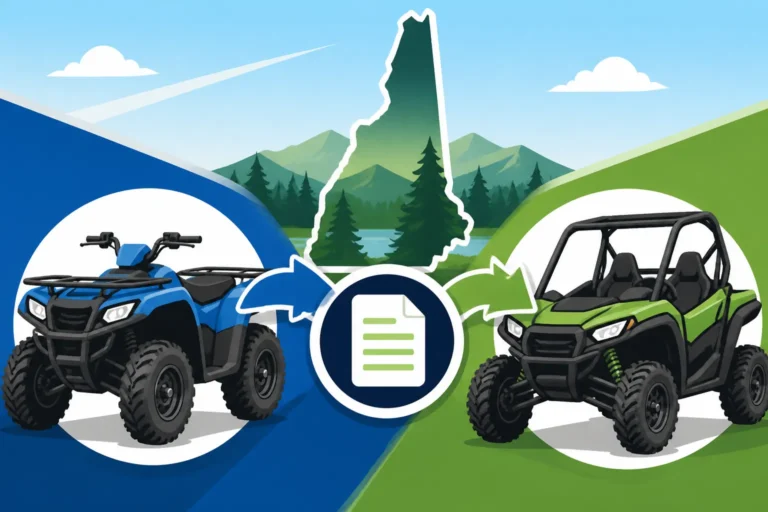
To help you visualize the choice, here's a table comparing the two main options:
| Feature | Annual Nonresident Registration | Ten-Day Nonresident Registration |
|---|---|---|
| Duration | May 1st to April 30th (full season) | Ten consecutive days |
| Cost Variation | Higher without club membership, discounted with club membership | Fixed rate, no club discount |
| Machine Type | All OHRVs (ATV, UTV, trail bike, snowmobile) | Primarily wheeled OHRVs (ATV, UTV). Check for specific exclusions. |
| Renewal | Annual renewal required | One per machine per season |
| Best For | Frequent visitors, extended stays, season-long use | One-time or infrequent, short visits |
| Value Proposition | Cost-effective for multiple trips | Convenient for single, brief trips |
Ultimately, consider your travel plans for the next year. If you're unsure, perhaps start with a ten-day, and if you fall in love with the trails and find yourself planning another trip soon, you can always invest in the annual registration later. Just remember that the ten-day option is typically limited to one per season for a specific machine, so plan accordingly.
The Role of Club Membership in Nonresident Registration
One of the smartest moves an out-of-state OHRV rider can make when registering in New Hampshire is joining an approved OHRV club. It might sound like an extra step, or perhaps you're wondering what a club has to do with registration, but in New Hampshire, club membership is intrinsically linked to the OHRV trail system and can provide significant financial benefits and enhance your riding experience.
Why Joining a Club Makes Financial Sense
Let’s talk numbers, because this is where the financial incentive truly shines. New Hampshire offers a substantial discount on annual OHRV registrations for anyone who is a member of an approved New Hampshire OHRV club. For nonresidents, this discount can be a game-changer. For example, a nonresident who is not a club member will pay a certain rate, let’s say [What a Nonresident Pays Without Joining a Club]. However, if that same nonresident joins a club, their registration fee drops significantly, making them eligible for a rate akin to [A Nonresident Club Member Pays $78]. The difference can be quite substantial, often around $30 or more. This means that the cost of your annual club dues, which are typically very reasonable, can often be recouped entirely (or nearly so) through the registration discount alone.
It’s truly a win-win: you save money on your registration, and your club dues support the very volunteers who maintain the trails you ride. The state incentivizes club membership because these clubs are the lifeblood of the trail system, doing the hands-on work that keeps thousands of miles of trails open and safe. The savings are clear, and it’s one of those bits of insider knowledge that frequent visitors quickly learn to leverage. This isn't just about saving a few bucks; it's about being a part of the system that sustains the riding you love.
How to Join a New Hampshire OHRV Club
Joining a New Hampshire OHRV club is usually a very straightforward process. The most important thing to remember is to join the club before you go to register your machine. This might seem obvious, but many riders get excited, head straight to the registration agent, and then realize they missed out on the discount because they weren't a member yet. For more on this, check out [Joining a Club Before You Register].
Here’s a general rundown of how to join:
- Find a Club: The New Hampshire Off-Highway Vehicle Association (NHOHVA) website is an excellent starting point. They have a directory of all approved OHRV clubs across the state. You can often choose a club in the region you frequent most, or simply one that aligns with your interests. Some popular areas for riding include those around Jericho Mountain State Park, and clubs like the Great North Woods Riders or Metallak ATV Club are very active.
- Pay Dues: Most clubs offer online membership applications and payment. Annual dues are typically quite affordable, often in the $25-$35 range per family.
- Get Proof of Membership: Once you’ve paid your dues, the club will usually issue you a membership card or an email confirmation that serves as your proof of membership. Make sure you have this document ready when you head to the registration agent. The folks at the counter need to see proof of your active membership to apply the discounted rate. This is explicitly covered in [Proof of Membership at the Counter].
- Register Your OHRV: With your club membership in hand, you’re now ready to register your machine at the discounted rate.
Some local powersports dealers might also be able to help you sign up for a local club on the spot, or at least point you in the right direction. It's always worth asking if you're registering at a dealer, as they often have close ties to the local riding community.
Beyond the Discount: The Benefits of Club Membership
While the registration discount is a major perk, joining a New Hampshire OHRV club offers much more than just financial savings. It connects you to the heart of the riding community and provides tangible benefits that enhance your overall experience.
- Trail Access and Information: Club members often have access to detailed trail maps, up-to-date trail condition reports, and local knowledge that can significantly improve your rides. You’ll know which trails are open, which might have recent hazards, and where the best spots are.
- Community and Events: Clubs organize group rides, social events, and volunteer days. It's a fantastic way to meet fellow riders, share experiences, and make new friends, especially if you're new to the area. Imagine joining a poker run or a guided tour through parts of [Ride the Wilds].
- Advocacy and Preservation: Your membership helps support the club's advocacy efforts to protect and expand riding opportunities. Clubs work closely with landowners, local governments, and the state to ensure trails remain open and that the OHRV sport thrives responsibly. They are the ones talking to landowners and addressing issues to ensure continued access.
- Volunteer Opportunities: If you're interested in giving back, clubs always welcome volunteers for trail maintenance, signage, and event support. It's a rewarding way to contribute to the sport you love and see firsthand how the trails are cared for. The fact is, much of the actual trail work, from clearing brush to building bridges, is performed by dedicated club volunteers, often using grant money secured through the registration fees. This symbiotic relationship ensures the trails remain pristine for everyone, and it's something LawDepot documents for landowner agreements are often used to facilitate this crucial private land access.
In essence, joining an OHRV club in New Hampshire isn't just a transaction; it's an investment in the future of the sport and a direct contribution to the incredible trail system that draws so many riders to the state. It allows you to be an active part of the solution that keeps New Hampshire a premier destination for OHRV enthusiasts.
The Registration Process for Out-of-State Machines
So, you're ready to get your out-of-state machine registered in New Hampshire. Great! The process itself is fairly straightforward, but it requires the right documentation and knowing where to go. Don't worry, it's not overly complicated, and thousands of nonresidents go through it every year to enjoy our trails.
Required Documentation for an Out-of-State Machine
When you head to a registration agent in New Hampshire, you'll need to have a few key pieces of paperwork ready. Since New Hampshire does not issue titles for OHRVs, your proof of ownership is crucial, especially for an out-of-state machine that might have been titled in your home state. This is one of the biggest differences from registering a car. You might be wondering, [Do You Need a Title for an ATV in New Hampshire?], and the short answer is no, not for registration purposes.
Here's what you'll typically need to present:
- Proof of Ownership: This is paramount. For a machine you've owned for a while, your most recent out-of-state registration certificate is usually sufficient. If you just purchased the machine, you'll need a bill of sale. This document should clearly state the buyer's name, seller's name, date of sale, purchase price, and a complete description of the OHRV, including the year, make, model, and Vehicle Identification Number (VIN) or serial number. Sometimes a previous owner will have lost their certificate, in which case a robust bill of sale will be essential. Websites like LawDepot offer templates for comprehensive bills of sale that can help ensure all necessary information is included.
- Personal Identification: A valid government-issued photo ID, such as your driver's license, is required to verify your identity.
- Proof of Club Membership (if applicable): As discussed, if you've joined a New Hampshire OHRV club to get the discounted rate, you must bring your current, valid club membership card or confirmation. The registration agent will need to see this to apply the lower fee.
- Registration Application: You'll fill out a New Hampshire OHRV registration application form, which the agent will provide. It asks for basic information about you and your machine. You can often find a sample of the [The New Hampshire OHRV Registration Application] online to get familiar with it beforehand.
Make sure all your documents are current and legible. Having everything in order before you go will prevent delays and ensure a smooth registration experience. It can be frustrating to get to the counter and realize you're missing something crucial, so a quick double-check before you leave is always a good idea.
Where to Register Your OHRV in New Hampshire
New Hampshire offers several convenient locations where you can register your out-of-state OHRV. The goal is to make it as accessible as possible for riders to get legal and hit the trails.
- New Hampshire Fish and Game Department: You can register directly at the New Hampshire Fish and Game Department headquarters or one of its regional offices. While this is an option, it might not be the most convenient for many visitors, as these offices can be a bit out of the way depending on where you're riding.
- Authorized OHRV Registration Agents: This is typically the most popular and easiest option for visitors. The state authorizes various businesses to act as registration agents. These often include:
- Powersports Dealers: Many ATV/UTV dealerships across New Hampshire are authorized to process OHRV registrations. If you're buying a new or used machine in New Hampshire, the dealer will often handle the registration for you right at the point of sale. Even if you're not buying a machine, many dealers offer registration services as a courtesy to the riding community. This is a very common place to go for [Registering at a Powersports Dealer].
- Town Clerks: A number of town clerks throughout New Hampshire, particularly in areas with high OHRV activity (like the North Country), are also authorized to process registrations. This can be a great option if you're staying in a specific town, as the clerk's office is often centrally located. You can often find one to buy [Buying an OHRV Registration From Your Town Clerk].
- Online Registration: While you might be able to renew an existing New Hampshire registration online, initial registrations, especially for out-of-state machines, usually require an in-person visit to verify documentation. Always check the current Fish and Game website for the most up-to-date information on online options.
It's a good idea to call ahead to the specific location you plan to visit to confirm their hours, what forms of payment they accept, and if they have any specific requirements for nonresident registrations. Some agents might have limited hours or only accept certain payment methods. The New Hampshire Fish and Game website also typically provides a searchable list of authorized agents.
Understanding the OHRV Decal and Certificate
Once your registration is successfully processed, you won't walk away with a traditional license plate. Instead, you'll receive two important items: a registration certificate and two numbered decals. These are your proof that your out-of-state machine is now legally allowed to ride New Hampshire trails.
- The Registration Certificate: This is a paper document, similar to a vehicle registration for a car, but specific to your OHRV. It lists your name, address, machine details (make, model, VIN), and the registration period. This certificate is extremely important and must be carried with you whenever you are operating the OHRV. Not having your physical certificate on you can lead to a fine, even if your machine is properly registered. Imagine a conservation officer checking your machine mid-trail; they'll want to see that certificate. To avoid issues, keep it in a waterproof bag on your machine or in your riding gear. You can find more detail on this in [New Hampshire's Printed Certificate and Two Decals] and [What Happens If Your Certificate Is at Home].
- The Decals: You will receive two numbered decals that correspond to your registration certificate. These decals are typically weatherproof and self-adhesive. They must be conspicuously displayed on your OHRV. The specific placement rules dictate that one decal must be placed on the left side of the forward half of the OHRV, and the other on the left side of the rear half of the OHRV, ensuring they are visible from the left side of the machine. This allows enforcement officers to easily identify registered machines. Take care when applying them, ensuring the surface is clean and dry for good adhesion. If they peel off or get lost, you'll need to order replacements. More on their placement can be found in [New Hampshire OHRV Decal Placement].
These decals and the certificate are your ticket to enjoying New Hampshire's trails. Treat them with care, display them correctly, and always have your certificate handy. It’s a simple system designed for clarity and ease of enforcement, ensuring everyone is contributing to and respecting the trail network.
Special Considerations for Visiting Riders
Bringing your OHRV from another state to New Hampshire involves a few extra layers of understanding beyond just the basic registration. You’ll want to be aware of how New Hampshire interacts with registrations from its neighbors, specific rules for younger riders, and the often-overlooked aspect of insurance. Being prepared for these specifics will ensure a smoother, more enjoyable trip.
Bringing a Machine from Neighboring States (Maine, Vermont, Massachusetts, Quebec)
This is a point of frequent confusion and a source of frustration for many riders from nearby states: your OHRV registration from Maine, Vermont, Massachusetts, or even Quebec, is not honored in New Hampshire. This is a critical piece of information that many riders learn the hard way. While it might seem counterintuitive, given the close proximity and shared borders, New Hampshire's OHRV laws are very specific about requiring New Hampshire registration for use on its trails.
Whether you're trailering your quad from Portland, Burlington, or Boston for a weekend adventure, or driving down from Montreal for a longer stay, you must obtain a valid New Hampshire OHRV registration before you ride. The reasons, as discussed earlier, boil down to funding for our trail system, local control, and the unique legal framework governing OHRVs here. So, don't assume your Maine or Vermont registration will cover you; it simply won't. You can delve into this further by specifically looking at [Bringing a Machine From Maine], [Bringing a Machine From Vermont], [Bringing a Machine From Massachusetts], and [Bringing a Machine From Quebec]. Each of these explicitly states that an out-of-state registration isn't enough. It's a key difference from how highway vehicle registrations are mutually recognized across state lines. The state wants to ensure that every rider who benefits from our extensive, well-maintained trail system is also contributing to its upkeep.
The OHRV Safety Certificate for Young Riders
New Hampshire is very particular about age and safety education when it comes to OHRV operation, especially for minors. If you have younger riders in your group, understanding these rules is absolutely essential, regardless of where they typically ride.
- Riders 12 and Older: Any OHRV operator who is 12 years of age or older must possess an OHRV safety certificate. This certificate demonstrates that they have completed an approved safety education course. The only exception to this is if the operator holds a valid motor vehicle driver's license from any state. So, if your 16-year-old from Massachusetts has their driver's license, they’re exempt from the OHRV safety certificate requirement. However, a 13-year-old who doesn't have a driver's license will need that certificate. For more details, see [New Hampshire's Certificate Rule at Age 12] and [Why a Driver's License Substitutes in New Hampshire].
- Riders Under 12: Operators under 12 years of age have even stricter rules and must be directly supervised by a licensed adult (at least 25 years old) who is also riding an OHRV. There are also restrictions on where they can ride.
- Supervision Rules: For riders aged 12 and 13, specific supervision rules apply when riding on public OHRV trails, even with a safety certificate. They generally need to be accompanied by a licensed adult. For comprehensive details on these regulations, especially concerning minors, check out [New Hampshire Rules for Riders Under 18].
- Obtaining a Safety Certificate: If your young rider needs a safety certificate, New Hampshire offers both online and in-person courses. The online course usually has a fee, such as [The Online OHRV Safety Course Costs $34.95], while some classroom courses offered by Fish and Game or clubs may be free. It’s a good idea to complete this before your trip, as courses can fill up. The certificate is generally good for life and covers both OHRVs and snowmobiles.
Ignoring these age and safety requirements can lead to fines and, more importantly, put your young rider at risk. It’s always better to be safe and informed when bringing children to ride New Hampshire’s trails.
Insurance and Liability for Out-of-State Riders
Here's another detail that often surprises visitors: New Hampshire does not legally require OHRV insurance for operation on its trails. This policy aligns with the state's "Live Free or Die" philosophy, placing the onus of responsibility directly on the operator. While this might sound liberating, it’s crucial for out-of-state riders to understand the implications.
- No Mandatory Insurance: Unlike cars, there's no state mandate for liability, collision, or comprehensive insurance for your ATV or UTV in New Hampshire. You can learn more about this by referring to [Why New Hampshire Requires No OHRV Insurance]. This means that if you are involved in an accident, any damages or injuries sustained by yourself or others, or to property, would be your sole financial responsibility unless you have personal coverage.
- Highly Recommended Personal Coverage: Even though it's not required by the state, having robust OHRV insurance is highly recommended, especially for out-of-state riders. Your homeowner's insurance might offer some limited coverage for recreational vehicles, but it's often insufficient for significant incidents. A dedicated OHRV policy typically covers liability, medical payments, and damage to your machine.
- Checking Your Home State Policy: Before you trailer your machine to New Hampshire, contact your insurance provider to clarify your current policy's coverage. Does it extend to out-of-state OHRV use? What are the limits? Are there any exclusions for certain types of riding or specific locations? Understanding these details before an incident occurs can save you immense financial and emotional distress.
- Rental Machines: If you plan to rent an OHRV in New Hampshire, rental companies almost always offer or require you to purchase some form of limited liability coverage or require a significant credit card hold for potential damages. This is a good indicator of the inherent risks involved.
Ultimately, while New Hampshire might not force you to carry OHRV insurance, riding without it is a significant financial risk. For peace of mind and protection against unforeseen circumstances, ensuring you have adequate coverage is a responsible and prudent decision for any out-of-state rider.
Ensuring a Smooth New Hampshire OHRV Experience
You’ve got your machine registered, you understand the rules, and you're ready to hit the trails! To truly make the most of your New Hampshire OHRV adventure and ensure it's memorable for all the right reasons, a bit of thoughtful preparation and mindful riding will go a long way. This isn't just about legality; it's about safety, respect, and maximizing the fun.
Pre-Ride Checks and Trip Planning
A successful OHRV trip starts long before your tires touch the trail. Taking the time for some essential pre-ride checks and thoughtful trip planning can prevent breakdowns, ensure safety, and help you navigate the diverse terrain of New Hampshire.
- Machine Inspection: Before every ride, perform a quick but thorough check of your OHRV. This includes checking tire pressure, fluid levels (oil, coolant, brake fluid), brake function, headlight and taillight operation, and ensuring all nuts and bolts are tight. Listen for any unusual noises during a short test run. A simple loose connection or low fluid can quickly become a major problem miles from anywhere.
- Check Trail Conditions: New Hampshire's trail conditions can vary dramatically depending on the season, recent weather, and specific location. Always check the status of the trails you plan to ride before you head out. OHRV clubs and the NH Fish and Game Department often post real-time trail conditions on their websites. This is especially important during mud season in the spring or after heavy rain, when some trails might be temporarily closed or extremely challenging. You can often find daily updates on [New Hampshire Trail Status Before You Ride].
- Route Planning and Maps: Don't rely solely on cell service, which can be spotty in remote parts of the North Country. Carry physical maps or have downloaded GPS maps on a reliable device. Familiarize yourself with your planned route, noting potential fuel stops, points of interest, and bail-out options. Consider using apps that allow for offline map access.
- Tell Someone Your Plans: Always let a friend or family member know your planned route, who you're with, and your estimated return time. If you run into trouble and are out of cell range, this information could be crucial for a search and rescue effort.
- Pack Essentials: Beyond your riding gear, pack a small emergency kit. This might include a first-aid kit, basic tools, a tire repair kit, a flashlight, water, snacks, and extra fuel. Appropriate clothing for changing weather conditions is also key; the mountains can see rapid shifts in temperature and precipitation.
By taking these steps, you’re not just preparing for a ride; you’re preparing for a safe and enjoyable adventure in New Hampshire’s beautiful backcountry.
Respecting Landowner Permissions and Trail Rules
The vast majority of New Hampshire's OHRV trail system exists because of the generosity of private landowners who allow clubs to build and maintain trails on their property. This privilege comes with a significant responsibility for riders to respect these landowners and adhere to all rules. The continued existence of our trails depends on it.
- Stay on Marked Trails: This is perhaps the most fundamental rule. Never ride off designated, marked trails. Veering off-trail can lead to trespassing, property damage, and erosion, jeopardizing landowner permissions for everyone. Posted land means no entry, and even unposted land is not an invitation to ride. Many private landowners allow access through formal agreements that can be found through resources like LawDepot.
- Respect Private Property: If you see signs indicating private property, do not enter. This includes avoiding fields, lawns, and gardens, even if they appear open. Always assume permission is required unless explicitly stated otherwise. You can learn more about this by checking [New Hampshire Landowner Permission Rules].
- Follow Posted Rules and Signs: Pay attention to all trail signs, which provide crucial information about speed limits, upcoming hazards, closed sections, and specific regulations (e.g., width restrictions in certain areas). For example, some rail trails might have a [New Hampshire Trails With a 50-Inch Limit]. Speed limits are not suggestions; they are strictly enforced for safety and to minimize impacts on landowners and wildlife.
- Noise Limits and Etiquette: New Hampshire has a [New Hampshire's OHRV Decibel Limit] to mitigate noise pollution, particularly in residential areas or near wildlife habitats. Keep your exhaust system in good working order and avoid excessive revving. When passing others on the trail, slow down and offer a friendly wave. Be courteous and share the trail responsibly with other users, including hikers, bikers, and equestrians where trails are multi-use.
- Leave No Trace: Pack out everything you pack in. Do not litter. Protect the natural environment and leave the trails cleaner than you found them. This ensures the trails remain pristine for generations of riders to come.
By riding responsibly and respectfully, you're not just following the law; you're acting as an ambassador for the entire OHRV community and helping to preserve access to New Hampshire’s amazing trail network.
Utilizing Resources for Visitors
New Hampshire has a fantastic array of resources designed to help OHRV visitors plan and enjoy their trips. Tapping into these resources can make your experience even better.
- New Hampshire Fish and Game Department: The official state agency is the primary source for OHRV regulations, registration information, safety course schedules, and general guidance. Their website is an invaluable first stop.
- New Hampshire Off-Highway Vehicle Association (NHOHVA): This statewide organization represents the interests of OHRV riders and is an umbrella for all the local clubs. Their website provides club directories, trail maps, event listings, and advocacy news. It’s an excellent way to connect with the riding community.
- Local OHRV Clubs: As highlighted, joining a local club is beneficial, but even if you don't, many clubs offer public access to their trail maps and trail condition updates on their websites or social media pages. They are often the best source for localized, up-to-the-minute information.
- Visitor Centers and Tourism Boards: In popular riding areas like the Great North Woods, towns often have visitor centers or local tourism associations that can provide maps, recommend lodging and dining options, and offer insights into local trails. They can also tell you about specific trail systems like [Jericho Mountain State Park at Berlin].
- Powersports Dealers and Rental Companies: Local dealers and OHRV rental companies are often deeply integrated into the riding community. They can offer advice on trails, local services, and even provide guided tours or maintenance tips. Companies like Bear Rock Adventures at Pittsburg and Northeast Snowmobile and ATV Rentals in Gorham are fantastic local resources.
By proactively utilizing these resources, you can ensure you have the most current information, access to the best trails, and a deeper understanding of what makes New Hampshire an incredible destination for OHRV enthusiasts. From the vast, interconnected trails of [Ride the Wilds] to the challenging terrain of Jericho Mountain, there’s an adventure waiting, and being prepared means you’ll enjoy every moment of it.
Disclaimer
This article is for general informational purposes only and does not constitute professional advice. Laws, prices and regulations vary by location and change over time. Consult a qualified professional for guidance on your specific situation.